Follow Us on Google

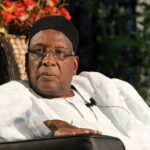
I came across a very beautiful piece entitled “Incursion of ISWAP: a major security setback,” penned by one of the most resourceful intelligence czars the Nigerian nation has ever produced, in the person of Mr. Afakriya A. Gadzama, currently chairman of the Abuja-based National Institute for Security Studies (NISS).
In October last year, that elite national security institution, which is of the same rank, prestige and status as the National Institute for Policy and Strategic Studies in Kuru, near Jos, selected me as the media personality to deliver a lecture on “COVID-19 and the media: an assessment of the Nigerian experience,” as a component part of the Global Health Security Module for Executive Intelligence Management Course 14 (EIMC-14).
On December 10 of last year, I narrated in these pages the experience I gained on that rare platform, and also wrote on how I misperceived the whole invitation to mean a plan by the DSS to arrest and detain me. And, as always, I solicited deeper citizen participation as the fastest way to resolve the lingering national security malaise afflicting the country for over 10 years snow.
I was particularly elated that the very knowledgeable Gadzama was coming out to kind of set an agenda for the nation, to help all of us as citizens further learn about the real danger facing us all, that is, the incursion of ISWAP far from the North-East, its traditional area of expertise, to places we could never have imagined. When patriots like Gadzama, a man that has never been associated with frivolities, take their pen to caution us about the dangers facing us, any discerning mind must listen.
One major issue the intelligence czar alluded to was the very fact that there is no such thing as intelligence failure, as some uninformed media outlets often report, but inability of the action agencies to utilize intelligence gathered by the DSS, the Defence Intelligence Agency, the National Intelligence Agency, etc, as well as the clear inability of the citizenry to deepen intelligence gathering and make it more precise through closer interaction and cooperation with the intelligence community. These are facts I have always argued on these pages and some other fora, and the earlier those in charge of our security accept them as the true facts that they truly are, the better for us all as a nation.
I reproduce herewith, the piece by Mr. Gadzama, hoping it would lead to a change of mindset on the part of many compatriots who have chosen to see our security forces as foes, rather than friends making great sacrifice for this nation. Excerpts:
The incursion of Islamic State West African Province (ISWAP) into the country in the last couple of years is a development that has immense implications to countries in the West African sub-region. As predicted by several commentators, the terrorist group would certainly worsen the security situation in the sub-region as most countries are already very fragile due to internal political conflicts and economic weaknesses. This is why the inroad by ISWAP should be viewed with all seriousness.
There is no doubt that the group is determined to gain a foothold in the sub-region to pursue the agenda of its sponsors. Nigeria is a preferred destination of the group for obvious reasons, especially as the country is already conducive for its activities. One of these is the presence of the Boko Haram, a known ally of the group and many who identify with its ideology. The country is apparently an attractive destination of militant Islamic groups professing extreme ideologies and other terrorist elements professing alien Islamic doctrines. It is important to observe that, in almost all the countries in the sub-region that ISWAP has infiltrated, they plan to assert control and influence. The incursion of ISWAP into some countries would, therefore, aggravate internal conflicts in attempts to dabble into the internal affairs of the countries. It will be recalled that Islamic State right from inception made no pretense of its objectives and the incursion of ISWAP, its successor, is, therefore, in pursuit of this objective. This is dangerous.
Another obvious implication of the influx of ISWAP into countries like Nigeria is the spread of the group’s ideology. It is also pertinent to observe that countries that are becoming strongholds of ISWAP in the sub-region are at the moment in one form of turmoil or the other.
The group’s presence in such countries could assume alarming dimensions and be worsened by the large quantum of small arms and light weapons in circulation in the region. These could be used by the terrorist group to destabilize many of the countries. There is in fact nothing worse than terrorists having control over the domestic affairs of countries.
Conflicts could result from the activities of groups like ISWAP in attempts to impose their brand of Islam and oppressive rule over the populace. They could also attempt to impose their surrogates.
Any of these could precipitate uprisings, which could be major distractions in fragile countries. In countries like Nigeria, the activities of ISWAP in communities controlled by Boko Haram, a close ally of the group, could accentuate the perception of widespread insecurity. Apart from general insecurity that has impeded free movement of people, the incursion of ISWAP will disrupt socio-economic activities. Economic activities have already been seriously affected in many communities in northern parts of the country as a result of the activities of Boko Haram and bandits. This is why some governors of states infiltrated by terrorist groups suspected to be ISWAP such as Borno and Niger recently raised the alarm on the danger posed. Meanwhile, there is no doubt that the group has deeply infiltrated many parts of the country and is believed to be most active in the North-East and the North-Central, but they could also have found their way to the South-West and other parts of the country. This has gone unnoticed because of the cosmopolitan nature and the support it seems to enjoy in some states.
The situation is made worse by the absence of the will and determination to frontally deal with the menace. Although people in the rural areas are aware of their existence, there is hardly anything they can do because of fear of deadly attacks. Discussions among security forces reveal that the problem of tackling the group is not lack of intelligence but lack of will.
It is disturbing that the group freely operates in parts of Lake Chad and parts of Askira Uba in southern Borno, where it reportedly has settlements and operates markets.
The group is believed to be behind foiled attacks on Buratai. The group is also believed to have made extensive inroads into parts of Niger, Katsina and Kaduna States and might have made similar inroads into Zamfara and Sokoto states. No less disturbing are claims that the security forces are aware of the presence of the group in some states but have not gone to dislodge them, preferring to look the other way.
There have also been reports that the security forces confuse the activities of ISWAP with criminal activities of armed bandits and lawless herdsmen as a French intelligence source observed some years ago. It should however be noted that the group has very often used some subversive and criminal groups as cover to perpetuate its presence in the country.
The wanton attacks and killings in some communities in many states are clear indications of its existence and it is known to be behind raids on communities and attacks on security operatives. Many informed commentators believe some of the current attacks in Zamfara, Kaduna, Katsina, Borno and Yobe States are committed by ISWAP or those conniving with them.
These attacks are fueling the perception that the country is under siege which could do enormous damage to the image and legacy of this government. There is reason to believe that security posts and armouries could become targets of the group in the coming months as the group might ally with other subversive groups to undermine the government and sabotage key installations. It is obvious that the group has established sleeper cells in many parts of the country which could be used as staging posts for more attacks in future. The forthcoming elections could also be a convenient period for the group to sabotage the efforts of the government.
What all these portend is that ISWAP will emerge as the most deadly group in the country in the coming months. The gravity of the presence of ISWAP could best be appreciated from the perspective that no country would condone flagrant challenge of its sovereignty in any form and by any group. This is why the incursion of the group into the country in recent months is arguably the most potent threat to the country’s security. Everything must therefore be done to stop the group from establishing a foothold beyond its current inroad in parts of the country.
As previously observed, the group’s activities in the country could only be tackled through multilateral cooperation. The country should explore the possibility of cooperation with countries that have the capacity to eliminate the group in the sub-region. The government should also acquire and equip the security forces with the weapons and capabilities they need to fight the group ferociously. The infiltration of the group at a time the country is contending with a combination of acts of banditry, kidnapping, lawless activities of herdsmen and separatist agitations would certainly constitute a huge distraction and serious setback to the efforts to fight terrorism.
This is why some informed sources believe that unless ISWAP is stopped in its tracks, the country will almost certainly be plunged into unimaginable disaster. The mistakes made in dealing with Boko Haram must be avoided at all cost. The Government has provided the security forces with the required capabilities to stop the ongoing onslaught by the group. The government and the security forces should therefore be supported in their efforts to counter the onslaught so as not to be distracted from pursuing its obligations of meeting the aspirations of the people.
(To be continued)