Follow Us on Google
By Uche Usim
A virtual cinema powerhouse, Circuits, has introduced a revolutionary welfare model that promises lifetime monthly income and comprehensive health insurance for aging Nollywood icons. The announcement has ignited fresh national debate on how Africa’s creative industries should treat the pioneers who built their cultural and commercial foundations.
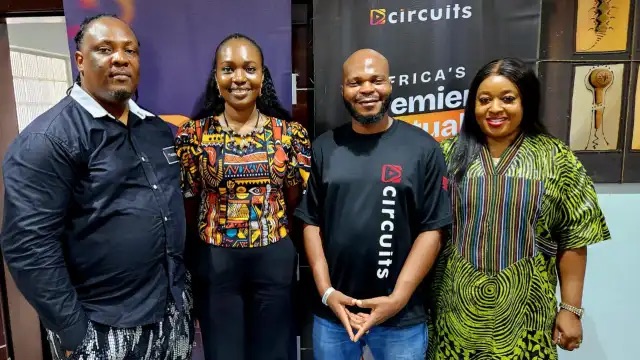
At an exclusive roundtable with some editors in Lagos at the weekend, Circuits’ Chief Operating Officer, Mrs Imade Bibowei-Osuobeni, said the initiative, named the Film Veterans’ Dignity Fund, delivers structural economic redress for legends who worked without institutional safety nets.
“This is not charity, it is an economic responsibility. The men and women who built Nollywood’s cultural wealth deserve lifetime dignity, not abandonment. We designed the Film Veterans’ Dignity Fund to correct a long-standing economic injustice in the creative industry”, she said.
The first beneficiaries, Chief Pete Edochie, Idowu Philips also known as Iya Rainbow, and Chief Lere Paimo, represent some of the most influential actors across generations. The Fund, she noted, is the first private, structured, recurring welfare programme in Nigeria’s film history dedicated to creatives aged 70 and above and built to last for life.
“For years, the industry depended on informal structures. Contracts were weak, royalties were inconsistent, and piracy wiped out incomes.
“We believe the new economy must honour the old creators and create a sustainable economic pathway for the new.” She added that more veterans would be added as Circuits deepens partnerships with institutions and investors. “No Nollywood trailblazer should grow old in financial distress,” she said.
Circuits is also shaping a broader economic blueprint that merges film, technology, community development and job creation. Describing the platform, Bibowei-Osuobeni called Circuits “Africa’s first true pan-African virtual cinema, built on scheduled pay-per-view and designed to protect intellectual property while expanding revenue channels for filmmakers.”
The platform already boasts content from Nigeria, Uganda, Zambia and several other African markets.
Its cinema-like scheduling approach ensures predictable earnings for creators. “When you buy a film on Circuits, you are paying for a scheduled seat, not random access,” she explained. “That ensures creators receive real-time, measurable income.” The limited-release model, where films remain available for only a set period, has pushed up scarcity value and boosted producers’ earnings.
But the battle with piracy remains fierce. “In one day, we can record 10,000 infringements, and we take down more than 9,900 almost within minutes,” she revealed. “In under a year, we removed over one million illegal channels and URLs. Without this fight, creators cannot earn what they truly deserve, and the economy cannot grow.”
Circuits’ state-backed creative development programmes are also gaining momentum. Ekiti State has already committed 15 million dollars to the Ekiti State Creative Impact Fund, which will train residents, create state-owned content and grow new IGR streams. “Fifteen other states are in the pipeline and at different levels of conversation,” she disclosed. “This is not another government project, this is a commercially anchored system that builds jobs, strengthens state finances and gives young people paid digital skills.”
The rollout begins in January, and thousands of youths across participating states are expected to enter new creative and technical employment pipelines.
Bibowei-Osuobeni also added that Circuits’ long-term ambition is to build a unified creative, technology and tourism economic network that will position African cinema as a major global force and a generator of new prosperity.