Follow Us on Google
By Vivian Onyebukwa
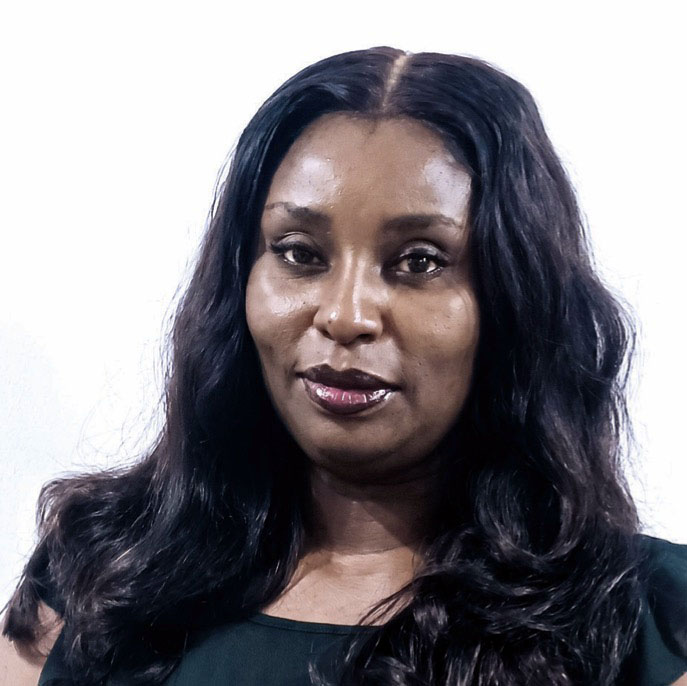
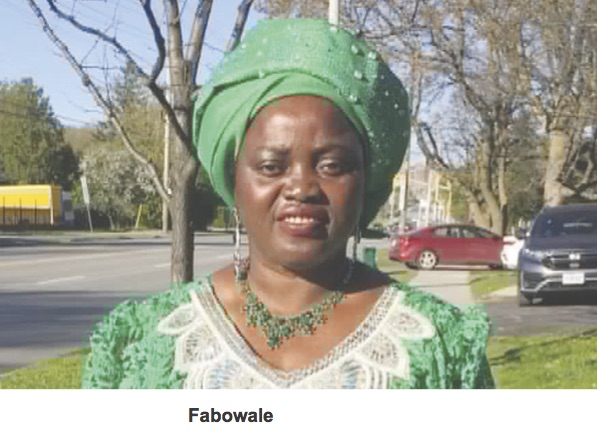
Lola Fabowale is a Nigerian-Canadian Applied Managerial and Social Sciences Researcher with specialization in entrepreneurship.
The former Oxfam Research Analyst has borne a burden all these years while studying and working for the government of her adopted country, Canada and various development focused agencies including, how to help free Nigeria, her native land from her self-inflicted dysfunctions that have kept and continues to keep it down. Her exposure to a developed society such as Canada she said, is where things run smoothly and work has been a source of sadness vis a vis the vibes and picture of decay, poverty, suffering, illiteracy and failure of governance she picks up during her occasional visits home since she left the shores of Nigeria more than 40 years ago to study in North America on scholarship.
In this interview with Daily Sun, she spoke about Nigeria as a country, comparing it with other parts of the world where she has been. Lola, who writes and speaks fluently in English, French and Spanish in addition to Yoruba, talks about her journey into becoming a poet, novelist, essayist and writer.
You left the shore of Nigeria 40 years to live in Canada, what’s your perception of Nigeria?
Working as a civil servant with the Canadian government and also with Oxfam and other development partners only made the pain of my disappointment acute, as the perception of Nigeria as a corrupt nation had created distrust that tended to deny the country of opportunities and aids, especially in key social sectors such as health, education and economic empowerment.
Yet, I believe in Nigeria’s immense potential for growth and prosperity, what with its huge size, population, resources and strategic position as a regional power. My mind rankles with frustration and angst when I think of why and how the country has been unable to get its acts together and march to greatness which fond memories of the glorious diverse cultures, a vibrant generation of youths, able to hold their own among their counterparts in any part of the world and the barrel of petro-dollar economy, though slightly battered yet throbbing with energy when I left in the 80s, convinces me, is the country’s due.
Over time, I have poured my frustration and passionate love and belief in Nigeria into writing. Out of this, a mass of essays, short stories, a novel in the making and volumes of poetry of which the first entitled: “Nostalgia and Tears F’Orile” has just been published and is due for launch in early October.
How did you get into writing?
I am a native of Abeokuta. I was born and bred in Sagamu, Ijebu Remo Local Government Area where I imbibed a strong love for culture and stage performances that was nursed by both of my parents. Despite exposure to classical and popular literature from a very tender age-you could say I learnt Shakespeare practically on my father’s knees. I opted to study first the natural sciences and later, the social sciences. Today, I count myself an essayist, poet, short-story writer as well as a novelist whose experiences as a social scientist who has worked in virtually all sectors of the economy inform her creative side.
My foray into creative writing began in 1986 when in response to allegations of racial profiling by the Toronto Police against Blacks. I penned ‘Notes to Night’, a poem decrying the prejudiced practice. Soon after, I wrote ‘A Woman Wronged?’ a short story that points out contradictions of arraigning small time bootleggers plying the Cotonou-Lagos routes on criminal charges of smuggling when state officials commit more heinous white paper crimes with relative impunity. Both poem and short story were published in Shanti, the Trent University International Program weekly newsletter. Ever since, though latent, you could say “the creative embers have been smoldering”.
Why do you see poetry as your favourite literary genre?
Poetry comes most naturally to me. Whatever the mood I am in, whether it is sad or glad, I wish to put it into lines. Suffice it to say, I also engage with other literary genres including short stories, essays and novels and even plays. In fact two of my poems-both as yet unpublished are a form of play because they require dialogue between two or more persons.
Can you give an insight into your first book?
NTF has long been in the making since 1986. It is a collection of my poetic musings over the years-thinking of Nigeria and Canada and the strengths and challenges of living in both. Normally, when the inspiration struck me, I would share the resultant lines with friends. When social media became popular, it was a natural outlet for the sharing of my thoughts and emotions. However, when I tried to compete in a number of poetry contests, it became obvious that I had to curtail my sharing of posts on social media since many contests want unpublished work and they consider social media posts, publishing
Besides, since 1999, some friends convinced me that I had crossed the amateur line in poetry writing and should consider putting my work to print. Given that I had been writing over the years with mainly Nigeria in mind, coming up with a portfolio was not too difficult. However, publishing proved a long winding road. I amassed the body of my current collection in 2021 but when I showed it to a master poet Emeritus, Professor Niyi Osundare, he adjudged the totality of the works as too “fat” for one publication. He advised that I should divide it into two collections of which NTF is the first. In between editing and proofs, we only got to print on July 1, 2023.
How often do you visit home visits and how much have you maintained the link?
To be sincere, since I left Nigeria in 1982, I have visited only four times. One could say I return from my North American sojourn every 10 years on average. Still, my childhood memories remain very strong and continue to impact my writing and my unflagging love for my native land.
Do you think that people are not sacrificing their expertise for Nigeria’s sake?
Yes, you are absolutely right. If Nigeria is to change, who is better than Nigerians themselves to change things?
When I was growing up, travelling out was but an icing on the cake. The real deal was to return home. However, the Scylla and Charybdis of successive military versus civilian administrations have nipped hopes of many sojourning Nigerians of returning home to contribute meaningfully to their native land in the bud. Endemic corruption by the two types of administration have strongly put off many potential returnees like me while eliciting mass exodus of those all, already at home.
Rather than stay permanently abroad, I would have loved to be in politics to empower women, children and youths. My career choices in Canada especially, with Oxfam Canada betray that bent. However, flagrant insecurity in Nigeria has been a put-off, not only for me but for countless Nigerians voting with their feet every day.
The pervasive impacts of thuggery in politics at all levels of analysis dampen the fire in the belly for progressives among whom I like to count myself. Still, speaking out as people like me, do, is not without its merits and its own dangers. Witness Niyi Osundare being attacked with an axe by an unknown assailant who was never brought to book. Witness intrepid Wole Soyinka having to leave at dawn because of a rampaging Abacha who felt no qualms whatsoever (despite raging international opinion) to kill Ken Saro-Wiwa. Until the violent beast responsible for mal-administration in Nigeria is tamed, there will continue to be a need of protest but alas, also a dearth of progressives ready to put their lives at risk and run for political offices.
Do you think we can get Nigeria to work again?
The government alone cannot be expected to do everything. However, the state owes civil society some basic tools evinced in state-of -the-art social and physical infrastructure, upholding the rule of law and safeguarding security. Nigerians have always been entrepreneurs-both in social and business enterprises. Those with the right education, skills and tools cannot but thrive. However given the poor investments in the education and health sectors, we are basically shooting ourselves in the foot and wiping out the middle class. The solution is to reverse the current trend. You know Canada and the rest of the West feel no qualms about going into serious debt to prioritize their health and education sectors with a strong sense that a healthy and educated workforce can more than pay back national debts several times over. What is pitiful is that successive Nigerian administrations with few if any exceptions furrow the backs of the masses while officials enjoy state-funded largesse. Where are the Thomas Sankaras in Nigeria who are prepared to earn the median income of Nigerians as State salaries rather than Senators enjoying individual annual incomes that surpass twelve times that of a United States President?
So, what exactly do you suggest as a way out?
Our approach to governance has been very much a case of strangling the goose that lays the golden egg and may account for why money-making rituals and the implicit insecurity have become national diseases. My own bent is to, no matter how small scale, to work with like-minded groups and individuals to support initiatives that will empower women and youths to develop artisanal skills that boost employability.
We have to stop churning out graduates who are looking for jobs; we need to create a new breed of people who would not only be self-employed but be in a position to employ others. One of my poems in NTF Anni horibbiles vel fertilises (III) notes that Chinese children master impressive manufacturing and designing skills as early as age six. Yet in Nigeria, an engineering graduate may not be privy to such skills until he has first had the fortune of someone hiring him, which, in the current economic climate the country is in, may well be never. We have to shift our focus and start doing things differently.
Why do you still stick to your maiden name?
My husband and I share the view that our marriage is a union which doesn’t eclipse our individuality. In fact, more than I, my husband Charles D. Male, a Ugandan, was persuaded that I should retain my maiden name under which he was convinced I had already achieved repute as a researcher cum writer. That is why my pen name remains Lola Fabowale.