Follow Us on Google
By Ugochukwu Ibezim
For centuries, the scientific study of microorganisms, microbial activities, and infectious diseases has fascinated and puzzled researchers. These studies on the harmful effects of microbial activities on humans and animals have led to the discovery of drugs and vaccines to control or eliminate them. However, over time, it was discovered that some of the drugs were no longer effective as they used to be due to their resistance by some of these microorganisms, leading to the creation of the terms antimicrobial resistance (AMR) and multidrug resistance (MDR) to describe the phenomena.
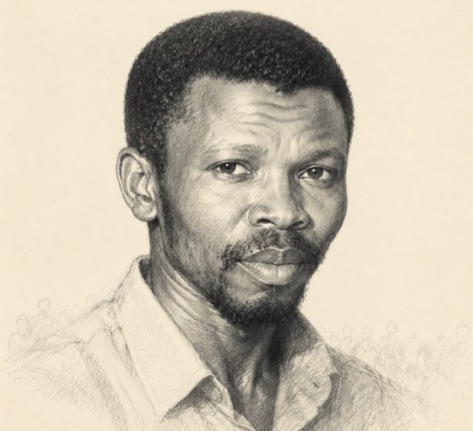
Chibuzo Nwokafor, a first-class Microbiology graduate with a Master of Science degree in Biotechnology from the University of West Scotland, United Kingdom, focuses his research on infectious diseases, antimicrobial resistance, immunology, and drug discovery.
Currently a researcher in Microbiology at the University of Alabama at Birmingham, United States, Nwokafor said his journey into microbial and antimicrobial resistance research has been challenging and rewarding, adding, “It has involved continuous learning and problem-solving, providing me with daily insights into microbial pathogenesis and its impact on human health.”
He said that conducting first-hand research in leading-edge research facilities has deepened his understanding of antimicrobial resistance and its complexities. He added that his scholarship and research endeavour “is contributing to the development of public health, One Health, disease control and treatment, and global health at large.”
A few months ago, Nwokafor and his research colleagues published some scholarly papers to shed more light on multidrug-resistant tuberculosis in sub-Saharan Africa and the therapeutic options for methicillin-resistant staphylococcus aureus using guava and neem extracts.
The two papers were respectively titled ‘Challenges for mathematical modelling of multidrug-resistant tuberculosis in sub-Saharan Africa’ published in the Asian Journal of Advanced Research and Reports 18 (9): 90-97; and ‘Exploring guava and neem extracts as therapeutic options for methicillin-resistant staphylococcus aureus (MRSA) in Africa’ published in Journal of Advances in Microbiology 24 (9):1-15.
According to a 2024 publication on the World Health Organisation’s (WHO) website, multidrug-resistant tuberculosis (MDR-TB) is a form of TB disease caused by a strain of M. tuberculosis complex that is resistant to rifampicin and isoniazid. The treatment success rate for people diagnosed with MDR/RR-TB has steadily improved but remains alarmingly low.
Nwokafor and others, in their multidrug-resistant tuberculosis paper, noted that in sub-Saharan Africa ─ where there are inadequate diagnostic and reporting facilities ─ limited data availability hinders the accurate estimation of key parameters in mathematical models of multi-drug-resistant tuberculosis. They furthermore noted that gaps in knowledge about multi-drug-resistant tuberculosis dynamics add another layer of complexity to these modelling efforts. In the research, they utilised databases from Google Scholar, PubMed, Scopus, Web of Science, etc., covering the period from 2010 to the present, to highlight the epidemiology of multidrug-resistant tuberculosis in sub–Saharan Africa and the limitations in mathematical modelling of multi-drug-resistant tuberculosis in the region.
Nwokafor et al, discovered that accurate diagnosis and reliable data are crucial barriers to effective modelling. They also found that the review underscores the potential of machine learning techniques to improve data quality and address issues related to incomplete data, suggesting that these methods could become essential components of future mathematical models.
A 2024 paper on ‘Multidrug-resistant tuberculosis’, published in Nature Reviews Disease Primers, estimated that DR-TB will cost the global economy about US$16.7 trillion between 2015 and 2050 and that about 20-25 per cent of the total global estimated cost of antimicrobial resistance by the year 2050 will be due to DR-TB8.
In light of these findings from the above Nature Reviews Disease Primers paper, Nwokafor and his colleagues believe that adequate data gathering, analysis and modelling on multidrug-resistant tuberculosis in Nigeria and sub-Saharan Africa will lead to a substantial decrease in the mortality and morbidity of the disease as well as its incidence in healthcare costs.
Nwokafor and his research colleagues’ work on the therapeutic options for methicillin-resistant staphylococcus aureus (MRSA) in Africa using guava and neem extracts is germane because of its benefits in public health and research. Nwokafor and his colleagues described MRSA as a virulent strain of antibiotic-resistant Staphylococcus aureus and a principal cause of disease prevalence and death rates. They submitted that MRSA’s resistance to traditional antibiotics makes it a crucial threat to public health. Hence, the essence of their research into plants with traditional medicinal uses which they believe may provide an alternate means of treatment.
In the paper, the researchers explored the antibacterial capabilities of Psidium guajava (guava) and Azadirachta indica (neem) against MRSA by evaluating data from multiple investigations carried out in Africa.
Their findings showed that A. indica and P. guajava extracts may have strong antibacterial action which can prevent the growth of MRSA and stop the formation of biofilms. They added that despite the extracts’ lower efficacy when compared to modern antibiotics, plant extracts could serve as a novel approach to effectively tackle antimicrobial resistance due to their enhanced synergistic efficacy when combined with other extracts.
Nwokafor et al found that this is achieved with low toxicity, hence the call for more research to investigate it thoroughly. Moreover, they further found that the socio-economic consequences of applying these easily accessible and reasonably priced plant-based remedies in environments with limited resources were determined to be advantageous to Africa.
They recommended more thorough clinical trials and standardizing procedures to validate the therapeutic potential of these plants against MRSA. In a recent interview on his work on AMR and MDR, Nwokafor emphasised that plant-based extracts hold significant promise in cancer research due to their potential to inhibit cancer cell growth, induce cell death, and interfere with tumour progression. He explained this further by stating that taxol from the Pacific yew tree, and vincristine and vinblastine from the Madagascar periwinkle are used in chemotherapy. “Plant extracts also offer anti-inflammatory and antioxidant benefits, crucial for cancer prevention. Often, these compounds work synergistically with conventional treatments, potentially reducing side effects and improving outcomes,” he added.
A 2023 progress update on tuberculosis in a WHO African Region report revealed that drug-resistant TB, both rifampicin resistant and multi-drug resistant, is a growing burden, affecting 450,000 and 77,000 people in the African region respectively; and, of these cases, 53 per cent were from Nigeria and South Africa. WHO also revealed that Nigeria is among the six of the 30 high TB burden countries with worryingly low levels of treatment coverage in 2021.
Usman Abubakar and Syed Sulaiman in their 2018 review of the prevalence, trend and antimicrobial susceptibility of methicillin-resistant staphylococcus aureus in Nigeria, published in the Journal of Infection and Public Health, revealed that the prevalence of MRSA infection in Nigeria has increased by 18.3 per cent in 2009, 16.5 per cent in 2010, and 42.3 per cent in 2013.
In light of the 2023 WHO African Region update on tuberculosis and Usman Abubakar and Syed Sulaiman review of the prevalence, trend and antimicrobial susceptibility of methicillin-resistant staphylococcus aureus in Nigeria, Nwokafor called on deliberate and sustainable research efforts and partnership by scholars and governments in Nigeria towards controlling AMR and MDR in the country. Ugochukwu Ibezim, a public health analyst, writes from Lagos.