Follow Us on Google

SIX months after revising upward its growth forecast for Nigeria’s economy in 2022 to 3.1 per cent from its earlier projection of 2.7 per cent released in January, the International Monetary Fund (IMF) has revealed in its new report that rising inflation, pervasive insecurity and election expenses will negatively affect the nation’s economy. Other factors that will pose threats to the performance of the economy, according to the global financial institution, include monetary tightening by the Central Bank of Nigeria (CBN), rising energy cost and high food prices. This was disclosed recently by the Fund’s Resident Representative for Nigeria, Ari Aisen.
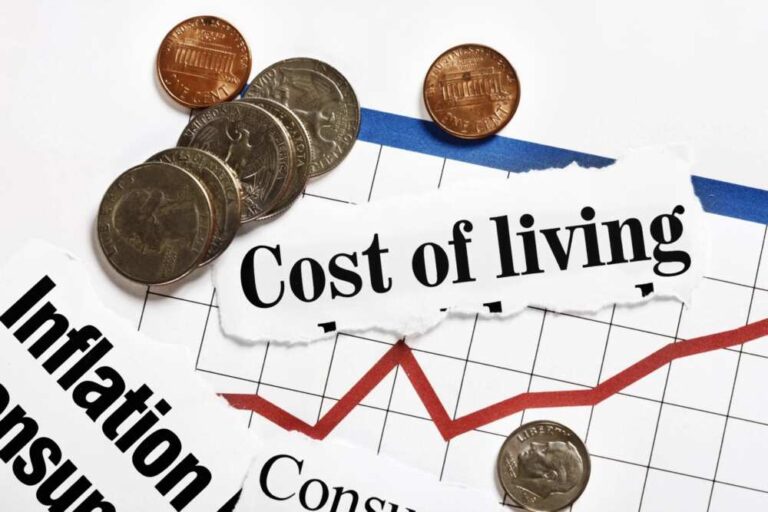
The IMF’s bleak economic outlook for Nigeria is similar to the projection by the World Bank. Undoubtedly, Nigeria is currently going through spending pressure within the fiscal narrow space occasioned by political activities ahead of 2023 general election, heightened insecurity and spiralling inflation, among other challenges. The situation might have been worsened by the millions of naira reportedly spent at the primaries of the All Progressives Congress (APC) and the Peoples Democratic Party (PDP). Moreover, rising inflation has reached a new high of 16.82 per cent for the month of April, according to data from the National Bureau of Statistics (NBS). This is the highest inflation rate in 30 months. It has impacted on disposal income of consumers, resulting in high cost of food items. Insecurity has remained Nigeria’s most intractable problem as terrorists are daily killing Nigerians.
For high commodity importers like Nigeria, the IMF noted in its report that the war in Ukraine will add between $6billion and $10billion in financing needs annually, even as the impact of the COVID-19 pandemic has slowed down economic recovery. Within the last two years, NBS figures showed that Nigeria’s Terms of Trade fell by over three per cent. There is no doubt that huge financial needs would be required to boost the performance of the economy as soaring interest rates, spiralling inflation, insecurity and unemployment have contributed to shrink public and private businesses. That is probably why Nigeria is listed by the World Bank among developing economies adversely hit by present harsh global economic weather, with about 60 per cent of low-income people at high risk. Therefore, it behooves on government to roll out measures that will generate more revenues and put the economy on the path of recovery and growth.
The NBS report for the third quarter (Q3 2021) on Expenditure and Income Gross Domestic Product (GDP) revealed that Nigerians spent N54.84trillion on household consumption in nominal terms in the first half (H1) of 2021. The figure is higher than N48.22trillion recorded in the first half of 2020, and N49trillion and N44trillion in the first half of 2019 and 2018, respectively. Household expenditure is the amount of final consumption expenditure made by households to meet their daily needs, such as food, clothing, house rent, energy, transport costs, durable goods (notably cars), health cost, leisure, and miscellaneous services. The rise in household spending is a clear signal that Nigerians are spending more as a result of the increase in prices of goods and services. It does not in any way mean they are earning more.
With prices of goods rising and incomes stagnating, it is likely that many people would not afford to save, which has grave implications for the economy. The latest inflation rate of 16.82 per cent is far above the CBN inflation target of nine per cent. Food prices inflation is due more to supply side shocks occasioned by insecurity and farmers/herders clashes as well as poor rural transportation system. Across the states, the Consumer Price Index (CPI), which measures inflation, shows that food inflation has increased substantially, though it differs across the states. High inflation is fundamentally a disincentive to investment. At the same time, inflation erodes returns on investments. And this calls to question government’s agricultural policy, which has been essentially driven by import substitution.
Let the Federal Government heed the call to check rising inflation, high energy cost, debt crisis and diversify the economy. Nigeria’s debt stock is close to N40trillion, amid more borrowings. This will likely elicit dire consequences. Embarking on major policy adjustments will brighten Nigeria’s economic outlook. Government should refrain from resorting to extra budgetary spending through overdraft from the CBN. While we agree with IMF and World Bank’s position on the overuse of CBN overdraft, we do not support their advice that CBN should ease restriction on foreign exchange for select goods, which Nigeria can produce locally. We should strive to produce the goods we need instead of depending so much on imports. It is time for Nigeria to fully develop its agriculture and the solid minerals sector. Doing so will boost non-oil revenues and enhance the nation’s tax base.