Follow Us on Google
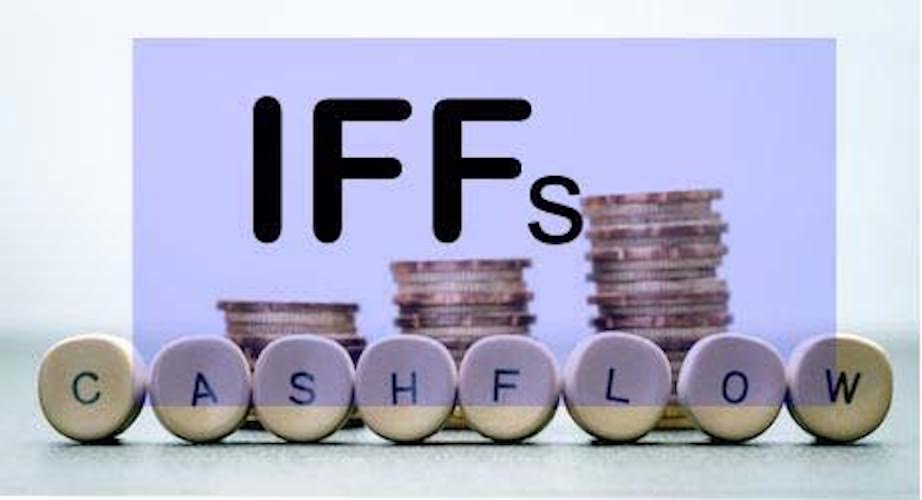
A new report by Global Financial Integrity (GFI), a US- based think tank, has revealed that Nigeria lost a whopping $77.7billion to illicit financial flows (IFFs) in ten years, from 2013 to 2022. According to the report, South Africa topped the list with $478billion in cumulative trade value within the same period covered by the report, while Nigeria came second. For the continent, the estimated annual loss is over $88.6billion, representing 3.7 per cent of Africa’s total Gross Domestic Product (GDP). IFFs involve cross-border movement of illegally-earned money, transferred, or utilized. It also includes proceeds of crime, corruption, and practices like tax evasion. Trailing Nigeria in the infamous IFFs is Ghana, $51billion; Cote d’Ivoire, $47.7billion; and Kenya, $47.5billion.
The implication of IFFs is dire to the economy of the country. Every dollar siphoned is a dollar not taxed or invested. This directly reduces the resources available for public expenditure. Statistics show that Nigeria loses between $15billion and $18billion annually to IFFs. This is despite efforts by government agencies to combat the menace. For example, between 2003 and 2013, Nigeria lost $157 million to IFFs. Foreign Direct Investment (FDI) within the same period was only $48billion and $59billion, respectively.
We believe that IFFs have become increasingly intractable due to evolving evasive techniques, weak global regulatory enforcement, and a symbiotic relationship between corruption and institutional dysfunction. These flows, which from various reports, cost developing nations like Nigeria and others billions of dollars annually, are driven by illegal activities and loopholes that enable the movement of money across borders with minimal detection.
Globally, over 60 international tax havens and secret jurisdictions have been identified as warehousing illicit funds. According to the United Nations Conference on Trade and Development (UNCTAD) there are also thousands of other illicit financial outlets disguised as shell companies and charity organisations across the world. In its latest report, GFI indicted Nigeria’s banking industry for the illegal financial flows, alleging that banks are either not doing enough or are complicit in illicit financial flows. Corrupt politicians are complicit as well.
Other News
The humongous loss to IFFs has come amid a recent report by the Central Bank of Nigeria (CBN) that the country spent huge amount in recent times on external debt servicing. The amount involves international payments, comprising debt service, remittances, and letters of credit, which stood at $2.6billion as of April, 2025, up from $2.07billion recorded in the corresponding period of 2024. Also, CBN Purchasing Managers index (PMI) released last week showed IFFs led to the contraction of the private sector in the country. Illicit financial flows and debt servicing have had reduced revenue needed to address pressing socioeconomic challenges in the country. In August 2024, the vice president of the International Police Organisation (Interpol), Mr. Garba Umar, revealed that “hundreds of thousands of dollars were laundered out of Nigeria every hour.’’ The disclosure made at the inauguration of a training workshop for academy personnel of the Economic and Financial Crimes Commission (EFCC), in Abuja, showed that Nigeria has become a transit country for illicit money laundering to other African countries and across the world.
Interpol has repeatedly cautioned that if the trend is not checked before such proceeds of crime get to the criminals, they “will enjoy the fruits of their crime, while the hard working and honest Nigerians pay the price of the crime.” The warning should be heeded. The relevant agencies should redouble their efforts to reduce illicit financial flows on the continent. Also disturbing are recent data indicating that the Nigerian banking sector accounted for an estimated $854billion of illicit cash flows in Africa between 1971 and 2009. The figure is said to be rising steadily at an average of 12 per cent in the last ten years, contributing to the present slow economic growth and development of the economy. A study by Afrinvest, a reputable investment management company, says Nigeria’s public debt stock may soon hit all-time high as a result of illicit financial flows and other fiscal and monetary policy failures. This raises more concerns about Nigeria’s debt-to-GDP ratio. That is the same concern raised by Interpol, to the effect that Nigeria risks becoming “prone to more crimes, more drugs, more fraud, more corruption and more violence” if illicit financial transactions are not curbed. All of this should serve as a wake-up call to the government and law enforcement agencies to do more than they are currently doing. No nation can make sustainable progress without effectively checking illicit cash flows and unsustainable debt servicing that currently gulps over 70 per cent of Nigeria’s total revenue. The federal government should scale up its collaboration with Interpol and other agencies towards curtailing IFFs to the barest minimum. One of such measures is what Interpol calls “Silver Note”, which targets combating money laundering in Africa, and globally.
This measure also requires the CBN to tighten the loose ends in the banking systems that enable the perpetrators of the crime to carry out their illicit trade. It will also help the EFCC and the National Drug Law Enforcement Agency (NDLEA) in their operations. More investigations should be carried out on suspected illicit financial barons. The menace has impacted negatively on the economy, drained our foreign exchange reserves, reduced revenue collection, and resulted in poor investment inflows as well as the escalation of poverty in the country.