Follow Us on Google
From Juliana Taiwo-Obalonye, Abuja
Every year on October 11, the world marks the International Day of the Girl Child, raising awareness about the challenges that girls face globally while promoting their rights and empowerment. Established by the United Nations in 2012, this day is especially significant for countries like Nigeria, where girls continue to confront crises that threaten their education, safety, and well-being.

This year’s theme, “The Girl I Am, The Change I Lead: Girls on the Frontlines of Crisis,” captures the spirit of resilience and leadership among girls who navigate through adversity and still aspire to change their communities. According to UNICEF’s 2025 data, Nigeria faces considerable humanitarian challenges that disproportionately affect children, with girls bearing the brunt of these hardships.
Over 14 million Nigerian children suffer from malnutrition, and an estimated 3.3 million are internally displaced due to conflict and environmental factors. Girls displaced by violence or living in precarious conditions experience disruptions in education and heightened risks of gender-based violence, early marriage, and limited healthcare access.

Aisha Bello, a girl affected by displacement in Abuja, vividly described the toll: “When we run from violence, we lose our childhood. School is far, water is scarce, and safety is a dream within reach.”

The First Lady of Nigeria, Oluremi Tinubu, in her message to commemorate the day, acknowledged the courage of Nigerian girls on this special day. “To every brave girl, striving to reach the classroom, walking miles for water, or carrying the quiet strength of displacement, you are seen, you are heard and valued. Your courage lights the way to a brighter future,” she declared. She called on all Nigerians to unite in creating enabling environments that allow girls to reach their fullest potential.
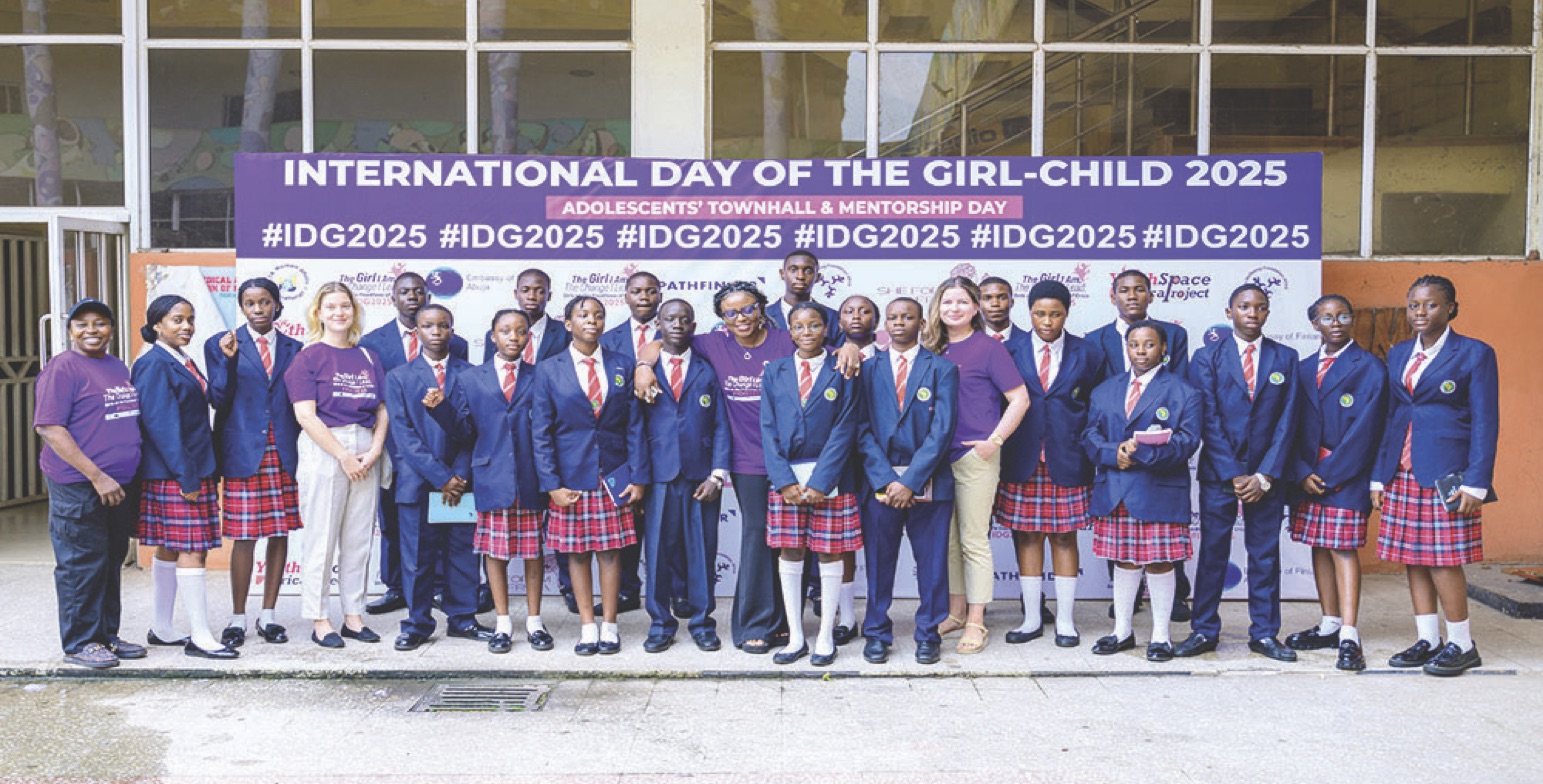
At the “Adolescents’ Townhall and Mentorship Day,” convened by SheForum Africa in collaboration with the FCT Women Affairs and Children Secretariat, Embassy of Finland, and Pathfinder International, various voices echoed this call for action.
Inimfon Etuk, founder of SheForum Africa, emphasised the urgency of investing in girls’ education and leadership development. “We know that the world faces crises beyond war—gender-based violence, health challenges, and social instability. Girls today are the leaders who will build resilient communities tomorrow. That’s why empowering them through education and support is paramount,” she said. She also pressed governments to take responsibility: “Women and young girls, especially in displacement settings, suffer most. Governments must minimise these impacts by domesticating policies on child development, education, and maternal health.”
Country Director of Pathfinder International Nigeria, Amina Dorayi, reinforced the message for girls and society. “Girls are already leading. We must ensure they have the tools and structures to succeed. Parents, communities, and governments should nurture both boys and girls to be proud partners in progress,” she advised.
Mandate Secretary of the FCT Women Affairs Secretariat, Adedayo Benjamins-Laniyi, reminded stakeholders that empowering a girl child strengthens the nation. “Decisions affecting children must prioritise their best interests. Every girl is unique, courageous, and talented.”
Represented by the Director of the Child Development Department, Idris Attah, the Mandate Secretary noted the FCT Minister’s approval for annual Girl Child Day celebrations on December 10 for the nation’s capital was in demonstration of his support of their well being and for the voices to be amplified, highlighting this year as the second edition.
From the Embassy of Finland, Trade Officer Maria Ruuskanen commended the girls’ courage in facing challenges like climate change and inequality, emphasizing, “Empowering girls is a proven path to building peaceful and prosperous societies. You girls are leaders now, not just the future.”
Director of Public Policy at Wellbeing Foundation Africa, Rasheed Yusuf, urged communities and governments to create enabling environments for girls’ success.
Voices from the beneficiaries underscored the power of the theme in their own words. Ifeoluwa Adeyemo from Girls Secondary School Kwali Abuja stated, “We must stand up for our rights; we are the change. Investing in girls is investing in a nation. Our generation is about progress, peace, and prosperity.”
Dinatu Joseph, scholarship beneficiary and master of ceremonies at the SheForum event from KNOSK N100-a-day Charity School Kuje, shared, “I learned I don’t need permission slips to make changes. I can dream big, solve problems, and lead change in my community.”
Munirat Mohammed, a physically challenged student from GSS Kwali Abuja, voiced the need for inclusive education. “We have potential; empowering us is essential for us to contribute meaningfully,” she said.
At Meadowlands School’s International Day of the Girl Child celebration, Head Teacher Andymarie Ikhine called for broader commitment to support girls as leaders. “Girls are not just recipients of help; they are agents capable of transforming society. At Meadowlands, we take pride in raising strong, confident girls ready to lead. Empowering a girl empowers generations,” he stated.
The event was highlighted by the enthusiastic participation of the school community, with girls confidently showcasing their unity in pink attire, while boys complemented the scene in white T-shirts and jeans.
He expressed heartfelt gratitude to parents and guardians for their invaluable support and active participation. He emphasised that their presence was integral in making the occasion memorable, underscoring the event’s dual focus on recognising the strength and potential of girls and honouring the leadership contributions of the student council and their lead teachers.
The celebration fostered a spirit of pride and unity among students, celebrating both gender empowerment and student leadership, leaving a lasting impact on the school community.
Guest speaker at Meadowlands School, Chioma Nwagbo inspired attendees to meet challenges with bravery, fearlessness, and determination, urging them to be bold change-makers and frontliners despite obstacles.
Beyond speeches and celebrations, practical initiatives like the Girl Child Workshop organised by FAME Foundation and Laureus Sport for Good at LEA Primary School, Utako, underline the significance of nurturing girl leadership. Facilitators Ngozi Osinachi and Dinah Abohwo inspired 102 young girls through sessions focused on leadership and goal-setting.
Osinachi taught that leadership starts with confidence and responsibility—not titles, encouraging girls to embrace accountability and courage. Abohwo’s “Dream Big, Start Small” session urged focus and consistency in pursuit of goals, reminding the girls that great accomplishments begin with modest steps.
The workshop concluded with participants pledging to apply their new knowledge to school, family, and community life, a testament to the transformative power of empowerment.
Despite progress, Nigerian girls face daunting challenges. Many suffer due to gender-based violence, disrupted schooling, early marriage, and unsafe living conditions, especially in crisis zones. UNICEF cautions that failure to protect girls threatens the nation’s future, as these crises deepen inequalities and obstruct development.
Experts and advocates call for increased investment in girl-centered education, healthcare, protection services, and infrastructure as critical to reversing these trends.
The stories shared on International Day of the Girl Child reveal a powerful truth: Nigerian girls are not just survivors of crises—they are leaders ready to transform their realities. Their voices, courage, and aspirations demand a collective response to support them.
As Oluremi Tinubu succinctly put it, “Let us come together to support our girls to reach their maximum potential.” When society empowers girls with education, protection, and opportunities, it invests in a future of progress, peace, and prosperity.
The path forward is clear: to elevate Nigeria, the nation must prioritize its girls, acknowledging that their leadership today will define the country’s destiny tomorrow. For every Ifeoluwa, Munirat, and every girl on these frontlines, the world must answer the call with unwavering commitment and action.