Follow Us on Google
From Scholastica Hir, Makurdi
The Centre for Democracy and Development (CDD West Africa) has identified disinformation as a major cause of political crises in Africa.
The organisation has therefore urged journalists in Benue State to prioritise fact-checking, verification and ethical reporting to enable them to correct any form of disinformation at their disposal.
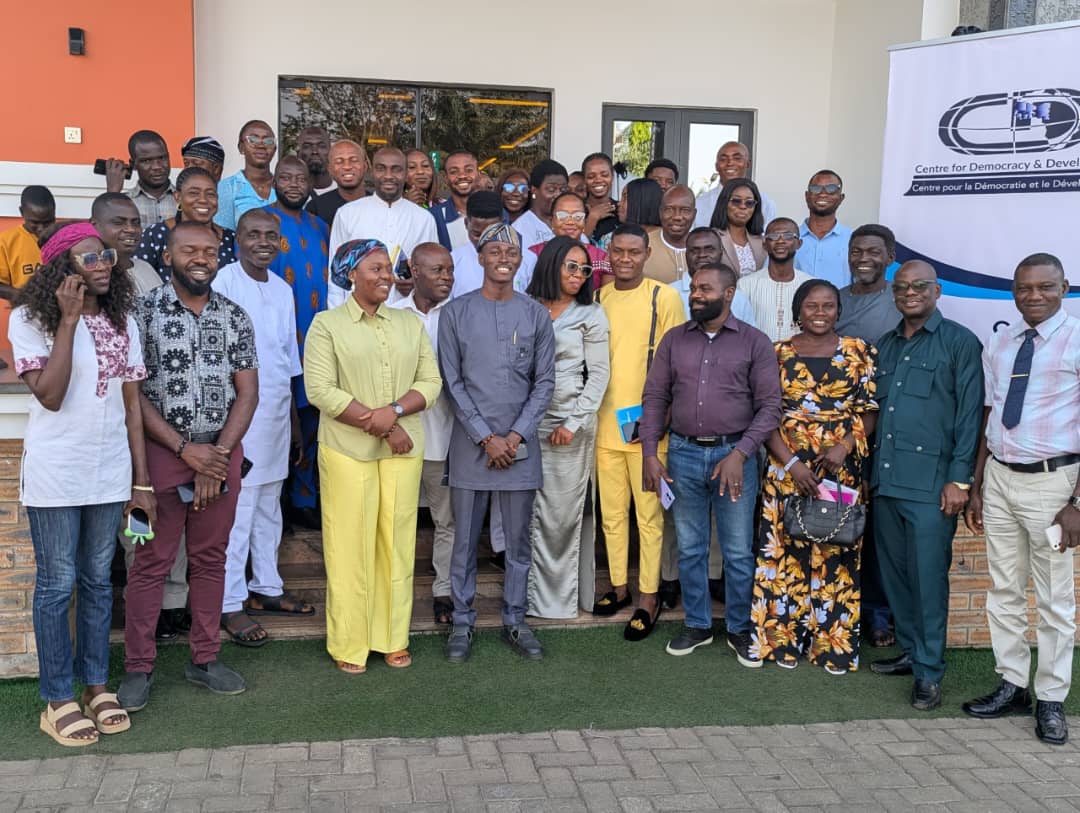
A programme staff member of the Centre for Democracy and Development (CDD West Africa), Mr Raji Olatunji, gave this charge during a two-day capacity-building training for journalists in Benue State organised by his organisation in Makurdi.
The training was on “Fact-Checking, Ethical Reporting and Verification Techniques”, themed “Strengthening Information Literacy and Social Cohesion”.
Mr Olatunji, who facilitated the sessions, said the training was to equip journalists with fact-checking skills as a critical safeguard and panacea against the spread of misinformation, disinformation and malinformation capable of causing violence and social unrest.
The facilitator said the training was taking place in four states including Benue, Kaduna, Katsina and Plateau, adding that the intervention aimed at strengthening information literacy and promoting social cohesion in the states.
He said journalists were deliberately prioritised because of their critical role in shaping the information ecosystem, particularly in an era marked by disinformation.
Other News
According to Mr Olatunji, the project was designed against the backdrop of recurring crises in northern Nigeria, where false information has often been weaponised to incite violence and chaos.
He said strengthening journalists’ capacity in fact-checking and ethical reporting was essential, given their influence as key stakeholders in information management.
He further disclosed that before the training, CDD conducted a community baseline assessment in Obi, Otukpo and Gwer West local government areas of Benue State to understand the grassroots information ecosystem.
The findings, he said, revealed that the media remained one of the most trusted sources of information for the people, underscoring the need to continually build journalists’ professional capacity.
He counselled journalists, saying, “Going forward, whatever information you can correct, do so. Ensure the facts are laid bare as fake news is a slap on the face of journalists as it not only ridicules you but undermines the work you do.”
During the sessions, participants were taken through practical techniques for verifying images, videos, locations and documents. The training examined the concept of information manipulation and disorder, including misinformation, disinformation and malinformation, as well as the principles and processes of fact-checking.
Journalists were also introduced to essential verification tools such as Google Reverse Image Search, TinEye, InVID, YouTube DataViewer, WHOIS Lookup and various fact-checking platforms including CDD FactCheck, Africa Check, Dubawa and FactCheckHub.