Follow Us on Google

By Chinwendu Obienyi
Nigeria’s banking and financial technology sectors may face a new layer of regulation as the House of Representatives considers a bill seeking to establish a National Payment Data Protection and Sovereignty Commission.
The proposed commission would oversee the protection, storage and processing of payment data in Nigeria, potentially creating an additional regulatory body alongside the Central Bank of Nigeria (CBN).
The bill also proposes a minimum fine of N1 billion for financial institutions that fail to keep their main payment data infrastructure in Nigeria. Individuals who transfer sensitive payment information outside the country without approval could face up to 10 years in prison or a minimum fine of N500 million, or both.
Sponsored by Lanre Okunlola, representing Surulere II Federal Constituency of Lagos State, the bill is titled A Bill for an Act to Establish the National Payment Data Protection and Sovereignty Commission.
It seeks to strengthen Nigeria’s control over financial information, protect the country’s payment systems against cyberattacks and reduce reliance on foreign data storage and processing facilities.
If passed into law, the proposal would affect banks, fintech companies, payment service providers, switching companies and other operators in the financial system.
Under Section 9, payment information generated in Nigeria must be stored within the country, while Section 10 requires local payment transactions to be processed through facilities physically located in Nigeria.
This means financial institutions that currently depend on foreign data centres and technology infrastructure for some of their local operations may have to review their arrangements and invest more in Nigerian-based facilities.
Such investments could cover data centres, cloud services, cybersecurity systems and backup facilities to ensure that payment services continue to function during emergencies.
Section 22 proposes a minimum fine of N1 billion for institutions that violate the local data storage requirements, with additional daily penalties for as long as the breach continues.
Other News
Similarly, Section 23 provides for up to 10 years’ imprisonment and a minimum fine of N500 million for anyone who transfers sensitive payment data outside Nigeria without the required approval.
However, the bill does not completely prohibit the transfer of payment data abroad. Section 19 allows such transfers with regulatory approval, provided certain conditions are met.
These include meeting international payment and settlement obligations, protecting national security, putting adequate safeguards in place and obtaining CBN approval.
The provision could mean that financial institutions would need to secure approval from both the CBN and the proposed commission for certain cross-border data transfers.
This is particularly important for banks and payment companies that rely on foreign technology providers and international infrastructure to process transactions, provide cloud services and support other financial operations.
The proposed commission’s responsibilities could also create questions about how its powers would relate to the CBN’s existing authority over Nigeria’s payment system.
The bill classifies payment transaction data as a Strategic National Economic and Security Asset, while payment infrastructure would be treated as Critical National Information Infrastructure.
This would empower the proposed commission to set security standards and ensure that payment systems are protected against cyberattacks, data theft and other disruptions.
While the proposal is aimed at protecting Nigerians’ financial information and strengthening local control of payment infrastructure, its implementation could increase operating costs for financial institutions.
Concerns may also arise over whether Nigeria has enough local data centres and technology infrastructure to support the proposed requirements without disrupting banking and international payment services.
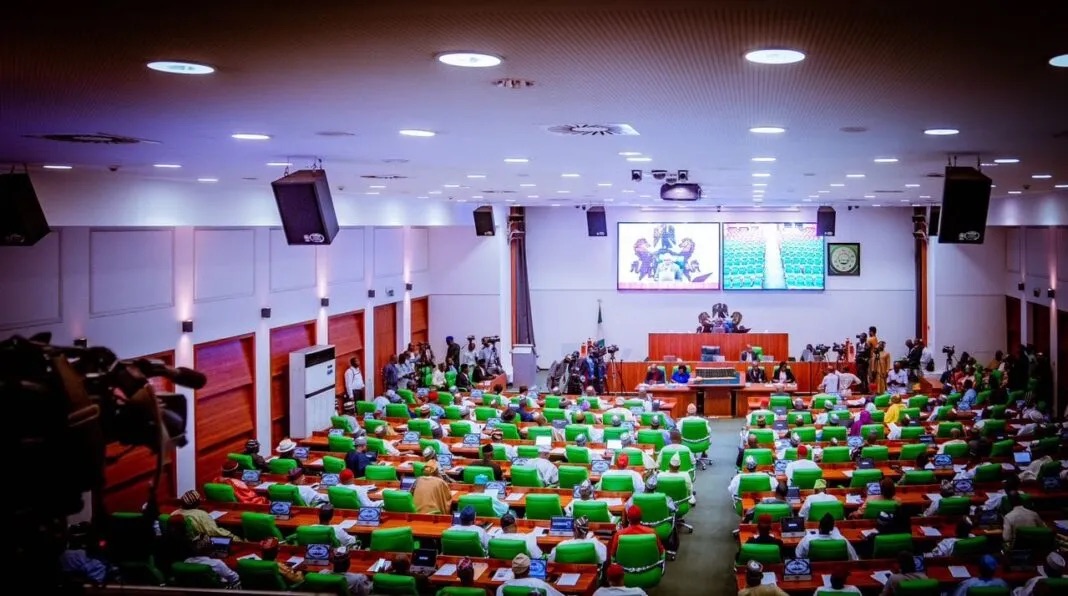
The bill was introduced during plenary at the House of Representatives and is expected to undergo further legislative consideration in the coming weeks.