Follow Us on Google
By Philip Nwosu
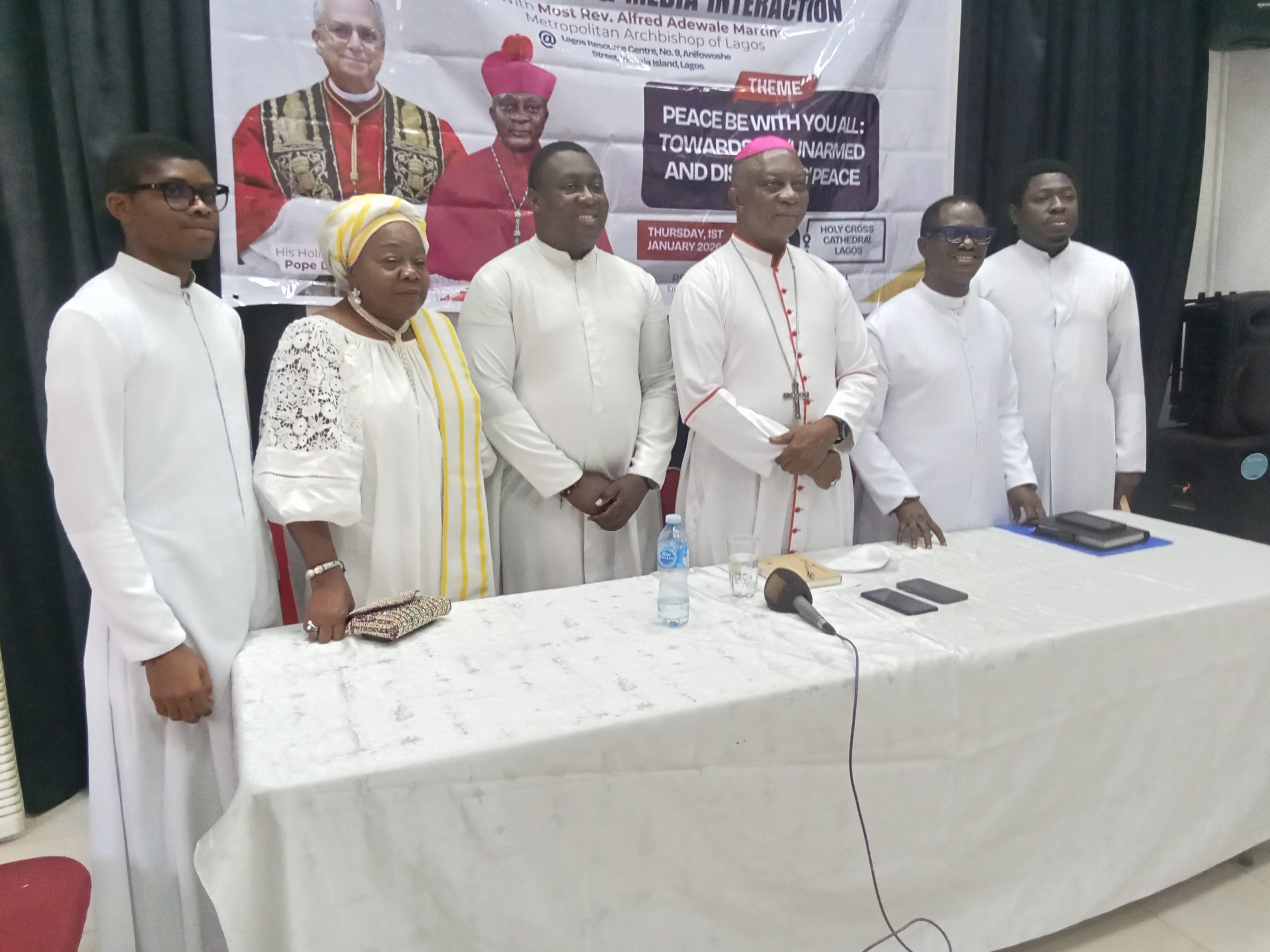
A Catholic Archbishop of Lagos Most Reverend Adewale Martin’s has called on Nigerians to embrace hope, demand accountability from leaders and work collectively towards peace, even amid rising insecurity, economic hardship and religious tensions in the country.
Speaking on during an interaction with journalists to mark the 59th World Day of Peace, the Archbishop reflected on Pope Leo XIV’s first peace message, which urges the world to pursue what he described as an “unarmed and disarming peace.”
According to him, the Pope’s message, issued as his first official communication since assuming office, challenges nations to move away from peace sustained by fear, violence or the accumulation of weapons.
“The peace we are talking about is not a peace that comes from mutual fear of what the other can do, but a deliberate effort to ensure there is no conflict, no disharmony, and that development can take place,” he said.
Relating the papal message to Nigeria’s current realities, the Archbishop lamented the persistent violence across the country, including terrorism, kidnappings and armed banditry.
He acknowledged recent United States military collaboration with Nigeria in targeting terrorist camps, describing the intervention as a wake-up call that has injected fresh urgency into government efforts to address insecurity.
“When issues go beyond the capacities of any country, it becomes necessary to seek help. This collaboration has given another impetus to ensure government really wakes up to the challenges of the time,” he stated.
However, he cautioned that lasting peace cannot be imposed by foreign powers.
“The peace we desire will not be established by the United States or any foreign country. It will be established by us, with whatever help we can get,” he added.
He stressed that Nigeria’s military and security agencies must now intensify “mop-up” operations, warning against overreliance on foreign forces.
The cleric noted reports that terrorists displaced by military action are relocating to other parts of the country, including Benue State, and urged heightened vigilance by local and regional security outfits.
He cited the role of the Amotekun Corps in the South-West as an example of how local security structures can effectively respond to threats, renewing calls for a fresh national conversation on state policing.
Commenting on the controversy surrounding the Tax Reform Act, the Archbishop said disagreements over the authenticity of the law should be resolved transparently by comparing the alleged versions side by side.
Other News
He acknowledged that while the Act contains positive elements—such as tax exemptions for low-income earners and a graduated tax system—public trust will depend largely on how revenues are managed.
“Government must ensure that the funds generated are used judiciously in ways people can see, feel and that make their lives better,” he said.
He warned that Nigerians’ skepticism stems from years of mismanaged public funds, poor infrastructure and declining social services.
Religious Persecution Concerns
The Archbishop also spoke on what he described as a growing sense of Christian persecution in Nigeria, citing factors such as killings in predominantly Christian areas and perceived marginalization in parts of the country.
He referenced Nigeria’s membership of the Organisation of Islamic Cooperation (OIC) as one of the issues that fuel feelings of exclusion among Christians.
“All these put together give Christians a feeling of being persecuted within the country,” he said, while cautioning against allowing the debate to distract from addressing the root causes of insecurity and injustice.
Despite the challenges, the Archbishop urged Nigerians not to give in to despair.
“One thing we must never do again is to give up. Hope is a virtue we must continue to practice,” he said.
He encouraged citizens to consistently demand the fulfillment of electoral promises and to keep national issues “on the front burner,” insisting that peace remains possible if Nigerians remain hopeful, engaged and united.
The World Day of Peace is celebrated annually on January 1 by the Catholic Church to promote peace, justice and reconciliation across the world.