Follow Us on Google
•Call for robust economic framework
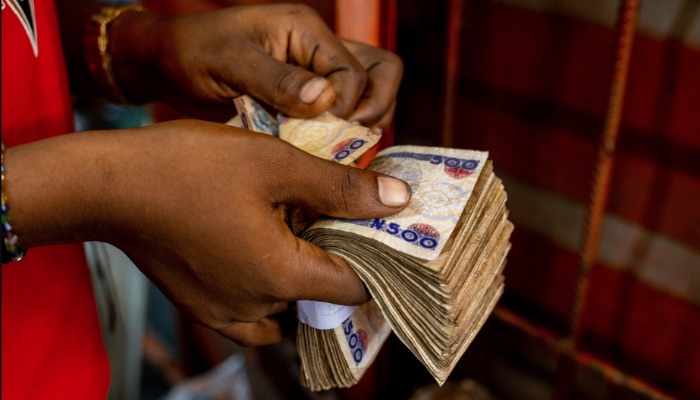
Excessive reliance on cash transactions in Nigeria’s economy has been identified as the major driver of Nigeria’s escalating inflation.
A financial analyst, Charles Iyore, Principal Partner at Dion & Associates Ltd, pitched this view on Sunrise Daily on Channels TV, where discussed the challenges posed by cash-based transactions, highlighting inefficiencies at both federal and state levels.
Iyore emphasised that the over-dependence on cash settlements is a major factor in Nigeria’s inflation struggles, pointing to a deep disconnect between monetary policy and real economic activities.
“We have an economy in which very many people are not part of, it’s like they’re spectators. This exclusion creates distortions,” Iyore noted.
He questioned the effectiveness of cash-based systems in controlling inflation, adding, “How much of the capital is converted into currency transactions? How much of that currency is applied in a manner that doesn’t cause inflation? If every settlement is by cash, moderating prices becomes difficult, leading to high core inflation.”
Iyore called for a more robust monetary framework to address these issues. “A sound monetary system, with effective instrument controls and a treasury that directs growth, is essential. Without these, efforts to stabilize the economy are undermined,” he explained. He also advocated for national planning, arguing that states should operate within a unified framework aligned with national goals to avoid rogue fiscal behavior. “Freedom doesn’t mean there are no boundaries. Each state should operate within a clear playbook aligned with national goals,” Iyore asserted.
Dr. Gbenga Adeoye, Principal Partner at Gbenga Adeoye & Co Ltd, also appeared on the programme, shifting focus to the role of state governments.
He criticised their failure to address critical infrastructure needs and their lack of effective strategies to curb inflation despite receiving substantial federal allocations. “Over the years, when economic crises occur, the federal government gets the blame. Yet, 95% of state governments have not done what they ought to do,” Adeoye argued. He further pointed out that many state governments have the resources to invest in infrastructure comparable to U.S. states, but these opportunities are largely ignored. “Where are the investments in roads, power plants, or industrial hubs? Most state governments are nowhere to be found,” he lamented.
The rising inflation on essential goods, particularly food, which has surged above 40%, has not been mitigated by state policies, Adeoye said. He criticized state spending on politically motivated items, such as luxury SUVs for directors, rather than investing in infrastructure that could alleviate inflation. “Instead of investing in critical infrastructure, states are buying SUVs for directors. This undermines any effort towards non-inflationary spending,” he remarked.
While both experts agreed on the need for non-inflationary spending, they diverged on the solutions. Iyore stressed the importance of centralized economic planning and urged the presidency to set the tone for fiscal discipline in the upcoming 2025 budget. “The presidency must take the lead. He’s the one we’ve entrusted with our mandate,” Iyore asserted.
On the other hand, Adeoye acknowledged the limits of federal influence over state spending, explaining, “States are autonomous entities under the law. While the president can provide direction, governors must implement these principles independently.” He called for stronger accountability mechanisms to ensure states adhere to effective fiscal policies to combat inflation.
In line with efforts to tackle inflation, President Bola Tinubu, during his 2025 budget speech, declared the Federal Government’s commitment to reducing Nigeria’s inflation rate from 34.6% to 15% by the end of 2025. “The 2025 budget projects that inflation will decline significantly from the current 34.6% to 15% by the end of next year,” Tinubu stated, also forecasting an improvement in the exchange rate from N1,700 per dollar to N1,500. He emphasized that these projections were key to stabilizing the economy and ensuring sustainable growth. “Our focus is not just on macroeconomic stability but on creating opportunities for Nigerians to thrive. By enhancing infrastructure and ensuring adequate security, we can unlock the full potential of our economy,” Tinubu added.