Follow Us on Google
From Adanna Nnamani, Abuja
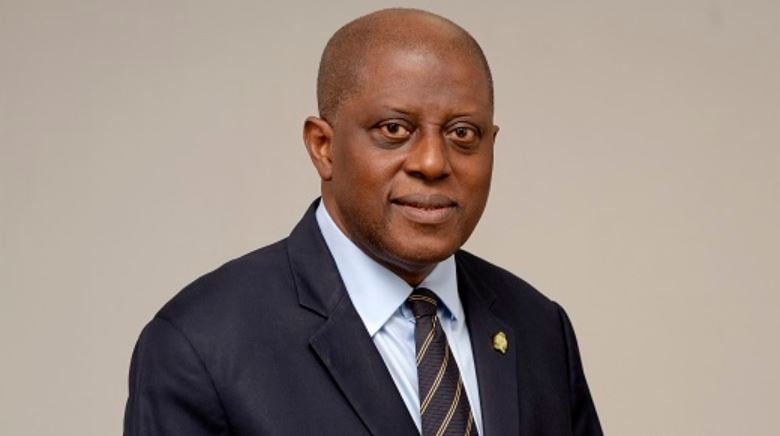
When Olayemi Cardoso assumed office as Governor, Central Bank of Nigeria (CBN) on September 22, 2023, the institution was coming under intense scrutiny over the state of the foreign exchange market, the health of the banking system, monetary policy credibility and the level of confidence in Nigeria’s financial system.
Nearly three years later, the CBN under Cardoso has pursued a broad reform agenda touching virtually every major area of the financial system, from banking and foreign exchange to payments, cybersecurity, consumer protection, financial markets and external reserves.
The reforms have also attracted international recognition.
In March 2026, the Central Bank of Nigeria was named Central Bank of the Year by Central Banking, an international publication covering central banks and financial institutions. The publication cited, among other things, the reversal of unconventional monetary policies, foreign exchange reforms, banking recapitalisation, payments modernisation and improvements in governance and transparency.
But beyond the award and official claims, the reform programme represents a fundamental attempt to reshape the operating framework of Nigeria’s financial system.
Central to the agenda is a simple objective of strengthening the institutions that determine how money moves through the economy and restoring greater confidence in the financial system.
Rebuilding the banks
One of the biggest components of the Cardoso reforms has been the recapitalisation of banks.
On March 28, 2024, the CBN announced new minimum capital requirements for banks, setting the minimum for commercial banks with international authorisation at N500 billion, national banks at N200 billion and regional banks at N50 billion. The CBN said the exercise was designed to make banks stronger, more resilient and better positioned to finance economic growth.
By March 31, 2026, the recapitalisation exercise had reached a major milestone, with 33 banks meeting the revised requirements and raising approximately N4.65 trillion in fresh capital.
Significantly, about 72.55 per cent of the funds were sourced domestically, according to the CBN timeline.
The significance goes beyond the amount of money raised.
Banks sit at the centre of economic activity. They mobilise deposits, finance businesses, support investments and provide credit to households and companies. A stronger capital base therefore gives banks a larger cushion against shocks while potentially allowing them to undertake bigger transactions and support larger projects.
The CBN also moved to strengthen governance around the country’s biggest banks.
In September 2025, it introduced a succession framework for Domestic Systemically Important Banks, or DSIBs. These are banks whose failure or disruption could have significant consequences for the wider financial system.
The framework was designed to ensure that the departure or replacement of a chief executive does not create uncertainty around the institution’s leadership or operations.
In another development, the CBN approved the Bank of Industry’s Non-Interest Banking Window in February 2026, creating additional room for financing based on non-interest principles.
Together, these measures point to a banking-sector reform agenda that is not limited to raising capital but also covers governance, continuity and financial inclusion.
Different approach to FX market
Perhaps no issue has generated as much attention around the CBN since Cardoso took office as the foreign exchange market.
The naira had faced severe pressure, while the gap between official and parallel market rates had become a major source of uncertainty for businesses and investors.
The CBN’s response has been to move towards a more market-driven FX system, improve transparency and address outstanding obligations.
The Bank says it cleared a verified backlog of about $7 billion in foreign exchange obligations, a move it said helped reduce volatility and improve investor confidence. Its reforms page also records an increase in external reserves from $33.6 billion in October 2023 to $37.9 billion by July 2024.
The reform programme continued in 2026.
On May 15, the CBN launched the fourth edition of its Foreign Exchange Manual, providing an updated framework for FX market operations.
The Bank also introduced measures affecting Bureau de Change operators, giving licensed BDCs structured access to foreign exchange through authorised dealer banks. The FX BDC Purchase Tracker was introduced to strengthen monitoring, transparency and compliance.
For the oil industry, a major change came on March 25, 2026, when International Oil Companies were permitted to repatriate 100 per cent of their export proceeds through authorised dealer banks.
The move was aimed at improving the efficiency of the FX market and reducing restrictions around the movement of legitimate export earnings.
The diaspora remittance market also came under greater scrutiny.
New naira-settlement requirements for International Money Transfer Operators were introduced on March 24, 2026, with the stated objective of making remittance flows more transparent and traceable.
For a country that relies heavily on diaspora remittances and oil export earnings for foreign exchange, the changes have potentially significant implications.
The CBN also expanded monitoring of crude oil export proceeds by allocating additional export terminals for closer oversight of the oil and gas export chain.
From cash to digital payments
The other major transformation has been in Nigeria’s payments system.
Nigeria already had one of Africa’s most active digital payments markets before Cardoso’s tenure, but rapid growth brought its own risks, fraud, weak consumer protection, agent abuse, cyber threats and unreliable point-of-sale transactions.
The CBN’s response has been to combine digital expansion with stronger regulation.
In September 2025, the Bank inaugurated the committee for Payments System Vision 2028.
The roadmap was formally launched on June 1, 2026, with emphasis on interoperability, security, inclusion, innovation, trust and collaboration.
The objective is to build a payments environment in which Nigerians can move money across different platforms with greater ease while reducing the risks associated with digital transactions.
The CBN had already revised its agent-banking guidelines in October 2025.
The new rules introduced stronger requirements around consumer protection, agent supervision, transaction controls, geographical identification and sanctions.
That was followed by measures to improve the reliability of PoS transactions, including geo-fencing and dual-connectivity requirements.
The Bank also strengthened instant-payment security.
From July 1, 2026, customers were given greater control over instant-payment preferences and transaction limits, alongside stronger device authentication, identity verification and real-time fraud monitoring.
These reforms address a problem that has become increasingly important as Nigeria becomes more dependent on electronic transactions: the more money that moves digitally, the greater the need to protect the system from fraud and cyberattacks.
The CBN has also said Nigeria’s digital-finance transformation accelerated significantly, with more than 12 million contactless payment cards in circulation and a regulatory sandbox supporting fintech innovators.
Tightening the fight against fraud
The expansion of digital banking has made cybersecurity and financial crime a central concern for regulators.
Under the reform programme, the CBN has strengthened several layers of its anti-fraud architecture.
Other News
On March 10, 2026, new automated standards for anti-money laundering, counter-terrorist financing and counter-proliferation financing were introduced, with emphasis on real-time monitoring and detection of suspicious activities.
Two days later, on March 12, the Bank strengthened its Bank Verification Number and watch-list framework.
The objective is to improve the ability of banks and regulators to identify suspicious accounts and transactions while making identity verification more effective.
On March 30, the CBN deployed a Cybersecurity Self-Assessment Tool to help regulated institutions examine their cybersecurity preparedness and identify weaknesses.
Banks were also directed to strengthen rapid-response mechanisms for electronic fraud, with emphasis on reducing the time required to intervene when suspicious transactions occur.
For customers, the reforms are important because the value of a digital financial system depends not only on speed but also on trust.
The CBN has therefore increasingly sought to make banks responsible for protecting customers while requiring financial institutions to maintain stronger systems for detecting and responding to threats.
Changing the rules around cash
Nigeria’s long-running transition from cash to electronic payments has also been accompanied by changes in cash policy.
In December 2025, the CBN revised its cash policy, introducing new withdrawal thresholds while removing restrictions and charges on cash deposits.
The intention was to make cash management more efficient while encouraging the continued growth of electronic payment channels.
The Bank also intervened in financial advertising.
In November 2025, financial institutions were directed to withdraw misleading or non-compliant advertisements and improve transparency in their communication with customers.
The principle behind the measures is straightforward: customers should be able to understand financial products and the risks attached to them before making decisions.
Modernising the financial markets
The reform programme has also extended beyond commercial banking.
On April 17, 2026, the CBN introduced the Nigerian Overnight Financing Rate, or NOFR, as a transaction-based overnight benchmark.
A benchmark interest rate is important because it provides a reference for pricing financial transactions.
The NOFR is expected to improve price discovery, transparency and monetary-policy transmission while helping financial institutions manage interest-rate risks.
The Bank has also been reviewing the operation of the fixed-income market, including trading and settlement arrangements.
The broader objective is to create a financial market where prices better reflect actual transactions and where monetary policy decisions transmit more effectively into borrowing and investment costs.
The CBN has simultaneously reviewed its discount-window and liquidity-management arrangements.
These measures may appear technical to ordinary Nigerians, but they ultimately affect how banks obtain liquidity, how they price loans and how quickly monetary-policy decisions influence the wider economy.
The reserves story
Perhaps the most visible indicator of the changes in the external sector has been the movement in Nigeria’s foreign reserves.
The CBN has placed greater emphasis on rebuilding external buffers while improving the transparency of the FX market.
In 2026, Nigeria’s external reserves crossed the $50 billion mark, a level the CBN described as the highest in approximately 17 years.
The Bank’s 2025 macroeconomic outlook had projected reserves at about $51.04 billion for 2026, compared with $45.01 billion in 2025. It linked the projected increase to factors including improved conditions in the FX market, higher oil earnings, sovereign borrowing and diaspora remittances.
The CBN has also sought to diversify the composition of the country’s reserve assets.
Locally sourced gold refined to international London Bullion Market Association Good Delivery standards was added to Nigeria’s reserve assets.
The logic is that a country’s reserves do not necessarily have to depend entirely on foreign currency assets. Gold can provide another reserve instrument and diversify the country’s external buffers.
The rise in reserves is particularly important because reserves serve as a buffer against external shocks. They can support confidence in the country’s ability to meet external obligations and provide room for intervention during periods of severe pressure on the foreign exchange market.
The larger picture
Taken together, the Cardoso-era reforms amount to a wide-ranging attempt to rebuild the architecture of Nigeria’s financial system.
Bank recapitalisation has focused on strengthening the institutions that lend money to the economy.
FX reforms have targeted transparency and market efficiency.
Payments reforms have sought to make digital transactions safer and more reliable.
Consumer-protection measures have placed greater emphasis on accountability by financial institutions.
Cybersecurity and anti-money-laundering reforms have responded to the growing sophistication of financial crime.
Financial-market reforms have sought to improve pricing, liquidity and monetary-policy transmission.
And reserve accumulation has provided a larger external buffer.
The changes have not removed all of Nigeria’s economic challenges.
Inflation, the cost of credit, exchange-rate pressures and the financial burden on households and businesses remain important issues. Indeed, Central Banking’s recognition of the CBN in 2026 came against a difficult economic backdrop and was based on the institution’s reform direction and progress rather than a claim that every economic problem had been resolved.
What is clearer is that the CBN under Cardoso has moved aggressively to change the rules and operating framework of the financial system.
The Central Banking award provides an external assessment of that reform programme. Its judges pointed specifically to what they described as a return to policy orthodoxy, monetary discipline, FX-market reform, banking recapitalisation, payments modernisation and governance improvements.
For the CBN, however, the more important test lies beyond awards.
It is whether the reforms can be sustained, whether stronger banks translate into more productive lending, whether a more transparent FX market can support businesses and investors, whether digital finance can expand without exposing customers to greater risks, and whether stronger reserves can provide lasting protection against external shocks.
Those are the measures that will ultimately determine the long-term significance of the Cardoso reforms.
For now, the timeline shows an institution that has spent the period since September 2023 rewriting several of the rules under which Nigeria’s financial system operates, from the capital required by banks to the way foreign exchange is traded, money is transferred, electronic fraud is tackled and the country’s external buffers are managed.