Follow Us on Google

Stakeholders in the real estate sector have acknowledged the need to strengthen capital liquidity for continued growth in the sector.
They viewed that despite increasing resilience, liquidity in the asset class is crucial to unlock further investment, necessitating a deepening of both institutional investors and developers to fully complete and optimise the investment cycle.
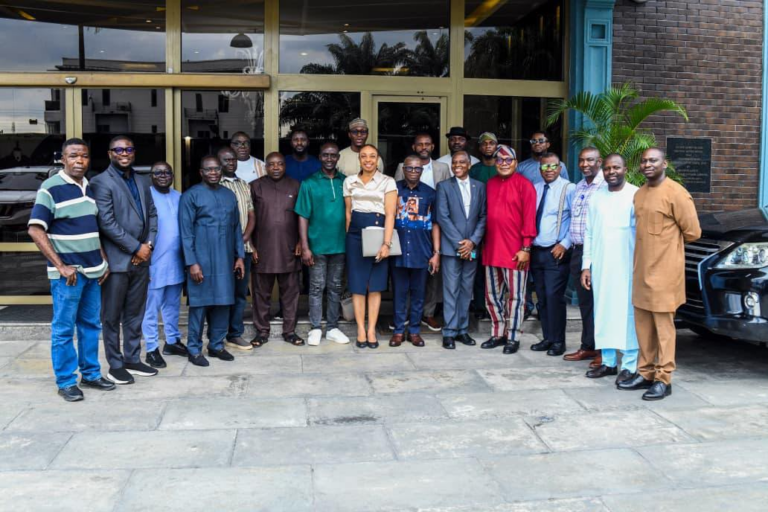
Stakeholders in the real sector made their views at the 9th Edition of the West Africa Property Investment Summit (WAPI) recently, where they agreed that despite the challenges that are bedeviling the sector, the future is bright in Nigeria as there is still a lot to be tapped in the sector.
The stakeholders unanimous in their deliberations agreed that there was hope only if the government can bring its influence to bear on the real estate sector and situate the sector for future success.
The event, which was facilitated by Africa Property Investment (API) Events, saw stakeholders at the summit exuding confidence that the future is bright in Nigeria as there is still a lot to be tapped in the real estate sector and that despite the challenges of funding and investment in the sector, the ever-growing Nigerian population makes the real estate business thrive. In his address, Head of Real Estate for West Africa at Stanbic IBTC, Mr. Tola Akinhanmi, said the ability of the Nigerian real estate market to withstand macro and micro challenges has resulted in persistent growth across the sector and into emerging asset classes.
He said: “The real estate asset class, known for its long-term nature, has proven its resilience over the past five to six years amid various shocks.
“This resilience has allowed the market to diversify and attract new investments from both local and offshore players.”
Despite the increasing resilience, Akinhanmi acknowledged the need to strengthen capital liquidity for continued growth and sophistication in the sector.
“A key impediment to growth remains capital. While we’ve witnessed growth in offshore capital investments over the past decade, recent years have seen somewhat muted activity from a scale perspective. Liquidity in the asset class is crucial to unlocking further investment, necessitating a deepening of both institutional investors and developers to fully complete and optimise the investment cycle.”
Director, Capital Market at JLL, Sandri Pepler, said the government needs to address issues in the management of the pension funds. He said, “I think in terms of local investment, your biggest source of capital is your local pension funds, and if you benchmark Nigerian pension fund activity in commercial property in relation to more developed markets, it is still far behind.
“So, local investment into commercial property in Nigeria requires regulatory changes to reflect best practises in other markets.
“The government needs to develop a real estate investment trust fund to handle large estates, office developments, retail centres, and large industrial distribution centres. The regulatory environment needs to be updated because that would create much-needed liquidity for further development.
“Once someone develops one property, he needs liquidity to do the next development and the bottleneck is always from the local capital perspective.
“From the perspective of foreign direct investment, there are some micro-issues that we are all aware of in Nigeria around foreign currency. And until that is resolved, the broader economic level of commercial real estate investment will not be resolved.”
Temilola Sonola, Nigeria co-lead at the Green Building Market Transformation Programme at the International Finance Corporation (IFC), a subsidiary of the World Bank, said the government needs to consider green buildings to support climate change.
She said, “What we would like to see happen in the Nigerian market when it comes to the built environment is that a lot more of the buildings are built green rather than brown. And we are here to show developers how easy it is to go green and that it is not as expensive as they thin
“In going green, you probably need about three to five percent on top of your capital, rather than 30 percent in some cases. It is simple to build green and we have an app online that you can use to go green for your building. Simply put, it is recertification made easy for our built environment.”
The event, which was facilitated by Africa Property Investment (API), saw stakeholders at the summit exuding confidence that the future is bright in Nigeria as there is still a lot to be tapped in the real estate sector and that despite the challenges of funding and investment in the sector, the ever-growing Nigerian population makes the real estate business thrive.
For clarity, API is the leading platform for the discussion of real estate investment and development in Africa. Through the activities of API, the various conferences, webinars, and executive training workshops held around the continent present stand-alone opportunities to learn about real estate investment in Africa, discuss current trends, partake in insightful debates, and develop valuable relationships.