Follow Us on Google

By Enyeribe Ejiogu
Generally, economic downturns, as being witnessed in Nigeria currently, cause difficulties and create challenges. Purpose-driven and goal-focused organisations as well as individuals take steps to adapt to the emerging opportunities, often re-inventing their sales operations and energising their sales teams.
In this interview, Principal Consultant, Natella Business Academy and Convener, National Sales & Growth Conference, Dr Joseph Mfon, speaks on how global business developments are impacting the sales role. Mfon’s career has spanned over two decades across sales, marketing, business development, strategic management, and executive consulting. Working across multiple industries has provided valuable insights into organisational growth and commercial excellence. Currently, he is focused on helping organisations build high-performing teams, strengthen leadership capabilities, improve sales performance, and achieve sustainable growth through training, consulting, and strategic business development. The conference brings together thought leaders and practitioners to shape the future of business growth in Nigeria and across Africa.
Would you say that the current state of the Nigerian economy is a good “laboratory” for innovative sales initiatives that will enable most industrial sectors to survive and thrive?
Without any doubt, I believe the current Nigerian economy has become one of the greatest testing grounds for innovation, resilience, and strategic business transformation. While many
organisations view the prevailing economic challenges as obstacles, I see them as opportunities to rethink traditional business models and create sustainable competitive advantages.
History has shown that some of the world’s most successful businesses emerged or transformed during periods of economic uncertainty. Difficult environments compel organisations to become more creative, customer-focused, efficient, and innovative.
In today’s Nigeria, businesses can no longer rely on conventional sales methods or assume that yesterday’s strategies will continue to produce tomorrow’s results. Inflation, changing consumer purchasing behaviour, exchange rate fluctuations, rising operational costs, and increased competition have fundamentally altered the business landscape.
Customers are more informed, more selective, and more value-conscious than ever before.
Consequently, organisations must evolve beyond simply selling products or services to creating meaningful customer value.
This environment demands that organisations strengthen their revenue-generation systems by embracing technology, leveraging data, improving the customer experience, diversifying revenue streams, and building agile sales teams that can respond quickly to market changes. Companies that invest in digital transformation, customer intelligence, and strategic market expansion will be better positioned to thrive despite economic headwinds.
Rather than asking, “How difficult is the economy?” business leaders should be asking “How can we redesign our sales systems to remain relevant in this economy?” That shift in mindset is what separates organisations that merely survive from those that continue to grow.
This is one of the reasons the theme of the National Sales & Growth Conference 2.0 (NSGC2), is particularly relevant. The conference is designed to equip business leaders with practical strategies to navigate disruption and transform challenges into opportunities for sustainable growth.
To thrive in the present situation, what should personnel in core sales roles unlearn and then learn to upgrade, boost their skill sets and be fit for purpose?
The role of the salesperson has changed dramatically over the last decade, and the pace of change is accelerating. Sales professionals who continue to rely solely on traditional selling techniques will increasingly struggle to meet customer expectations.
The first thing many salespeople need to unlearn is transactional selling – that is the mindset that success is simply about convincing customers to buy. Today’s customers are looking for trusted advisers, not product pushers. They expect sales professionals to understand their business challenges, provide insights, and recommend solutions that create measurable value. Salespeople must also move away from operating on intuition alone. While experience remains valuable, decisions today should increasingly be supported by customer data, market intelligence, and measurable performance indicators. Equally important is abandoning the belief that learning ends after formal education or product training. Continuous learning has become a professional necessity.
What should sales professionals learn?
First, they need stronger capabilities in consultative and solution selling. Understanding customer needs, asking the right questions, and creating value-driven conversations are now essential. Second, digital competence is no longer optional. Sales teams should understand CRM (customer relationship management systems) sales automation, AI-enabled selling tools, customer analytics, and digital communication platforms. Third, emotional intelligence has become one of the most valuable competencies in sales. Building trust, managing relationships, negotiating effectively, and understanding customer emotions significantly influence buying decisions. Sales professionals should also strengthen their skills in strategic negotiation, customer experience management, business development, account management, and value proposition design.
Finally, adaptability must become part of every salesperson’s DNA. Markets change, customer expectations evolve, technology advances, and competitors innovate. The most successful professionals will be those who embrace learning as a continuous process. At NSGC 2.0, participants will gain practical insights into these evolving competencies and understand how to position themselves for long-term relevance in an increasingly digital and competitive marketplace.
When you look at the Nigerian FMCG market, what new opportunities are you seeing opening up for people with insight and eager to explore?
The Nigerian FMCG sector remains one of the country’s most dynamic industries despite economic pressures. While challenges certainly exist, I believe the opportunities far outweigh the limitations for organisations that understand changing market realities. Consumer behaviour has evolved significantly. Today’s consumers demand affordability, convenience, quality, accessibility, and personalised experiences. Companies that can respond quickly to these changing expectations will gain significant market advantage.
One major opportunity lies in route-to-market innovation. Businesses need to rethink how products reach consumers by integrating traditional distribution channels with modern digital platforms and direct-to-consumer strategies.
Another area is e-commerce and social commerce. Digital platforms continue to reshape purchasing behaviour, creating opportunities for businesses to reach wider audiences at lower customer acquisition costs.
There is also enormous potential in underserved markets, including semi-urban and rural communities, where consumer demand continues to grow. Many businesses remain concentrated in major urban centres, leaving significant growth opportunities untapped.
Last-mile distribution continues to present opportunities for innovation through technology, partnerships, and logistics optimisation. Customer experience is another major differentiator. Beyond competitive pricing, organisations that consistently deliver excellent customer service, reliable product availability, and meaningful engagement will enjoy stronger customer loyalty.
Data analytics also presents significant opportunities. Organisations that understand consumer behaviour through data will make better pricing decisions, optimise inventory, improve promotions, and forecast demand more accurately.
Ultimately, success in FMCG will increasingly belong to organisations that combine innovation, operational excellence, digital capabilities, and customer-centric thinking.
Reflecting on your career, what major success milestones do you remember with joy and a smile?
Looking back, I feel grateful for a career that has allowed me to contribute to organisational growth, leadership development, and business transformation across different sectors. One of my greatest achievements has been helping organisations improve their performance through strategic consulting, sales transformation initiatives, management development, and capacity-building programmes. Seeing businesses become more competitive, watching professionals grow into stronger leaders, has been an incredibly rewarding experience. I also consider the opportunity to mentor young professionals as well as emerging business leaders one of the most fulfilling aspects of my journey. Building people ultimately creates stronger organisations.
Another milestone has been establishing Natella Business Academy as a platform dedicated to developing individuals and organisations through practical learning and executive development
programmes. Perhaps one of the most exciting milestones is the establishment of the National Sales & Growth Conference (NSGC), which is in its second year.
The conference was born out of a simple but powerful vision, to create a national platform where
CEOs, business executives, sales leaders, HR professionals, finance executives, entrepreneurs, policymakers, and industry experts could come together to discuss practical strategies for driving sustainable organisational growth.
The inaugural edition exceeded expectations by bringing together thought leaders committed to sharing practical experiences rather than theoretical concepts.
Today, seeing NSGC evolve into a growing movement focused on revenue growth, leadership excellence, innovation, and organisational transformation gives me great satisfaction.
However, I believe the greatest milestone is still ahead because every achievement creates the responsibility to contribute even more meaningfully to society.
How did you handle the challenges that came along the way?
Every worthwhile journey comes with obstacles, and my career has been no exception. One important lesson I have learned is that challenges are inevitable, but our response determines the outcome.
Whenever I encountered setbacks, I focused on learning rather than complaining. Every difficult experience became an opportunity to improve my thinking, strengthen my leadership, and refine my approach. I also realised early in my career that resilience is not about avoiding failure; it is about refusing to allow failure to define you. Continuous learning has been another important pillar. Markets evolve, industries change, customer expectations shift, and technology advances rapidly. Remaining teachable has enabled me to remain relevant.
Building strong professional relationships has also been invaluable. Success is rarely achieved in isolation. Collaboration, mentorship, partnerships, and trusted networks often provide the support needed to overcome difficult periods.
Faith, discipline, integrity, and consistency have equally shaped my journey. While quick success may attract attention, sustained success is built through years of disciplined execution and commitment to excellence. Today, whenever I encounter challenges, I ask myself one question: “What is this situation teaching me that success alone could never teach?” That perspective has helped transform obstacles into stepping stones.
Last year you initiated the annual sales conference. What key takeaways came out from the first outing? What was the level of attendance and response? What should attendees expect from the second edition?
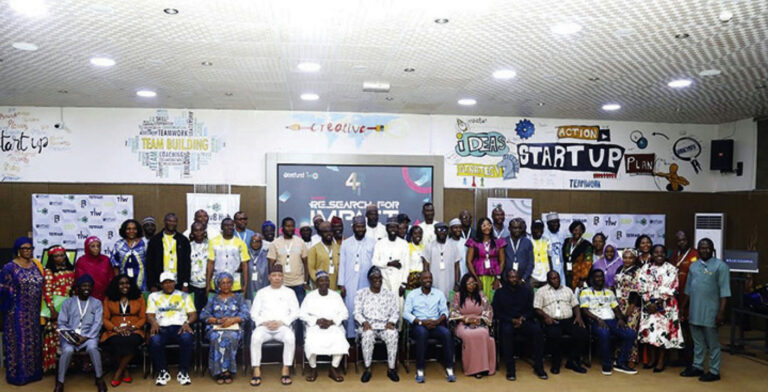
The inaugural National Sales & Growth Conference was a significant milestone not only for Natella Business Academy but the wider business community. Our vision was to create a platform that moved beyond motivational speeches to practical business conversations capable of improving organisational performance.
The response was highly encouraging. We welcomed participants from different industries, including manufacturing, FMCG, financial services, telecommunications, consulting, education, healthcare, and SMEs. Business leaders appreciated the practical case studies, panel discussions, networking opportunities, and actionable strategies shared throughout the conference.
One of the strongest pieces of feedback we received was that participants valued the conference’s practical orientation. They wanted real solutions, practical frameworks, and implementation strategies, and that is exactly what we delivered.
Building on that success, NSGC 2.0 promises to be even bigger, broader, and more impactful. This year’s conference will focus on helping organisations scale revenue while building sustainable growth systems capable of thriving in a disrupted and data-driven economy.
Participants should expect executive keynote sessions, industry-focused panel discussions, specialised masterclasses, practical workshops, and high-level networking opportunities. New additions include the National Sales & Growth Excellence Awards, which will recognise outstanding organisations and leaders demonstrating excellence in sales performance, innovation, customer experience, leadership, and organisational growth.
The conference will also feature expanded discussions around artificial intelligence, digital transformation, customer loyalty, finance, HR, organisational culture, strategy execution, SME scaling, manufacturing, FMCG excellence, and the future of sales in Africa.
Ultimately, NSGC 2.0 is not simply another business event. It is a platform for learning, collaboration, innovation, and practical solutions that enable organisations to scale revenue, strengthen leadership, and sustain growth in an increasingly competitive business environment.