Follow Us on Google
UBA uses global platform to push case for regulatory reform, trade finance and sub-national investment
As world leaders gathered inside the United Nations headquarters for the 81st Session of the United Nations General Assembly (UNGA 81), Nigerian banking giant, United Bank for Africa (UBA), ran a parallel business diplomacy schedule out of its American headquarters at 575 Fifth Avenue, Manhattan.
Led by its Group Managing Director, Oliver Alawuba, the bank spent about a week hosting and attending a string of high-level side events focused on unlocking investment, expanding trade finance and forging new partnerships for Africa.
While the UNGA is primarily a political gathering, it has increasingly become a magnet for business leaders, development financiers and institutional investors. UBA positioned itself firmly in that second crowd.
At the centre of UBA’s engagements was a familiar but potent argument that regulatory fragmentation is choking intra-African trade and capital flows.
Speaking at the Forward Africa Leaders Symposium held at the Harvard Club, Alawuba described Africa as “a big building with 54 rooms and each room has big walls,” in reference to differing central bank regulations, foreign exchange controls and licensing regimes across the continent.
He argued that even for a pan-African bank with presence in 20 African countries and about $30 billion in assets, it remains expensive to move capital across borders.
“When you do business in Africa, you meet multiple regulations… these policies at times are a hindrance to capital,” Alawuba said.
Other News
He also highlighted the challenge of currency risk on exit and the cost of dollar-intermediated trade, citing the example of a tea farmer in Kenya who has to settle a sale to Ghana in US dollars.
The bank said it is pioneering a payment platform with several countries to address the dollar-intermediation problem, a challenge already being tackled by Afreximbank’s Pan-African Payment and Settlement System (PAPSS). However, no details were provided on transaction volumes, payment corridors or timelines for rollout.
On support for small businesses, UBA referenced its $6 billion fund agreed with the African Continental Free Trade Area (AfCFTA), Secretariat to support small and medium-sized enterprises (SMEs). The headline figure is significant, but criteria for disbursement, pricing and accessibility for small cross-border traders were not disclosed at the New York events.
Also, at the Bullish Africa Annual Summit, UBA shifted from policy advocacy to direct investor engagement.
The bank’s pitch was straightforward. It said Africa is a complex but opportunity-rich market, and investors need an intermediary that already understands and operates within that complexity.
Beyond the public panels, two institutional meetings stood out as potentially more consequential.
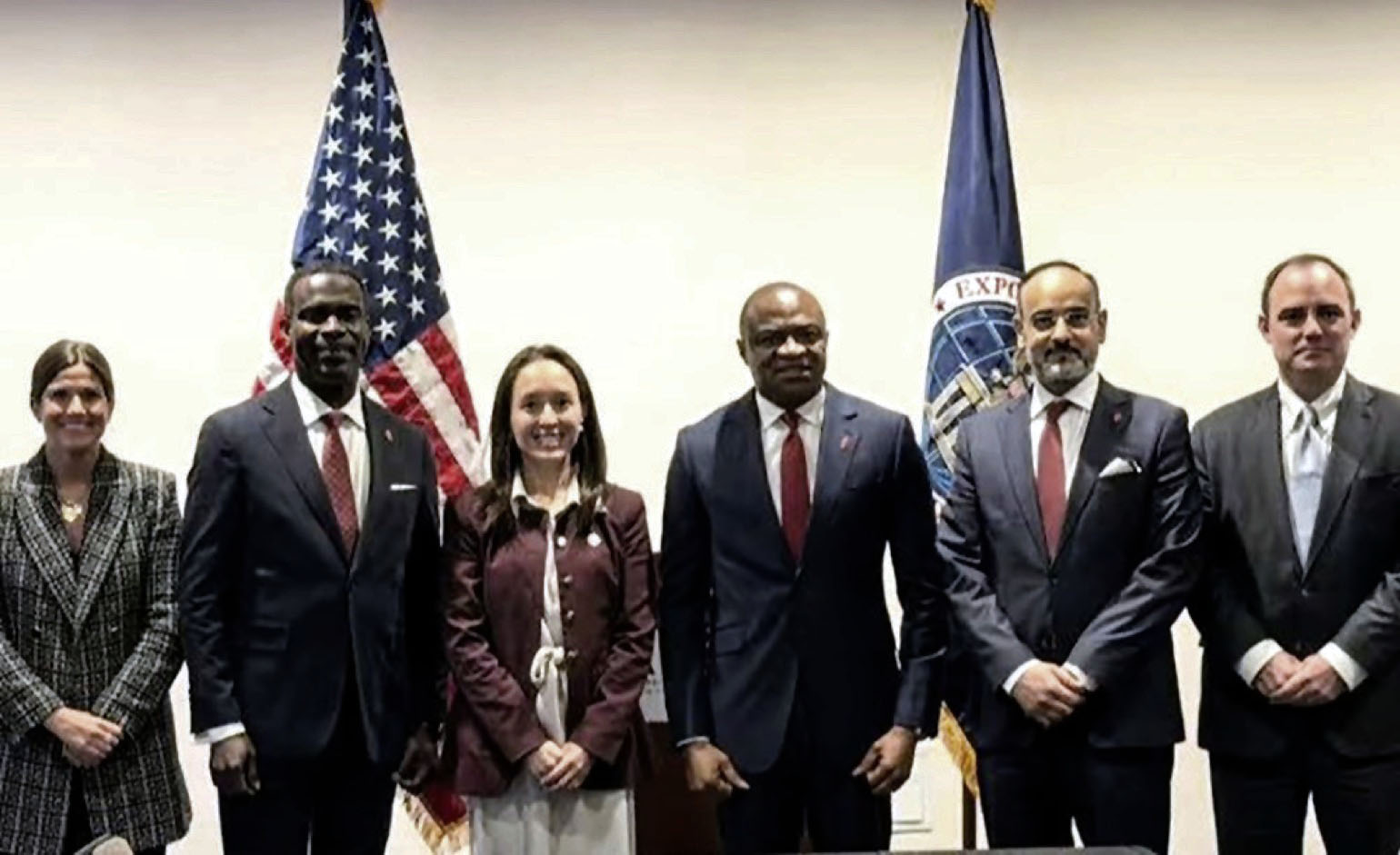
The first was with the Export-Import Bank of the United States, (US EXIM). Discussions here centred on expanding US EXIM support for UBA’s trade finance book, particularly for African importers purchasing American goods, as well as project and structured finance. UBA America already maintains a relationship with the agency. If expanded, the facility could lower funding costs for specific US-Africa trade transactions. It is, however, a targeted trade line rather than a continent-wide solution.
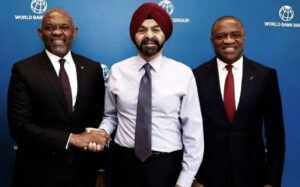
The second was a meeting with World Bank President, Ajay Banga, focused on mobilising private capital for infrastructure, energy, agribusiness and SMEs. No formal commitments or deals were announced. In practice, analysts note that such UNGA meetings are exploratory. The World Bank is seeking credible local partners that can originate bankable deals, while UBA is seeking de-risking instruments that make long-term African projects commercially viable. Progress will depend on post-UNGA follow-up rather than the initial handshake.
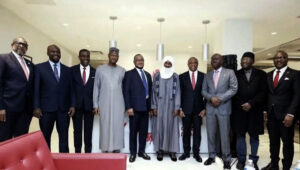
UBA also hosted a high-level reception for prominent Nigerian leaders, including Emir Muhammadu Sanusi II, Governor Babajide Sanwo-Olu of Lagos State, Governor Dikko Radda of Katsina State and Governor Dauda Lawal of Zamfara State, at its New York office.
The stated focus was sub-national investment opportunities in infrastructure, agriculture, health, education and technology, and how states can leverage diaspora capital.
Alawuba used the occasion to present a positive macroeconomic narrative about Nigeria and to reinforce UBA’s visibility as a leading pan-African bank.
The meetings came forward as a strategic and coordinated outing by a systemically important African bank using the gravitational pull of UNGA to push a consistent narrative: that Africa’s capital challenge is structural, not sentimental, and that pan-African banks deserve a seat at the table when the solutions are designed.