Follow Us on Google

Charles Nwaoguji, [email protected]
When President Mohammed Buhari came to power on May 29, 2015 with the hope of repositioning the manufacturing sector he hinted that his administration would be committed to diversifying the economy by focusing more on the non-oil sector.
There were indeed high expectations as the Nigerian business community especially operating in the manufacturing sector jubilated at his coming . They believed the messiah had come to end their woes and empower them to grow the industry. But four years down the line, many are lamenting that much of the expectations in the manufacturing sector were not met by Buhari’s administration. Stakeholder who spoke to Daily Sun, said the manufacturing sub-sector of the economy consisting mostly of medium/small enterprises and artisan handicraft failed to perform due to economic hardship within the four years of this administration.
In reality many local and foreign investors interested in the Nigerian manufacturing businesses like electronics, chemicals, vehicles, wood, and food, etc. were restricted from coming into the industry by stringent regulations, excessive running capital and unskilled labor among other Many past Nigeria governments have shown willingness to promote and support the growth in the manufacturing sector, the irreparable damages caused by past inappropriate government policies and over-reliance on oil for income as such the solutions lies in the economic diversification and reforming the 1972 Indigenisation Decree. In the present Nigerian circumstances, manufacturing sector can still have high export potential because of the huge internal population and the neighboring countries that depend on the little productions from Nigeria for their sustenance.
The textile industry was once very efficient, and source of labor intensive export in the countries, but now a comatose big font of export if the government could guarantee the sector adequate financial resources, management, planning and investment in production technology process with the goal to sustain export.
The National President of Nigerian Chambers of Commerce, Industry, Mines and Agriculture (NACCIMA) , Hajiya Saratu Iya Aliyu said all the problems and limitations that are hindering the growth of the manufacturing and services sector in the country such as poor infrastructure, lack of manufactured goods, unskilled labor, difficulty in sourcing financial resources for businesses, over-reliance on oil revenue, etc. will become things of the past, if the Buhari administration can have hearing ears to hear the advise of the stakeholders.
She believed the present administration have not done bad, but there is room to improve.
Problem of unemployment in Nigeria
It is unfortunately that in-spite of our huge natural endowments; Nigeria ’s economy has been grinded ground due to mismanagement, and misappropriation of funds resulting to over 70% of the masses living below poverty line. We must evolve a private sector driven economy to energize our production base and transform our import driven economy of today into an export oriented and globally competitive one through the acceleration of reforms in the power and transport sectors and provide access to credit for small and medium scale businesses through a functional monetary system that will drive down the high inflation in the system, help naira attain greater value and engender stable single digit bank lending rates. This will create increased investments and growth in the economy and creation of jobs that will absorb the teeming unemployed youths in the country. We must commend President, Dr. Goodluck Ebele Jonathan for frontally attacking the power problem through his power reform road map and I urge him not to relent till the crippling power problem in the country is addressed to provide the energy needed to kick start Nigeria’s industrial take off. Government must hasten the commercialisation and privatisation of public enterprise to give opportunities to investors to revamp our decayed infrastructures and create jobs for our army of unemployed youths.
Furthermore, government must cut down on high public spending to save funds for development and job creation efforts.
Infrastructure deficit
Nations in the throes of development have always been able to develop their infrastructure through public private partnership arrangement as variously been canvassed by the private sector. Government must also hasten constitutional and institutional reforms to remove hiccups to businesses, like the obnoxious 1960’s Railway Act that makes the sector whole concern of the Federal Government, denying investors the opportunity to revamp the sector. The National Assembly should hasten the review of the railway act and others like it to help open up our public infrastructure to private sector participation for increased efficiency and effectiveness. Without adequate infrastructure, our hope for a rapid industrial take-off and our vision 2020 will be dashed. Government should also ensure the availability of venture capital in the system through a functional monetary system. Availability of venture capital in the system may even help private sector investors to begin to see our infrastructure deficit as investment opportunities to help revamp our run down infrastructure.
However, we must commend the Buhari administration for its planned privatization of our coal mining concerns, PHCN to help bring in the private sector to increase our power generation efforts. Also the administration’s foray into alternative energy development, must be lauded, this will provide cheaper energy to the people and help address the bondage of gas powered power plants that have been the bane of electric power supply initiatives in the country.
High cost of funds has militated against industrial growth in Nigerian
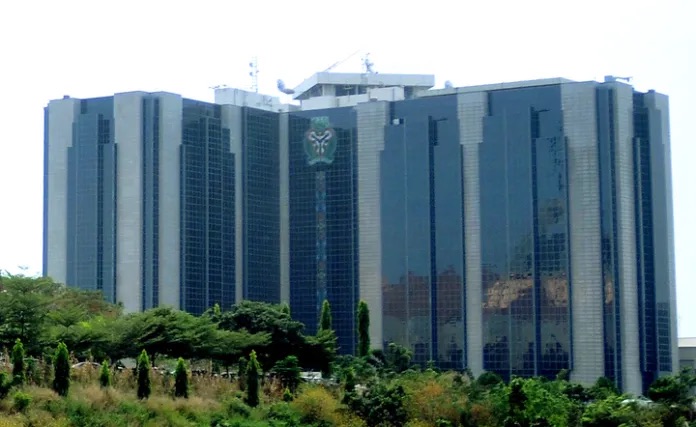
Rising inflationary trend is most persistent threat to Nigeria’s growing economy as it has resulted to high cost of funds. But the unfortunate thing is that the Central Bank of Nigeria CBN has at its disposal the instruments to lower the inflation that has risen to over 13 per cent, to a single low digit.
The apex bank should control price modulation activities in the monetary system which is the apex bank’s ability to moderate inflation, enthrone stable interest and exchange rates, which will create a conducive investment climate for long-term growth and development as contained in the CBN Act 2007. When this is done, there will be venture capital in the system for investors to use to invest and expand their businesses. Furthermore, government must find ways to cut down on our rising debt profile.