Follow Us on Google
From Ndubuisi Orji, Abuja
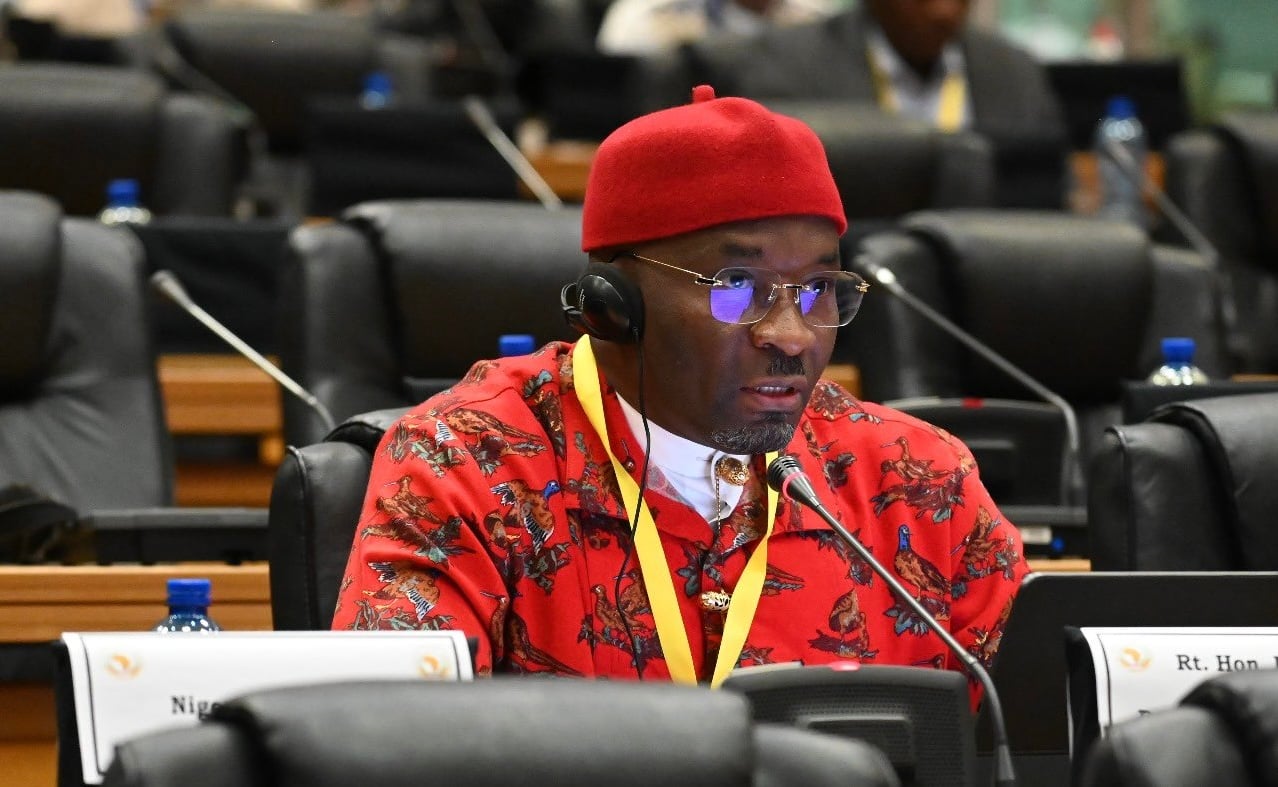
The Deputy Speaker of the House of Representatives, Benjamin Kalu, has called for deliberate “co-communication” between Nigeria and the European Union, as well as the adoption of near-shoring models, so as to change negative global narratives and boost investor confidence in Nigeria.
Kalu, according to a statement by his Chief Press Secretary, Levinus Nwabughiogu, made the call during an interactive session with European Union country ambassadors in Nigeria, led by the EU Ambassador to Nigeria and ECOWAS, Gautier Mignot, in Abuja.
The Deputy Speaker, while noting that the challenge is mainly about how Nigeria’s story is told and understood abroad, stated that there is a communication gap between Nigeria and her European counterparts.
“The investors’ confidence should be prioritized with regards to coming in to do business in Nigeria. The narrative, most times, does not reflect the actual situation in our country. You have lived here for a while. Nobody attacked you on the road. You moved freely, but the report that you have out there is different from the reality here.
“Sometimes, we handle our issues in a way that frightens outsiders, and also there is no deliberate effort by European journalists, for example, to come in to find out for themselves, not hearsay, but critically analysing the true position. So, we are not co-communicating. There is no co-communication between Nigeria and the European Union. We need to change our narrative”, he stated.
Kalu implored the European countries to adopt the concept of “near-shoring,” describing it as a model where technology and finance are brought closer to raw materials to create shared prosperity.
According to him, “In tourism, we are bundling it now, I must also mention the concept of near-shoring. As you know, this is where technology and finance are brought closer to raw materials. You have the finance and the technology. We have the raw materials, the metals and agro products. We have it.
“Why should my cocoa farm remain a cocoa farm? Can it become a chocolate factory? Because near-shoring says: bring your technology and I will bring my farm, so that we both benefit.”
The Deputy Speaker posited that leveraging Nigeria’s natural resources through near-shoring partnerships with EU firms would reduce export of raw commodities, create jobs and discourage youth migration and improve the balance of trade for both sides.
He revealed that the government is already working to expand Nigeria’s tourism assets and investment opportunities in a more coordinated way to attract long-term EU partnerships.
The session, which featured question-and-answer segment, with the diplomats raising concerns about Nigeria’s tourism assets, promotion of its image abroad and business environment, is part of an ongoing parliamentary diplomacy by the Deputy Speaker, in his capacity as Chairman of the House of Constitution Review Committee, to deepen discourse on key proposed amendments.