Follow Us on Google

…N-HYPADEC tiller machines, planters reduce farmers’ exposure to attacks and costs
Fom Jude Dangwam, Jos
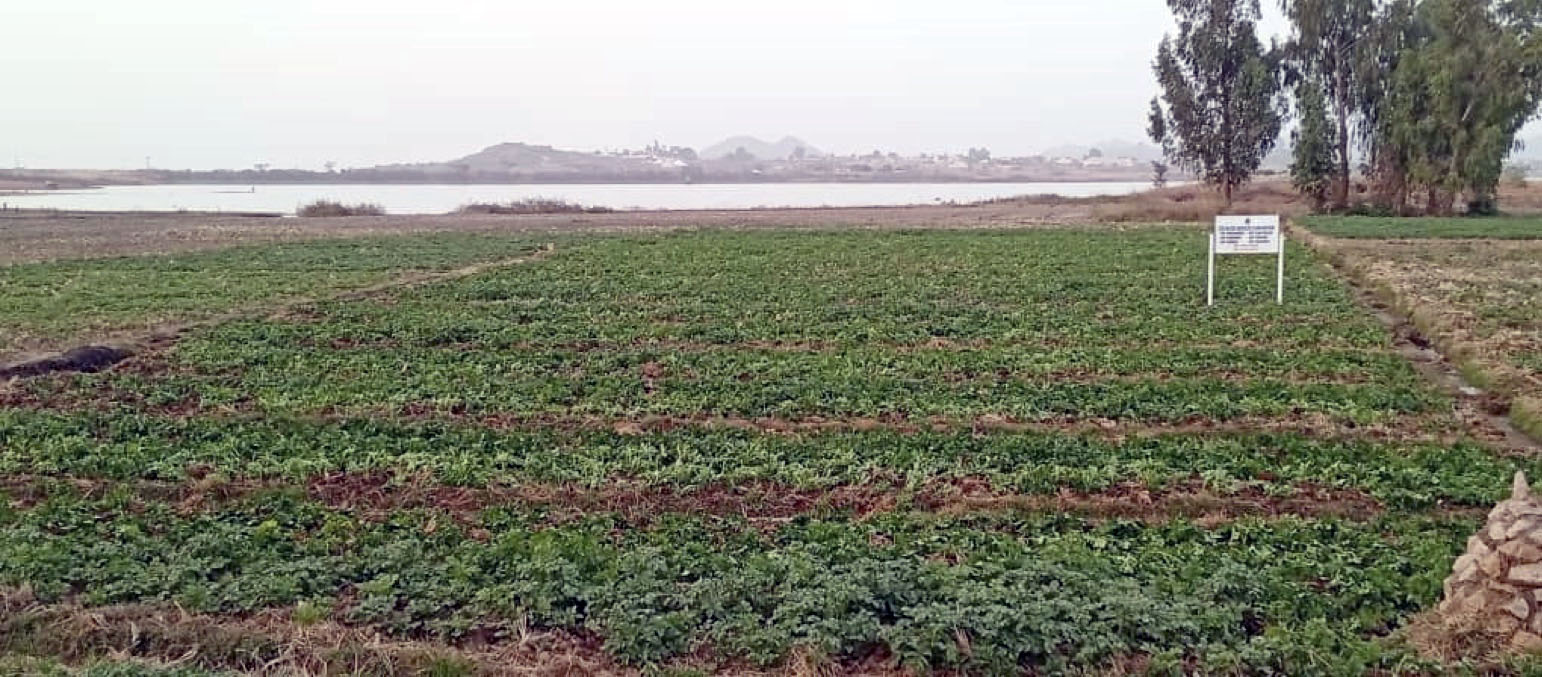
Farmers in Plateau State play a significant role in Nigeria’s food security, but across several communities, returning to the fields is no longer simply part of the annual farming cycle. For many farmers, it has become a calculated risk, one that weighs the need to produce food against the fear of attacks.
Years of attacks have claimed lives, displaced families and disrupted farming, forcing communities to confront a difficult question of how can they produce food when farming itself can expose them to danger?
Some survivors have turned to other means of livelihoods, including artisanal mining, to earn quicker incomes. That shift has reduced the agricultural labour force, particularly among young people, leaving farmers to contend with both labour shortages and insecurity.
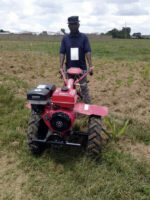
Against this backdrop, the National Hydroelectric Power Producing Areas Development Commission (N-HYPADEC) has deployed small-scale mechanisation equipment to farmers in Plateau State. The intervention includes power tillers and planting machines distributed to smallholder farmers’ in communities hosting N-HYPADEC facilities.
This year alone, the Commission has distributed about 100 machines, ranging from tillers to planters in the state. And for beneficiaries such as Pastor Daniel Evi, the intervention has reduced farming costs and the amount of time spent in exposed locations.
“I don’t know how to explain how important these N-HYPADEC machines are to us. The labour of 2-10 people or above, these machines have addressed it for us. I must say that this innovation and intervention is very, very helpful to us, smaller farmers, sincerely,” Evi said.
He said the machines has changed the length of time farmers remained on their farms as it used to be over the years, to also keep vigilance on their communities.
“Farmers now go to farms and come back early not exhausted as it used to be and even go on security patrol of our communities to prevent any attack from these bandits. We have had several incidences where our people will be cultivating their farms and they came under attack by these armed bandits, especially farms that are far away from community settlement in this Bassa local government area of the state.
“The machines have addressed the exposure of our people to attacks. Before now, our people go to the farm from 7am to 5pm or 6pm. But if the farm is closer to the house, they will come back around 7pm. But with the machines, a large portion of a farm can be cultivated in three hours.”
According to Pastor Avi, the machines have also provided an affordable alternative to conventional tractors by smaller holders farmers whose financial capacity is very low.
“The hand tiller machines have also helped our farmers who don’t have money to hire a tractor for their farms. The machine was given to our community, so we are mindful of the issue of maintenance.
“So, it has been made in such a way that if you want to hire it, you pay N3,000 per hour. This is what we use for maintenance. So, if you compare it with hiring a tractor at the cost of N25,000, you will see how many of our farmers can get that money?
“If you’re to put manual labour also on the farm, each person is paid N2,500, starting from 8-12 noon. Sometimes they will leave by 11am and you have to feed them. Those who cultivated small portions of farmland last year have increased their farm size this year because of this machine,” he shared.
Saf Manguna, who is the Acting President of Bokkos Traditional Council, HRH Lawrence Aizat, said farmers in his area had experienced repeated attacks by Fulani herders while working on their farms, but the machines have reduced the time they spent in the fields considered unsafe for farmers.
“Sincerely, we have had series of attacks on our people while ploughing their farms, particularly from the Fulani people. And this is because our people use manual labour, that is, cultivating with their hands.
“The machines have addressed issues of labour and has also helped our farmers not to stay for long on the farms again and become a target by these Fulani people,” he said.
The monarch shared his experience while deploying the machine during this year’s rainy season. “I work with this machine in this rainy season and it works for me very well. Before now, if you hire many people to the farm using manual labour, they will struggle to cultivate half a hectare. But with this machine now, it cultivates over a hectare in a day.
“We are grateful to government for considering us, the smallholder farmers, in ensuring that we contribute to food security in this nation. I want to also thank the governors that embraced this agricultural revolution and domesticating them in their state, especially in Plateau State.”
However, Saf said there were limitations, particularly in Bokkos, where some farmlands have tougher soil that required higher capacity of the tiller machines.
“The soil in Bokkos is very tough for the machine, but it works perfectly on dry season farming areas. You know, the biggest farms are not within the dry season areas.
“So, I will only appeal that the government should increase the capacity of the machine. If they increase the capacity, it will handle the toughest soil and our people will be very happy. In fact, we will have more agricultural production in the state,” he assured
For Solomon Manguna, also from Bokkos local government area of the state, the intervention has made a significant impact in attracting young people back to the farms having abandoned agriculture for mining.
“The N-HYPADEC machines are of great importance to us. They have made our work very easy and seamless now, unlike before. Now young people who had lost interest in farming are now taking advantage of the innovation as great farmers, contributing to their economic growth and the food security of the country too,” Manguna stated
He noted that the mini-mechanised farming had changed the amount of time farmers needed to spend in the fields.
“These tiller machines and planters have not only made our farm work easier but have also helped reduce our exposure to attacks by Fulani militias. Despite the smaller farm sizes we have, the work these machines do would ordinarily take us several days to complete by manual labour.
“So, the longer you stay on the farm, the greater the likelihood of being exposed to attacks by these Fulani people. But as it is, you go to the farm, deploy this machine, and a field that would take many days to complete using manual labour can be finished in one day,” he stated.
Other News
For smallholder farmers who cannot afford conventional tractors, the machines have opened a more affordable route to mechanisation.
“As smallholder farmers, we don’t have the financial strength to hire tractors. This has addressed our pains. We know that our farm sizes are smaller, but whenever you aggregate what we produce as smallholder farmers, you will see that we contribute a lot to the country’s food security. So, mechanised farming at this level is very important to us,” he affirmed
The challenges of safety and labour gap in Plateau reflects the wider concerns about the place of smallholder agriculture amid insecurity, changing livelihoods and declining interest in farming among young people is critical to be overlooked.
According to a research by the Food and Agriculture Organization (FAO) of the United Nations shows that smallholder farmers produce around a third of the world’s food. Five out of every six farms globally are smaller than two hectares, collectively operating about 12 per cent of agricultural land while producing roughly 35 per cent of the world’s food.
In Plateau, stakeholders said the loss of agricultural labour to other economic activities is making mechanisation increasingly important. The question is whether such interventions can be sustained and expanded alongside improved access to land, security, inputs, markets and affordable financing.
For farmers in the state, the machines have offered an immediate gain: the ability to complete in a day work that once required several days of manual labour.
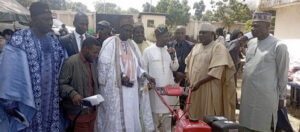
The Director of Planning and Statistics, N-HYPADEC, Pam Jidauna Davou, who represented the Commission’s managing director during the nationwide distribution exercise across the 10 N-HYPADEC states, said the agency was being deliberate about interventions aimed at addressing food security.
He said the Commission had undertaken several interventions in Plateau State, including youth empowerment and healthcare support, as well as measures aimed at improving security and the welfare of affected communities.
“As we hand over these farming machines to farmers, they should be handled judiciously. The state government must keep an eye on them to ensure proper use of the machines,” he cautioned.
The latest intervention builds on the Commission’s earlier distribution of power tillers to farmers in Plateau State.
In March 2026, 55 planting machines were presented to smallholder farmers in Jos as part of N-HYPADEC’s effort to expand agricultural production and support the federal government’s food-security drive.
The beneficiaries were drawn from Bassa, Barkin-Ladi and Bokko local government areas, which are the three Plateau LGAs hosting N-HYPADEC facilities.
Representing the Managing Director of N-HYPADEC, Abubakar Yelwa, the Deputy Director, Finance and Administration, Mrs Ruth Essien, said the intervention was designed to address some of the practical difficulties confronting smallholder farmers.
According to Yelwa, power tillers had earlier been distributed to farmers in the three LGAs in March 2026 as the foundation for safe farming by smallholders farmers in the state.
“In March 2026, power tillers were distributed to farmers across the three LGAs of Plateau that are hosting N-HYPADEC facilities.
“Today, we are here again to distribute these planters to farmers across the three LGAs. This is to boost farming activities and food security in the country,” he said.
Yelwa explained that the intervention was intended to ease planting, reduce labour requirements and increase productivity and safety of farmers in the affected communities.
Traditional leaders in the beneficiary communities described the intervention as an important boost to rural agriculture.
The Da Gwom Rwei of Barkin-Ladi, His Royal Highness Da Edward Bot, commended N-HYPADEC for its sustained interventions in host communities.
He said the commission’s support extended beyond agriculture, recalling the renovation of a Police camp and the commissioning of a Mobile barracks at Gashish.
“I sincerely want to appreciate this organisation for what they have been doing in Plateau. Last year, they renovated the police camp and commissioned a mobile barracks at Gashish, aside from the many other things they have been doing for us in Plateau State,” he stated.
Da Bot also linked the commission’s activities to electricity and economic development in his domain hosting the famous Nesco power plant in the state.
“Without light, the economy of this nation cannot move forward, and this organisation, N-HYPADEC has been at the forefront of providing us with electricity through NESCO, situated in Barkin-Ladi.
“Today, our communities are also benefiting from this empowerment of smallholder farmers through tiller machines. I want to thank you immensely,” he stated.
The monarch urged beneficiaries to protect the equipment and ensure that the intervention translated into tangible benefits.
“For those who are beneficiaries of this intervention, I want you to make good use of it and avoid any rancour,” he charged them.
The Plateau State Ministry of Agriculture described the intervention as a significant step towards improving agricultural productivity. The Director of Mechanisation in the ministry, Mr Yohanna Danladi, said the state government was working to complement federal interventions.
“If anybody benefited from this intervention, it is Plateau State that benefited. This will enhance the productivity of the farmers and increase their income too,” he said.
The state government has also identified smaller mechanised equipment as part of its strategy to strengthen smallholder agriculture.
Governor Caleb Mutfwang recently disclosed plans to engage an indigenous company to produce about 2,000 hand-tiller machines for farmers, with the broader objective of improving agricultural production for local needs and potential export opportunities.
For Plateau’s farmers, the machines may be small compared with conventional tractors. But where labour is scarce, resources are limited and security remains a concern, their impact is measured in hours saved, hectares cultivated and the ability to complete farm work and return home safely.