Follow Us on Google
During the commemoration of this year’s World Menstrual Hygiene Day, some individuals, groups and other stakeholders called on Nigerians to break the silence around menstruation. In a new documentary film by ADANSONIA Foundation, the group canvassed more open conversations around menstruation in the country. Speaking at a children’s event in Lagos, the film’s creator and director, Imo Eboh, explained that the project was inspired by the persistent shame and silence that still surround menstruation in many homes, schools and communities.
“We made this because so many kids still think periods are dirty or shameful. We are creating a period-friendly world through the voices of these young girls for all young people of the world, male and female. Everyone should watch it,” Eboh stated.
Similarly, the Federal Capital Territory (FCT) chapter of the Nigerian Association of Women Journalists (NAWOJ), has made a case for increased awareness on menstrual hygiene, improved access to sanitary products and the elimination of stigma surrounding menstruation, especially among women and girls in underserved communities. NAWOJ stated this in a message to commemorate the 2026 World Menstrual Hygiene Day, which is marked annually on May 28. It also pointed out that menstrual health remains a critical issue affecting the dignity, confidence, education and overall wellbeing of millions of women and girls across the country. The association argued that many girls still face discrimination, shame and limited access to sanitary materials because of poverty, cultural taboos and inadequate awareness.
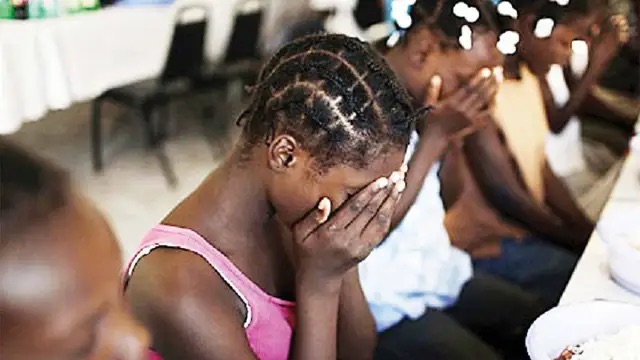
Also, The Children’s Empowerment Fund (CEF) had in an outreach programme organised to mark the day at the Girls Correction Centre, Idi-Araba, Lagos, promoted menstrual hygiene awareness and how to improve access to sanitary products for underserved girls across the country. The organisation called on the government to pay greater attention to period poverty in Nigeria by collaborating with non-governmental organisations to provide free sanitary materials for girls.
As part of activities to mark the Day, Anambra State First Lady, Mrs Nonye Soludo, has established 350 pad banks in the state public schools and also distributed 25,000 sanitary pads to schoolgirls in the state. Mrs Soludo said that menstruation is a natural part of life and not a curse, stressing that it is not something any girl should be ashamed of. Regrettably, she said that across many communities, countless girls still suffer in silence due to stigma, poor hygiene, lack of education and inadequate sanitary materials.
Other News
The theme of this year’s World Menstrual Hygiene Day, “Together for a #PeriodFriendlyWorld,” anchors the long-term, global movement to end period stigma and ensure that menstruation never acts as a barrier to education, health, or dignity. It focuses on five primary goals: social acceptance, education, product access, supportive infrastructure and medical care. Observed annually since 2014 and coordinated by WASH United, with support from organisations including the UN Children’s Fund (UNICEF), Menstrual Day aims to raise awareness of the challenges many women and girls face in managing menstrual safety and with dignity. The annual campaign encourages action to address stigma, improve access to menstruation products and information, and strengthen water sanitation and hygiene services.
According to World Bank data, over 300 million people are menstruating daily worldwide, but an estimated 500 million lack adequate facilities for menstrual hygiene management. It further says that poor access to products, water, and sanitation—combined with persistent stigma and gender inequality—leads to restricted mobility, missed schooling and severe health risks. UNICEF says that every month, roughly 1.8billion people menstruate, accounting for about 26 per cent of the global population.
The reproductive Health Supplies Coalition says that in low and middle-income countries, nearly 78 per cent of menstruators use purpose-made products (pads, tampons, cups), while about 22 per cent still rely on non-purpose-made alternatives like cloth and cotton wool. The World Bank Blogs noted that in some less-resourced regions, over 10 per cent of women completely lack access to basic sanitary items or proper WASH (Water Sanitation and Hygiene) facilities.
In 2024, The World Health Organisation (WHO) said that around the world, menstruation health and hygiene needs were being overlooked due to limited access to information, education, products and services, as well as inadequate facilities and inequalities. According to WHO, globally, only two out of five schools (39 per cent) provide menstrual health education.
Due to the importance of menstrual hygiene in the overall wellbeing of women and girls, we call on the federal and state governments to pay more attention to menstrual hygiene and create more awareness on it. All tiers of government should open more conversations on how to enhance the menstrual hygiene of women and girls in the country. Government should provide pad banks in schools and invest so much on water sanitation and hygiene facilities across the country. There should be menstrual health education in Nigerian schools.