Follow Us on Google
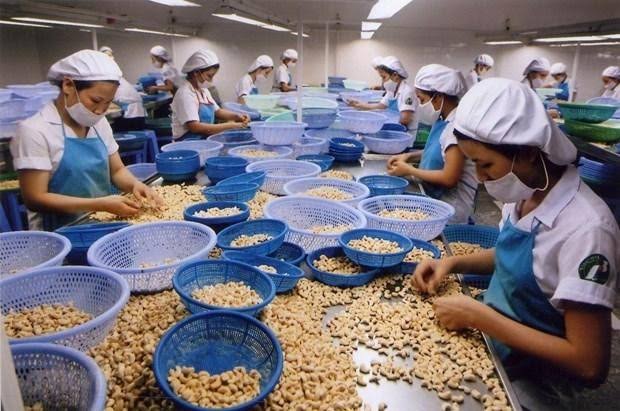
Nigerian farmers have moved to reposition the nation’s economy with massive production of cashew and also become its largest producer in the world. The farmers, under the auspices of the National Cashew Association of Nigeria (NCAN), have targeted to produce 2million metric tonnes of cashew in 2030. Consequently, NCAN has commenced a nationwide cashew nursery initiative to distribute one million high-yield seedlings to its members.
The initiative would inject N7.2 trillion into the economy. Therefore, the government should encourage NCAN to achieve the lofty objective. It will also help us to maximize our agricultural potential. Undoubtedly, Nigeria after oil will rely heavily on agriculture and manufacturing. We urge the state governments to key into the unfolding agricultural revolution by producing crops and other produce they have comparative advantage.
Instructively, Nigeria’s cashew industry has achieved a steady 10 per cent annual production growth over the past decade, according to the Nigerian Export Promotion Council (NEPC). Nigeria is rated the third largest highest producer of cashew in Africa and sixth in the world. Between 2011 and 2021, the production of cashew nuts in the country increased almost eight-fold from 30,000 tonnes in 1990 to 240,000 tonnes. Before then, production was relatively static at 25,000 tonnes over a 25-year period from 1965.
According to available statistics, Nigeria’s total cashew export value in 2023 was $351,647,140, and the total export quantity in the same year was put at 468,601,000 kg, the top export destinations in 2023 being Vietnam: $243,050,740 (249,353,000 kg), India: $77,976,150 (137,664,000 kg), United States: $7,031,770 (1,417,790 kg), Netherlands: $3,941,520 (491,203 kg), and Germany: $3,905,240 (703,389 kg).
Nigeria primarily exports raw cashew nuts, which are processed into various consumer products by other countries. The recent increment in the volume of cashew production is an indication that Nigeria has realised the economic value of the fruit. It is important that cashew production be scaled up in order to reclaim the country’s global leadership in cashew nut. Just like in palm oil production, Nigeria relinquished its leadership in cashew decades ago with much emphasis on crude oil exports.
The move to reposition Nigeria among leading global exporters of cashew nuts is welcome. We urge the cashew framers to deploy technology in cashew production by relying much on high-yield seedlings. Fortunately, we have favouritie soil and climate to grow the cash crop. The cashew growing belt regions in the country should scale up its production.
Other News
While the dominant cultivar species in the country take 4–5 years to begin yielding fruits, the hybrid varieties take 2-3 years to reach full maturity. At the moment, NCAN has been distributing the high quality, globally accepted Ogbomosho cashew variety to cashew farmers nationwide to make for uniformity. Though standardization is important, we should not neglect foreign varieties.
We enjoin the states in the cashew growing belt to support its massive production. With adequate support, NCAN can produce 2million metric tons between 2025 and 2029. The National President of NCAN, Ojo Ajanaku, said its latest initiative had led to the delivery of over 120,000 seedlings despite limited, external financial support to Kogi, Benue, Edo, and Enugu state farmers. The effort by ‘Beyond Farming Collective,’ which sup¬ported the production of 45,000 seedlings nationwide, should be emulated to enable NCAN surpass its target of distributing one million seedlings in the first phase.
Revamping the cashew sector should not be left to the farmers alone. Government at all levels and development partners should factor cashew production in their agriculture development plans. High-yield cashew seedlings should be made available at discounted rates to all cashew farmers in the country.
The massive cashew production will enhance our non-oil exports and create more jobs and enhance our food security. Let cashew farming be made attractive to the youths. Nigeria currently produces about 580,000 metric tons of cashew nuts annually, which approximately injects N3.7billion into the economy. Scaling up cashew production to one million tonnes may likely contribute N7.2 trillion to the econo¬my. Cashew farmers should exploit the abundant opportunities in processing cashew products rather than the wholesale concentration on exporting cashew fruits and nuts. Those who import our raw cashew nuts, process them before selling to end users, including Nigerian consumers.
We must begin to process our agricultural produce and curb selling them as raw materials alone. We can earn more revenue if they are processed before being exported. Let us process our sorghum, millets, corn, and others. The NEPC should offer advice on the packaging and exporting of these agric products. Let them organize workshops for Nigerian farmers, marketers and others. The diversification of Nigeria’s economy should begin with agricultural revolution.