Follow Us on Google

From Uche Usim, Abuja
When President Muhammadu Buhari approved the Presidential Fertilizer Initiative (PFI), undertaken by the Nigerian Sovereign Investment Authority (NSIA) in 2017, he had clear-cut objectives, among which was to boost agriculture, cut back on stupendous foreign exchange spent on fertilizer substitution and importation and boosting job creation locally.
 Four years down the line, there are a lot of fruits from the programme, prompting the President to approve its restructuring for another four years, starting from 2021, with some modifications.
The approval, which too effect with the proclamation, was communicated in a letter through the Office of the Chief of Staff to the President, in November of 2020.
NSIA, by investing in local fertilizer production, said it saved over $350 million from the erstwhile payments on subsidy and import substitution through the implementation of the PFI.
Within four years, the programme has delivered on key outcomes including over 30 million 50kg bags of NPK 20:10:10 equivalent spanning the project period; price reduction on fertilizer from over N10,000 to under N5,500, resuscitation of 41 blending plants from an initial number of four plants at project inception and creating 250,000 jobs (direct and indirect) across the agriculture value chain, including jobs in logistics, ports, bagging, rail, industrial warehousing, and haulage touch-points and others that have been created.
It also said food security has been achieved by facilitating increase in domestic food production through the provision of affordable, high quality fertilizer.
Already, the PFI has been extolled by various agriculture and finance stakeholders because, aside from the gradual realisation of the food sufficiency goal, it has shown the possiblity of exporting farm produce in large quantities to buoy foreign reserves, when local consumption target has been achieved.
For decades, Nigerian farmers have been hit by poor harvest because of near-zero access to fertilizer to boost crop performance.
A farmer in Gombe State, Hassan Usman, hailed the PFI for crashing the price of fertilizer, thereby making it more affordable and accessible to farmers.
He said: “Before now, we used to buy a bag of fertilizer for N10,000, but now it has reduced to N5,500. Many of us can now afford it and we can see the difference in our crop performance.
“It is something the government should sustain. It’s for the benefit of the entire country”.
Another farmer, Joe Nwogu, told Daily Sun that reducing the price of fertilizer was a major step towards food security.
“Not many of us use the improved crop varieties like maize and beans. But with fertilizer, we realise bountiful harvest in a small farm space. It is very encouraging and we commend the government for this. Fertilizer has reduced from N11,000 to N5,500. That is remarkable”, he said.
Nonetheless, the NSIA, under the new modifications, has been transitioned to an upstream player, thereby limiting its involvement to importation, storage and wholesale of raw materials. Other tasks have been outsourced to blenders. More so, the NSIA subsidiary, NAIC-NPK Limited, will be spun off to the Ministry of Finance Incorporated.
With the new order, blenders will no longer be paid blending fees by NAIC-NPK as they will recover their cost directly from selling the fertilizer to the market, leaving the entire process structurally impactful.
This will balance the incentives of the business and ensure the blenders build the right capacity to actively participate in the local supply sub-sector.
With the new modification, the blending plants are expected to provide bank guarantees to cover requisitioned raw materials demand that are appropriated for their respective production volumes.
In the lastest arrangement, the Federal Ministry of Finance, Budget and National Planning and the Central Bank of Nigeria (CBN) are to engage deposit money banks to facilitate lines of concessionary credit to blending plants for the purchase of raw materials for their businesses.
The PFI also expects the CBN to ensure that the foreign exchange needed for the programme is provided as and when needed to cover some raw materials. With the new format, blenders will be responsible for the bulk of activities in the fertilizer production value chain such as transporting the raw materials, sourcing filler, blending the fertilizer, and selling to off-takers.
Also, the Federal Ministry of Agriculture and Rural Development will perform its statutory monitoring and quality control role over blender activities.
The benefits of this new approach include unlocking and pouring more development finance (loans and investments) into the local fertilizer blending value chain of Nigeria. It is also expected to strengthen market systems and encourage actor participation. This will lead potentially to mergers and acquisition and innovation and growth across the industry, which will benefit farmers.
The new approach would further reduce food price inflation in the market as the availability of fertilizer would drive down the price of food.
It will also reduce the high rate of unemployment, as more people will become engaged in the production process.
In his comment at a recent event in Abuja, the chairman of the implementing committee of the PFI, Governor of Jigawa State, Mohammed Abubakar Badaru, said, “The programme has in many ways served to augment the administration’s policy-driven programmes to diversify the Nigerian economy.
“In the main, the programme has bolstered Nigeria’s industrial base, resuscitated, and strengthened domestic production capacity for fertiliser, eliminated the huge fertiliser subsidy burden placed on Federal Government, created thousands of direct and indirect jobs and alleviated the plight of the domestic farmer by ensuring availability of fertiliser.
“Clearly, the programme is a strong value proposition for the nation in the agriculture space, given the variety of socio-economic benefits it presents. We are grateful to Mr. President for creating this programme and look forward to supporting the next phase as it evolves.”
Speaking on the development, the managing director of NSIA, Mr. Uche Orji, explained that, with the support of the President, the programme has accomplished its principal objectives: “Having fulfilled the establishment, stabilization, and market discipline phase of PFI, the primary objective of which was to revive the blending plants and create a viable domestic blending industry, we believe the PFI should gradually evolve into the next phase, which is a tactical withdrawal of intervention in the industry and the emergence of a self-sufficient, sustainable, and efficiently operated market.
“NSIA is pleased with the government’s decision and looks forward to seeing the innovation and creativity which will characterize the open market in the sector.”
In his remarks, Thomas Etuh, chairman, Fertilizer Producers and Suppliers Association of Nigeria (FEPSAN), noted that the restructuring was a welcome development for FEPSAN.
He said: “The new approach will afford operators the opportunity to build recognisable and trusted brands while ramping up distribution nationwide.”
Before now, a giant step towards boosting local fertilizer production was taken in Morocco in March when NSIA signed agreements with an offshore firm, OCP of Morocco, Akwa Ibom State government, the Nigerian National Petroleum Corporation, Gas Aggregation Company of Nigeria, the Nigerian Content Development and Monitoring Board, Mobil and FEPSAN for the development of a $1.4 billion plant to produce ammonia and di-ammonium phosphate, under Nigeria’s Gas Industrialization Strategy initiative.
The multibillion-naira project will be sited in Akwa Ibom State due to its huge gas reserves.
The first phase of the project will produce 1.5 million tonnes of ammonia per annum in two phases. Up to 70 per cent of the ammonia produced will be allocated for export to Morocco and the balance will be routed to the production of 1 million tonnes of di-ammonium per annum phosphate and NPK fertilizers to feed domestic demand. It is expected that project construction will commence no later than Q3, 2021. In the first phase of the project, $1.4 billion will be invested in building the plant and its supporting infrastructure with a target operations commencement date of 2025.
Minister of State for Petroleum Resources and head of the Nigerian delegation, Mr. Timipre Sylva, assured the stakeholders of President Buhari’s commitment to the actualisation of the project, “He has mandated the Ministry of Petroleum Resources and all its agencies to give maximum support for this project.”
In his welcome, the chairman and of OCP, Dr. Terrab Terrab, said: “Ultimately, these agreements will strengthen the partnership between the NSIA and OCP Group and the different institutions in the gas industry in Nigeria. The outcome of today’s agreements will translate to knowledge transfer and broader economic opportunities as we build out the industrial platform. The platform will leverage the best of Nigerian and Moroccan natural resources, namely, the Nigerian gas and the Moroccan phosphate, and create a new basis for stronger ties”.
In his comments, the MD of NSIA, Orji, said the project was a key part of NSIA’s gas industrialisation strategy and would deepen intra-continental trade, which is essential to Africa’s development and economic renaissance.
“This landmark project, the MIP, will explore increased levels of synergy between NSIA and OCP and the partners to the transactions and ultimately ensure that Nigeria builds an industrial base that is sustainable and complementary to mutual objectives of developing the agriculture sector in Nigeria.” The changes to the PFI significantly reduce NSIA’s involvement and transfers the responsibilities to the blenders .
Also, Mr. Mele Kyari, NNPC’s group managing director, explained that the corporation and all its subsidiaries were committed to the project: “NNPC is committed to taking equity stakes in the joint venture company and will ensure sufficient gas is available for the project to succeed.”
Gov. Emmanuel Udom of Akwa Ibom State assured the parties of sufficient support to ensure the project succeeds.
“Our state is receptive to investments and we are prepared to offer the necessary support to make the project a reality. With a site that is suitably located to enable operational logistics and an abundance of gas resources, all that is left is for the parties to accelerate the project development process,” he said.
On his part, Mr. Simbi Wabote, executive secretary, NCDMB, also pledged to work hard to bring the project to fruition, “We are committed to ensuring that clear operational guidelines and constructive oversight is provided to support the project. The investment is a welcome development, and we look forward to the commencement of the project.”
In his speech, Mr. Olalekan Ogunleye, the managing director and CEO, GACN, said: “We are looking forward to the project. All the support required for its success within our remit will be provided. We expect that this will encourage more investment of this nature in Nigeria.”
Etuh of FEPSAN said that Nigeria possessed enviable reserves of natural gas while Morocco was a leader in fertiliser production, and “these comparative advantages make for a partnership between our two countries that is mutually beneficial and scalable. FEPSAN was a party to the first structure of the Presidential Fertiliser Initiative. We are working now to ensure that the results of the first phase are improved upon and broadened in the new structure.”
The agreements further cement the joint resolve of President Buhari and King Mohamed VI of Morocco to develop a multipurpose industrial platform project in Nigeria.
The project, NSIA stated, was of huge significance in the quest for industrialization, food security and deepening continental cooperation.
“The multipurpose industrial platform project is a backward integration initiative, which builds on the successes of the PFI and other sovereign bilateral initiatives between Nigeria and Morocco.
“It is structured to commercialize Nigeria’s vast natural gas resources and satisfy Morocco’s demand for cost-competitive ammonia.”
“The agreements are designed to create a clear path for the second phase of the Presidential Fertiliser Initiate as well as the creation and operationalization of a Multipurpose Industrial Platform (MPI) in Nigeria”, the statement added.
NSIA added that five agreements were executed as follows: a Memorandum of Understanding (MoU) between it, the OCP Africa and the FEPSAN to commit to the second phase of the Nigerian Presidential Fertilizer Initiative (PFI II). Another was a Shareholders Agreement (SHA) between the NSIA and OCP Africa for the creation of the Joint Venture Company (JVC) which will oversee the development of an industrial platform that will produce ammonia and fertilizers in Nigeria.
“A MoU between NSIA, OCP Africa and the Akwa Ibom State in Nigeria on land acquisition, administrative facilitation, and common agricultural development projects in the Akwa Ibom State.
“A MoU between NSIA, OCP Africa, and the Nigerian National Petroleum Corporation (NNPC), to evaluate the opportunity of an equity investment by the NNPC in the JVC and for its support on gas.
“A Framework Agreement between NSIA, OCP Africa, Mobil Producing Nigeria (MPN), the NNPC and the Gas Aggregation Company Nigeria (GACN) on gas supply for the MPI.
“The first two agreements relate to the second phase of the Presidential Fertiliser Initiative (PFI II) while the last three contracts underpin the creation of a Multipurpose Industrial Platform (MPI) to be sited in Akwa Ibom State.
“The agreements on the second phase of the PFI give effect to the presidential directive which has restructured the PFI programme. Under the revised structure, NSIA’s role moves upstream thereby limiting its involvement to bulk importation of raw materials on behalf of the fertilizer blenders, with bank guarantees provided by the blenders. This approach will make the programme more sustainable, strengthen the productive capacity of the blending plants and eliminate financial risk to the NSIA”, the statement added.
On the MPI project, three agreements were signed. The first is for land acquisition, the second for equity investment in the joint venture company to operate the MPI and the last for gas supply to the project.
NSIA is also involved in the immediate repositioning of the Nigerian Commodity Exchange (NCX) for greater efficiency towards stabilising food prices in the country.
It is to work with the Central Bank of Nigeria (CBN), as majority shareholder of NCX and Africa Finance Corporation (AFC), under the Infraco Structure, to develop and implement a strategic repositioning plan for the NCX to make the NCX an efficient world class Commodity exchange.
A Steering Committee (SteerCo) chaired by the CBN Governor and including representatives from NSIA and AFC as well as the Federal Ministries responsible for Finance, Budget & National Planning; Industry, Trade & Investment; and Agriculture & Rural Development, to oversee the implementation of this strategic plan.
The current plan to privatise the NCX be stopped forthwith given the unfortunate arbitrage opportunities which the government has noticed in the private sector arrangement ; which has become an obstacle in moderating food prices in Nigeria
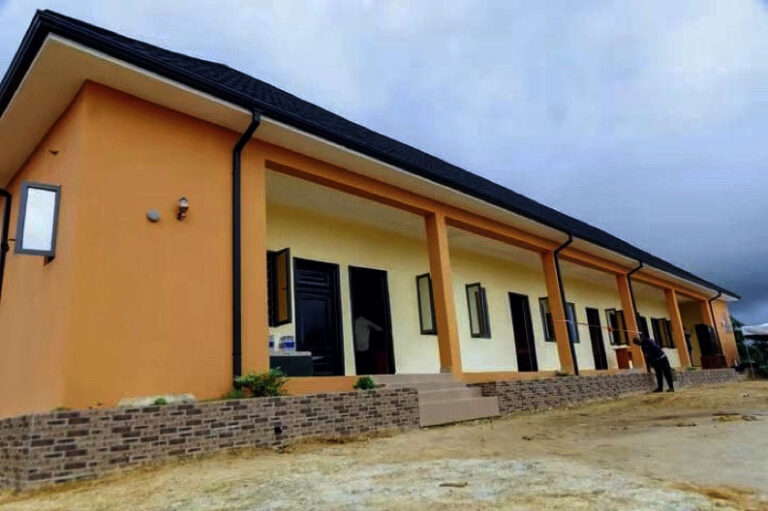
NSIA has also made indelible marks in the health sector having unveiled the a Diagnostic Centre located at the Federal Medical Centre, Umuahia.
Government and private health experts have described the centre as one that would revolutionise healthcare system in the country.
The virtual commissioning by the Finance Minister, Mrs Zainab Ahmed, was attended by the Governor of Abia State, Dr Okezie Ikpeazu; the Minister of State for Health, Dr Olurunnimbe Mamora; the Chairman of the Board of FMCU, Senator John Danboyi; Managing Director of the NSIA Mr Uche Orji and the Chief Medical Director of the FMCU, Dr Azubuike Onyebuchi.
In her remarks, the Minister said there was a nexus between a wealthy nation and her healthy population, underscoring the need for strategic investments in healthcare in order to surmount the numerous health challenges Nigeria was grappling with.
Ahmed referenced huge investments made by NSIA in the Lagos University Teaching Hospital Cancer Centre, the Aminu Kano Teaching Hospital and the Federal Medical Centre Umuahia that just got a diagnostic centre as bold investments needed to improve the lives of Nigerians.
The Minister, however, called on the private sector to help in addressing the mounting health challenges in Nigeria, since government’s resources were lean.
She said, “There is increasing awareness that the health of a people affects their productivity and the nation’s economic growth as a whole. As the saying goes, ‘A healthy nation is a wealthy nation.’
“The administration recognizes that progress in the health sector is handicapped by several bottlenecks. With full appreciation of the issues, we have worked and continue to work to ensure that systems are introduced to bridge these gaps.
“One such step in this direction is our direct intervention in addressing non-communicable diseases such as cancer.
“We have created an enabling environment for institutions such as the Nigeria Sovereign Investment Authority to execute high impact projects on time and on budget, delivering immense value for the Nigerian people.”
She recalled that in February 2019, President Muhammadu Buhari commissioned the NSIA-LUTH Cancer Centre in Lagos.
Prior to this investment, she said there had only been two working radiotherapy machines in the country.
Working through the Nigeria Sovereign Investment Authority and the Lagos University Teaching Hospital, the minister said the government utilized a Public Private Partnership model that unlocked investment capital to directly address this issue.
The centre, according to her, is delivering value to Nigerians as patients can receive quality care domestically in a safe, first-class environment.
She said the social impact is also noteworthy given the number of lives that will be saved over time and the positive impact it portends in terms of capacity building for the medical community.
Governor of Abia State, Dr Okezie Ikpeazu, while commenting on the facility said that healthcare was one of the priority areas of his administration.
He explained that the priority given to the sector stemmed from the conviction that only a healthy people can develop an economy.
The Governor, who commended the Federal Government on its choice of Umuahia as the location for the Diagnostic Centre, added that more investments needed to be made to reposition the sector.
He also called for effective legislation that would address some of the bottlenecks being experienced in providing the much needed interventions in the health care sector.
He said despite the state government’s intervention in the health care sector, his administration is also addressing the challenges being faced by those that are vulnerable in the state.