Follow Us on Google
-
Disease should be treated as national emergency, says vet doctor
By Olakunle Olafioye
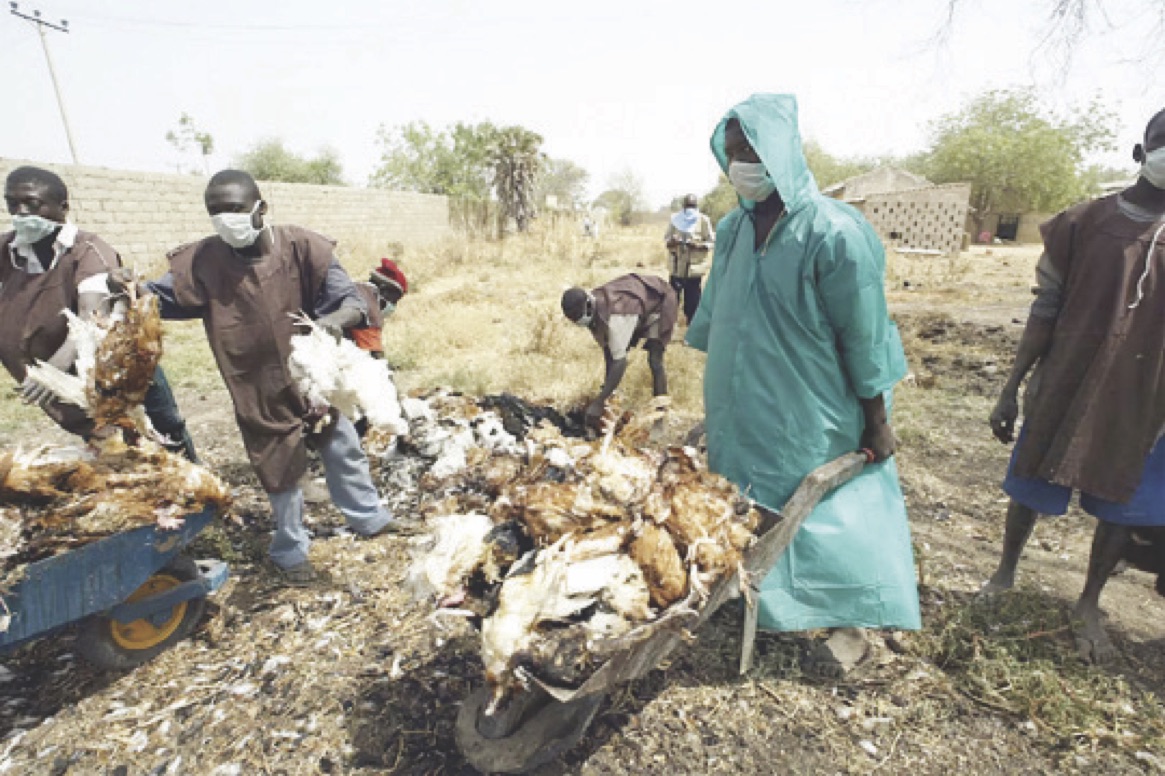
With the Christmas and the New Year festivities less than two months away, there could be no worse news for poultry farmers in Nigeria than the report of the outbreak of Avian Influenza in the country. Two local government areas of Taraba State, Ibi and Wukari, are currently grappling with the outbreak of the highly contagious virus with the state government reportedly working round the clock to contain further spread of the virus to other parts of the state and the country.
Taraba State Commissioner for Agriculture and Food Security, Professor Nicholas Namessan represented by the state Director of Veterinary Services, Dr Francis Nathan, at a press briefing in Jalingo penultimate weekend, said following the confirmation the outbreak of bird flu in the state, the Chief Veterinary Officer of Nigeria officially declared Taraba State positive for the virus. “To prevent further spread, we have expanded our rapid response team and are engaging political, religious, and traditional leaders. A total ban has been placed on the movement of poultry and poultry products from Jubu, Tapare, and Yamani areas. No birds will be allowed in or out of these locations,” Namessan stated. In addition to this measure, Taraba state also announced the closure of live bird markets in Doruwa, Bantaje, and Yamani, and urged residents to avoid handling or consuming sick birds due to the zoonotic nature of the virus, which can infect humans.
But despite the assurance, poultry farmers in other parts of Nigeria are not under the illusion of possible outbreak and importation of the virus to other parts of the country. This indeed, is a reality that has sent many of them into panic mode. Mr Adewale Adeyanju, a poultry farmer in Ota, Ogun State, said the timing of the outbreak should be a major source of worry to every poultry farmer in the country. “Every outbreak of bird flu is a source of concern to poultry farmers but whenever it occurs close to major festivities as we have now it should be of extra concern given the fact that this is a period when most farmers invest heavily in anticipation of the coming Christmas and New Year celebrations. I am particularly worried that avian influenza has been reported in part of the country at this period,” he said.
Not a few other poultry farmers are disturbed by the report coming from Taraba State. Mr Segun Olayiwola, another poultry farmer, said he received the disturbing news of the outbreak of bird flu a few days before it was officially announced and had since then been on the alert to safeguard his birds and business. “Taraba State may be hundreds of miles away from here, but that cannot be taken as guarantee that all is well. The virus can travel at a very fast speed. So I am not taking chances at all. As a poultry farmer I have put some precautionary measures in place, including vigilance and alertness, to guard against any unwholesome development in my poultry,” he revealed.
A veterinary doctor, Dr Richard Amadi said the outbreak of avian influenza in any part of the country should be viewed as a problem of national proportions. While pointing out that the outbreak of the virus at this period could compound the problem of poultry farmers who are still battling with economic hardship and the high cost of running poultry business in the country, he emphasised the possibility of spreading the virus to neighbouring states and beyond if adequate preventive measures are not taken.
Farmers are currently grappling with the high cost of inputs, especially feeds, medications, cost of energy, overhead costs and other related costs. Adding the fear of losing their birds and investments as a result of the outbreak of bird flu will definitely be too much for them at this time.
To reduce the spread of the virus in other parts of the country, Amadi called for the adoption of biosecurity as the first line of defence. Farmers should have Personal Protect Equipment for protection on the farms and they can visit livestock markets for antiseptic checks on the birds.” He also advocated the need for authorities in the country to support poultry farmers in every possible way in order to help protect their farms and investments.”
He also charged states through their departments of veterinary services to improve their surveillance at the border points and at the live bird markets around the state and possibly carry out some random testing.
“The government should also consider the policy on quarantine and the stamping out of affected flocks on farms as the case may be. But this should not be used without adequate compensation. If the government must maintain the quarantine policies, they must also deploy a compensation mechanism for affected farms. These approaches will go a long way in helping to arrest the spread of the virus,” he concluded.
Other News
Avian influenza is a highly contagious viral disease of birds caused by the influenza A viruses. It was previously known as fowl plague and was recognised as an infectious disease of poultry in Italy as far back as 1878. Although avian influenza A viruses occur naturally among wild aquatic birds worldwide, they are also known to infect other animals.
Poultry may be infected with two types of bird flu viruses namely the highly pathogenic avian influenza (HPAI) A viruses or the low pathogenic avian influenza (LPAI) A viruses. All outbreaks of the highly pathogenic form are known to have been caused by influenza A viruses of the sub-types H5 and H7.
The highly pathogenic viruses spread quickly and may kill nearly an entire poultry flock within 48 hours while the low pathogenic viruses may not cause symptoms or may cause only mild symptoms such as ruffled feathers or a drop in egg production.
Exposure to animal influenza viruses can lead to infection and disease in humans – ranging from mild, flu-like symptoms or eye inflammation to severe, acute respiratory disease or death.
The virus circulates in their natural hosts. Infected birds shed the bird flu virus in their saliva, mucus and faeces. Transmission or spread of the virus occurs primarily by the oral-faecal pathways through direct contact with secretions from infected birds, especially through faeces or indirectly through contaminated feed and surface water.
Most bird flu viruses, including sub-types H5 and H7, are of low pathogenicity and cause sub-clinical infections of the intestinal or respiratory tract. This means they do not easily cause disease and have only mild symptoms. The virus is spread mainly through faeces and droplets released during coughing and sneezing.
Highly pathogenic viruses have been proven to emerge after transmission from the wild bird reservoir and adaptation of low pathogenic virus sub-types H5 or H7 to new poultry hosts and subsequent mutation. A less dangerous virus spreads from wild birds to poultry and mutates to become more dangerous.
Low pathogenic strains result in mild or asymptomatic infections, whereas highly pathogenic strains cause up to 100% morbidity and mortality in animals.
The first major avian influenza outbreak in Nigeria was in 2006, caused by the highly pathogenic H5N1 strain, which spread across the country until 2008 before being declared free in 2013. A resurgence occurred in 2015 with the emergence of both H5N1 and H5N8 strains. Outbreaks have continued to be reported in various years since, including in 2017 and 2018, with co-circulating strains like H5N6 and H9N2 also being detected, indicating the virus may be endemic. A resurgence was reported in several states in 2021 leading to further surveillance and control measures.
Before the outbreak in Taraba State, there were reported outbreaks of avian influenza in Kano, Rivers, and Plateau states earlier in the year.