Follow Us on Google
From Chinenye Anuforo
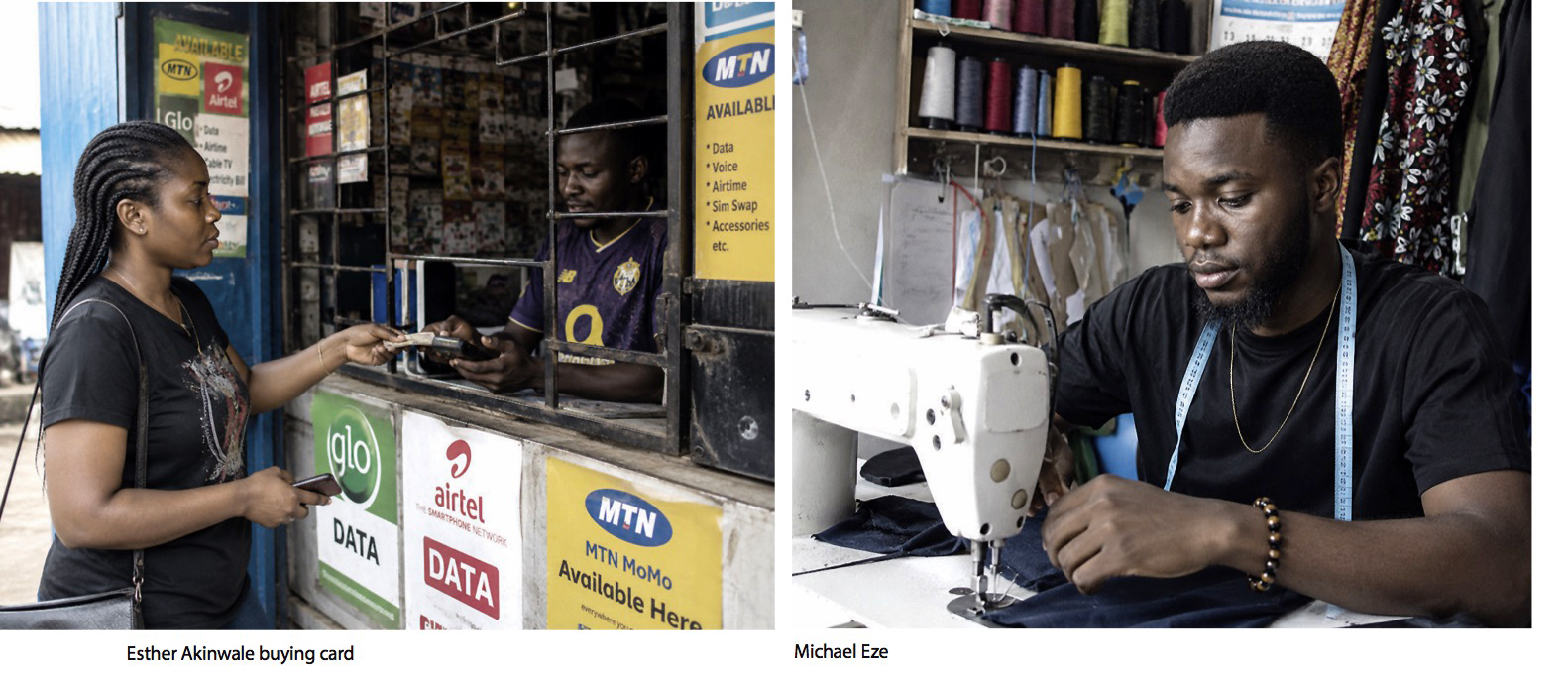
Every evening after closing from her small roadside provisions shop in Lagos, 29-year-old Esther Akinwale does something she once considered impossible.
Before buying food for herself, she buys data. Sometimes N500. Sometimes N1,000 if sales were good.

On difficult days, she skips dinner entirely. “But I cannot switch off my phone. My customers contact me on WhatsApp. I receive transfers with my phone. I buy goods online. If I don’t have data, it feels like I don’t exist”, she said quietly, clutching a cracked Android device that powers nearly every aspect of her daily life.
Across Nigeria, millions are making similar choices. Despite crushing inflation, stagnant incomes and worsening economic hardship, Nigerians spent an estimated N3.33 trillion on mobile internet data in just the first three months of 2026, according to industry data from the Nigerian Communications Commission (NCC).
Behind the staggering figure lies a deeper story, one of survival, adaptation and the growing reality that in modern Nigeria, internet access is no longer a luxury. It is becoming as essential as electricity, transport and food.
From traders livestreaming products on TikTok to Bolt drivers navigating traffic with Google Maps, students attending online classes, remote workers powering laptops from noisy cyber cafés and unemployed graduates hunting jobs on LinkedIn, the internet has quietly become the operating system of daily Nigerian life.
The NCC revealed that Nigerians consumed a record 4.06 million terabytes of data between January and March 2026, averaging 27.9 gigabytes per subscriber during the quarter.
At prevailing market prices, consumers spent an average of roughly N22,400 each on internet access within the period. For a country where millions survive on fragile incomes, the numbers tell a striking story.
According to the World Bank, nearly one-third of Nigerians live below the international poverty line. Yet many households now prioritise internet subscriptions ahead of several traditional expenses because economic survival increasingly depends on staying connected.
For 24-year-old fashion designer and content creator, Michael Eze, data has become a business investment rather than personal consumption.
“If I don’t post online for two days, my business suffers immediately,” he explained while editing Instagram videos on his iPhone inside a cramped tailoring shop.
“People think data is enjoyment. For many of us, data is work.” His statement captured the dramatic transformation taking place in the country.
Only a decade ago, internet access was largely associated with entertainment and social networking. Today, it drives banking, transportation, education, healthcare, communication, digital payments, e-commerce and small business operations.
For millions of young Nigerians shut out of formal employment opportunities, smartphones and internet connectivity have become the primary gateway to income.
This dependence helps explain another surprising trend emerging from the NCC’s latest “Device Model Adoption and Performance Benchmarking” report: Nigerians are still buying premium smartphones despite worsening economic conditions.
Samsung retained its position as Nigeria’s most-used smartphone brand with 37.8 per cent market share as of March 2026, while Apple’s iPhone accounted for 21.4 per cent.
Combined, both brands controlled almost 60 per cent of the country’s smartphone market. The figures appear contradictory in a country struggling with inflation and rising poverty.
Chinese smartphone brands such as Tecno and Xiaomi are already gaining market share by offering cheaper alternatives with strong features and 4G or 5G connectivity.
But analysts say smartphones are no longer viewed merely as luxury gadgets.
“They are productivity tools. A smartphone today is a bank branch, office desk, television station, shopping mall, classroom and business centre combined into one device,” said technology analyst Jide Awe.
For many young Nigerians, premium smartphones also carry emotional and social meaning beyond functionality.
Inside a popular phone market in Ikeja, Lagos, Computer Village, traders said demand for used iPhones remains exceptionally strong despite rising prices.
“Some customers save for months. Others buy on instalments. Even when people complain about hardship, they still want good phones because phones now define status and opportunity,” said one phone dealer who identified himself simply as Chibuzor.“
The booming second-hand smartphone market has helped make high-end devices more accessible to middle-income earners and students.
Flexible financing schemes introduced by fintech companies and telecom retailers have also enabled consumers to spread payments across several months.
But beneath the growing digital culture lies increasing financial strain. The average Nigerian household is now balancing food inflation, transport costs, electricity bills, school fees and rising telecom expenses simultaneously.
Many consumers complained that internet subscriptions disappear too quickly, forcing them to buy data repeatedly throughout the month.
“The painful part is that even after spending so much, the network still disappoints,” said Abuja-based freelancer Amina Yusuf, who depends on stable internet to work remotely for foreign clients.
That frustration has become one of the biggest challenges confronting Nigeria’s telecom industry. Industry stakeholders, including Chairman of the Association of Licensed Telecommunications Operators of Nigeria (ALTON), Gbenga Adebayo, have repeatedly warned that surging data consumption and rising operating costs are placing enormous pressure on telecom networks, even as Nigerians depend increasingly on internet connectivity for work, education, banking and commerce.
Adebayo has consistently argued that telecom operators are battling soaring diesel prices, forex volatility, multiple taxation and the rising cost of importing network equipment, stressing that data demand in Nigeria is growing much faster than infrastructure expansion.
According to him, sustaining network quality and expanding broadband coverage across the country would require continuous large-scale investment and more supportive operating conditions for telecom companies.
NCC Executive Vice Chairman, Aminu Maida, also acknowledged widespread consumer anger over poor service quality, congestion and slow internet speeds.
According to him, years of underinvestment weakened telecom infrastructure across the country even as internet demand expanded rapidly.
To address the problem, operators have now committed to approximately 12,000 network upgrades in 2026 alone.
About 2,800 upgrades have already been completed this year, including expansion of 4G systems and deployment of emerging 5G infrastructure.
One major telecom operator, Maida disclosed, plans to invest more than $1 billion this year exceeding total industry investment recorded last year.
The NCC boss also announced that affected subscribers would begin receiving compensation for major network disruptions.
For many Nigerians, however, the challenge is not merely service quality but affordability itself.
As telecom tariffs continue rising, consumers increasingly face impossible choices between staying connected and meeting other essential needs.
At a small café in Surulere, university student Emmanuel Okon sat quietly beside a power bank charging his aging smartphone.
He had just purchased a midnight data bundle because it was cheaper.
“I download school materials at night,” he explained. “That’s when data is affordable.”
Around him, dozens of young Nigerians stared silently into glowing screens, applying for jobs, editing videos, attending online classes, chatting with customers or simply escaping reality for a few moments on social media.
In many ways, the scene reflects modern Nigeria itself: exhausted, struggling, hopeful and permanently online.
Industry experts believe the country’s digital economy will continue expanding rapidly despite economic hardship.
Meanwhile, demand for 5G-enabled devices continues rising gradually as operators expand coverage nationwide. Yet experts warned that unless broadband becomes more affordable, digital inequality could deepen further.
The irony is difficult to ignore. At a time when millions cannot consistently afford stable electricity, quality healthcare or decent housing, internet access has become one of the few expenses many Nigerians simply cannot abandon.
Because in today’s Nigeria, losing data means losing access to work, money, education, opportunity and even social existence itself. And so every morning, millions recharge again.