Follow Us on Google
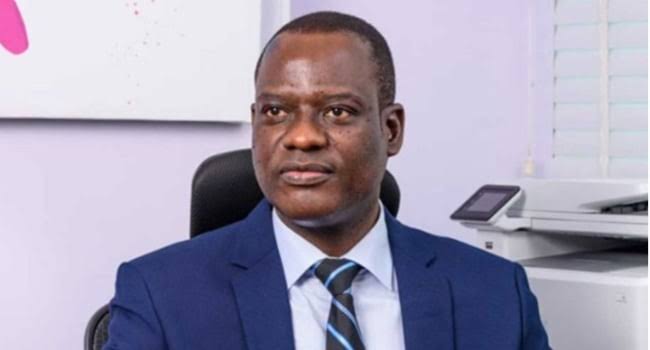
The Minister of Finance and Coordinating Minister of the Economy, Mr Taiwo Oyedele, recently stated that the recent economic gains have strengthened Nigeria’s prospects for achieving the ambitious $1trillion Gross Domestic Product (GDP) economy by end of this year. President Bola Tinubu had on October 23, 2023, during his opening address at the 29th Nigeria Economic Summit (NES), announced to grow the economy to $1trillion in 2026 and expand it to $3trillion by 2030.
The latest Q2 2026 GDP figures released by the National Bureau of Statistics (NBS) have apparently put the economy firmly on an upward trajectory towards meeting that ambitious target. According to NBS figures, Nigeria’s real GDP reached 4.43 per cent in the Q2 2026, accelerating from 3.89 per cent in the Q1 2026. The Federal Government’s excitement may have been further raised following a recent report by the International Monetary Fund (IMF), which ranked Nigeria among the ten contributors to global real GDP for 2026. Nigeria is projected to account for about 1.5 per cent in 2026. According to the report, agriculture, manufacturing and the services sectors are leading the economic expansion. But that is where the positives end. Economic gains that do not reflect on the lives of Nigerians should not be taken seriously. While the government is beating its chest that the economy is turning the corner and external reserves hitting $54billion, Nigeria’s debt-GDP ratio remains disturbingly high.
We agree with the Organised Private Sector (OPS) that despite the growth in headline GDP, there are significant weaknesses in the real sector, particularly manufacturing, which continues to face several costs and structural pressures. In fact, while headline growth suggests economic resilience, a critical analysis of the NBS GDP growth reveals widening disconnect between macroeconomic figures and real sector vitality. In short, Nigeria’s economy’s growth remains disproportionately, driven by services, which accounted for 52.62 per cent of GDP, while the broader industrial sector contributed just 17.23 per cent.
One of the key concerns raised by the Manufacturers Association of Nigeria is that of slower industrial growth that dropped from 7.46 per cent in Q2 2025 down to 3.96 per cent Q2, 2026. The overall headline GDP which the government is celebrating rely mostly on services; they do not reflect real growth in making physical gains, according to the Director General of MAN, Mr Segun Ajayi-Kadiri. The World Bank, in its recent Nigeria Development Update, titled, “Building Momentum for Inclusive Growth”, observed that though some of the federal government’s economic reforms are on the right track, stressing that in order for Nigeria to hit the aspiration of $1trillion economy, it needs to increase the current annual Gross Domestic Product (GDP) five times.
Other News
Therefore, there is need for deeper reforms and private sector-driven development that will accelerate productive growth, create jobs and opportunities of scale. According to the governor of the Central Bank of Nigeria, Olayemi Cardoso, key focus areas towards reaching the $1trillion target include curbing inflation, stabilising the exchange rate, among other things that will ensure inclusivity.
We believe that the vision of achieving $1trillion GDP economy is feasible, provided that the government can tackle key fiscal and macroeconomic challenges that undermine sustainable growth. For the economy to regain momentum, government’s efforts in policy formulation and implementation should translate to macroeconomic stability, more jobs, food security, reliable power supply and a robust export manufacturing and stronger household purchasing power by the people.
None of this impact is being felt by the majority of the populace. Though Nigeria has the largest total economy in Africa in nominal GDP, estimated at $400billion, key sectors that should drive the economy are struggling, forcing many industries to shut down and many more relocating to neighbouring countries because of lack of ease of doing business in the country, including multiple taxes that discourage investments.
In addition, government should set up a dedicated credit guarantee scheme that will lower interest rates and ensure a transparent foreign exchange clearance window for raw material imports. There should be a local procurement enforcement that will closely monitor budget releases to Ministries, Departments and Agencies (MDAs) that fail to the 60 per cent local procurement target. In all, reaching the $1trillion milestone will require maintaining high reform commitments, infrastructural investment and stable fiscal policies.