Follow Us on Google

The Federal Government has announced plans to scrap the policy separating the administration of Junior Secondary Schools (JSS) from the Senior Secondary Schools (SSS) and replace it with an uninterrupted six-year secondary school system. The government has explained that the new policy will solve the problem of Nigeria’s rising number of out-of-school children put at over 20 million.
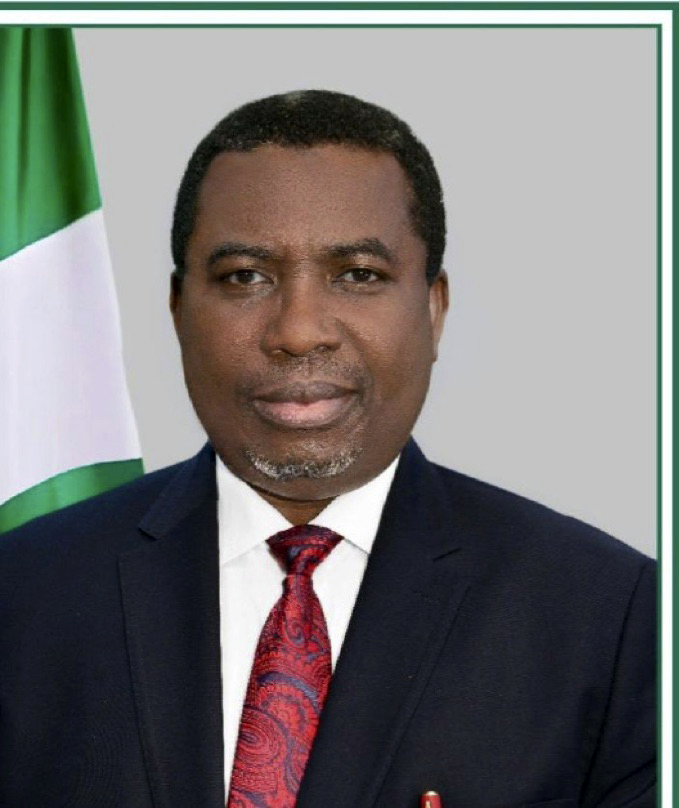
Minister of Education, Dr. Maruf Tunji Alausa, gave the hint of this major policy shift during the inauguration of the Universal Basic Education Commission (UBEC) Ministerial Implementation and Monitoring Committee in Abuja. According to him, the new policy is aimed at improving access to education, reducing the number of out-of-school children, and ensuring that every Nigerian child receives 12 years of continuous, quality education before progressing to tertiary institutions or vocational training.
Alausa further explained that the new model is designed to eliminate the transition barriers between junior and senior secondary education, which have contributed to high dropout rates among students. He noted that the disarticulation policy, which required JSS and SSS to operate separately with different principals and facilities, has not met its objectives but has rather resulted to estimated 20 million dropouts from primary school to JSS. He also said the imbalance has caused overcrowding in JSS facilities and left many senior secondary schools underutilised.
Government says an uninterrupted 12-year system would provide a more seamless learning experience, strengthen foundational and vocational skills, and improve student retention. The reform also seeks to standardise curriculum delivery, enhance education quality and better align Nigeria’s school system with global best practices. The 6-3-3-4 system, introduced in 1982, consists of six years of primary education, three years of JSS, three years of SSS, and four years of tertiary education.
Under the new arrangement being proposed by the government, the JSS and SSS divisions will be merged into a single 12-year basic education programme. Government says that the implementation of the policy will involve curriculum reforms, teacher training, adjustments to school administration, and collaboration with state governments and other stakeholders.
The National Parents Teachers Association of Nigeria (NAPTAN) has welcomed the proposal. NAPTAN’s National President, Prof. Boniface Odeh, described the move as one capable of addressing longstanding challenges in the education sector and restructuring the nation’s education system from the current 6-3-3-4 model to a 6-6-4 structure. Odeh said the proposed six-year uninterrupted secondary education would help reduce the high rate of student dropouts that usually occur after JSS.
The NAPTAN president also stated that the proposed structure would enhance academic continuity by allowing better curriculum implementation, deeper subject mastery and more time for vocational, skills acquisition and Science, Technology, Engineering and Mathematics (STEM) education.
Other News
There is no doubt that the JSS/SSS policy as presently operated is not effective. Due to the lapses in the system, the aim and objectives of the policy are not being realised. The gap that exists in the course of the transition from the JSS to the SSS is unnecessary. It is hoped that the new policy will reduce the financial and psychological burden on families associated with transiting from level to another.
Notwithstanding the anticipated gains in scrapping the JSS/SSS model, the federal government needs to address the underlying causes of school drop-outs in the country. Nigeria has over 20million out-of-school children, a figure considered the highest globally. The ratio translates to 1 in 3 Nigerian children not being in school. This is as a result of many factors including poverty, insecurity, and socio-cultural practices.
Beyond scrapping the JSS/SSS policy, the government should make 12 years of primary and secondary school free and compulsory for every Nigerian child. Doing this will reduce illiteracy and growing number of out-of-school children. The problem with our education system is not necessarily the policy, but with its implementation.
The government should also address the concerns of some stakeholders, who have criticized the policy shift and called for caution in its implementation. Every action to be taken in the proposed education system must be well thought out and implemention must be excellent.
Let government prioritise primary and secondary school education and fund them adequately. Having a sound foundation at this level will be of great advantage at the tertiary level. There is need for trained teachers at the primary and secondary school levels. At present, many primary and secondary schools in the country lack suitably qualified teachers.
Qualitative education goes beyond shifting from one policy to another. The new system should be made better than the one it replaced. Let there be good libraries, functional laboratories and conducive environment for teaching and learning.