Follow Us on Google
From Sola Ojo, Abuja
On Monday, August 31, 2026, the Economic and Financial Crimes Commission (EFCC) told media executives in Abuja that it had recovered N1.233 trillion between October 2023 and July 2026, alongside $684.48 million, £373,905.78 and €9.34 million.
By the following day, the figures had travelled across conventional and new media platforms, largely presented as another staggering paper recovery record by the nation’s anti-graft agency.
However, behind the trillion-naira, million-pound, dollar, and euro headline lies the question: where does the money go?
For an ordinary Nigerian family, the anti-corruption war can sometimes appear distant.
A politician’s conviction, a forfeited mansion or billions of naira recovered by the EFCC may make the headlines, but the question that often follows is: What does all of this mean for the ordinary citizen?
What does the recovery mean to Nigerians who have never seen a forfeited mansion, never attended an EFCC trial and have little interest in the technical details of financial investigations?
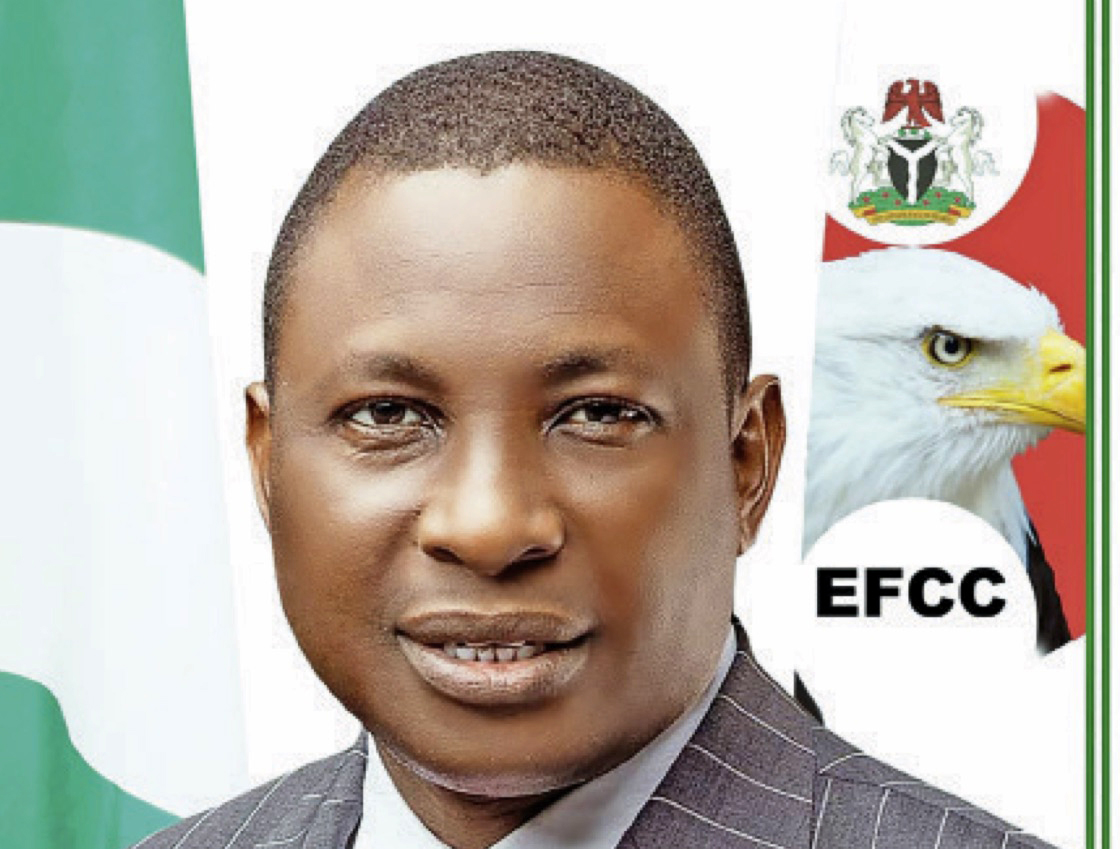
According to EFCC Chairman Ola Olukoyede, contrary to insinuations that the anti-graft agency is focusing more on internet fraudsters known as ‘Yahoo boy’, it is chasing senior civil servants who are using these boys to launder stolen money in large sums.
“We are not chasing the Yahoo boys as some of you thought; we are after some directors and permanent secretaries, who are using young Nigerian students, cryptocurrency and properties across the world to hide the proceeds of alleged corruption,” Olukoyede said.
On ‘Yahoo boy’, he said: “The story is bigger than the young man behind the keyboard.”
For years, the popular face of financial crime in Nigeria has been the young man behind a computer, popularly described as a “yahoo boy”.
But Olukoyede said he’s not interested only in young Nigerians involved in internet fraud. “We are also pursuing the sources of illicit funds and the people behind sophisticated financial networks.”
His words: “Some top civil servants who allegedly steal public money engage young Nigerians, many of them students, to convert the funds into cryptocurrency. The cryptocurrency can subsequently be used to purchase properties in different parts of the world.”
That, Olukoyede suggested, was why the commission’s anti-cybercrime strategy cannot stop at the arrest of young Nigerians.
“This is why cryptocurrency has become an increasingly important part of the commission’s enforcement strategy,” he added. The criminals, Olukoyede said, were also exploiting technology and time.
“Some banking attacks occur at night, when account holders are asleep and may not immediately notice suspicious transactions.
“The EFCC is responding by developing a 24-hour central monitoring system designed to strengthen its ability to detect and track suspicious financial activities.
“Instead of waiting for a victim to wake up and discover that money has disappeared, the system is intended to improve real-time monitoring of suspicious activities.
“In a financial system where money can move within seconds, an enforcement agency operating only within conventional working hours risks constantly chasing yesterday’s crime,” Okukoyede said.
To him, the proceeds recovered from crime were being channelled into productive interventions, including education and consumer credit.
He added that, “The national impact of the recovery is perhaps clearest when proceeds of crime are converted into productive social investment.”
Leaning on his previous experience as the commission’s scribe before becoming the chairman, Olukoyede advised the Federal Government on reinvesting the forfeited recovery funds into social programmes as a part of the fulfilment of President Bola Ahmed Tinubu’s Renewed Hope Agenda.
Perhaps, the call sat well with Mr President, who subsequently sought the cooperation of the National Assembly.
As a result, the Federal Government allocated N50 billion each from proceeds recovered by the EFCC to the Nigerian Education Loan Fund (NELFUND) and the Nigerian Consumer Credit Corporation in 2024, with another N50 billion each approved for the two institutions in 2026.
For a student who has gained admission but whose parents cannot afford university fees, the policy is more than an item in a government budget.
The idea is one of what many would liken to an abstract in a thesis that has great impact, but is not seen as a bridge or a wall.
For such students, it can be the difference between remaining in school and dropping out; it can mean sitting for examinations instead of staying at home; it can mean completing a degree and entering the labour market rather than abandoning an academic ambition halfway and becoming a nuisance to the society.
By April 2026, NELFUND said more than 1.38 million students had benefited from its loan scheme, and it is this kind of impact that Olukoyede noted should become the human face of recovered funds.
Also, some Nigerians are beginning to see beyond the abstract. They are beginning to see beyond the EFCC’s interrogation rooms.
Other News
They are beginning to see the recoveries in the university lecture halls where students remain in school because access to education financing has become possible.
Olukoyede cited the conversion of the recovered NOK University into the Federal University of Applied Sciences, Kachia in Kaduna State as an example of how asset recovery can produce long-term public value.
According to him, 1, 909 students matriculated at the institution in December 2025.
A property caught up in a criminal investigation has become an institution where young Nigerians can acquire knowledge and qualifications.
The journey from alleged proceeds of crime to a university classroom is, in many ways, one of the stories the EFCC wants Nigerians to understand about asset recovery.
Again, Okukoyede was emotional when he defended Nigerians: “From our investigations, many Nigerians do not want to steal. But because of pressure of basic needs, they found themselves doing the unthinkable.”
He then painted a monkey and banana scenario. “You keep a monkey in a cage with a banana and you warn it not to eat the banana or you will beat the hell out of it. But after two days, three days, you didn’t feed the monkey, it will eat the banana to survive and damn the consequences; it will wait for your beating rather than die of hunger while the banana is handy.”
To him, the commission is now interested in preventing top civil servants and politicians from stealing rather than recovery.
He believed access to legitimate credit can also reduce the attraction of financial crime, and for a country battling unemployment, poverty and pressure on household incomes, the argument is that enforcement alone cannot address all the factors that encourage financial crime.
Olukoyede recalled an analogy he had used previously, comparing the situation to a person placed in a difficult environment where legitimate options are deliberately restricted. His point was that people needed lawful economic alternatives. As he explained, “If you have this consumer credit system, if you have worked for 10 to 15 years, you should be able to have access to a loan that you can conveniently and comfortably service.
“If you know that you can get a housing credit that can give you a standard three-bedroom bungalow, for example, the propensity to commit financial crimes will be reduced,” he argued.
So, it is a significant shift in the way the anti-corruption campaign is being presented; not simply as a war against criminals, but also as an attempt to strengthen the economic environment in which Nigerians make choices.
He put it bluntly: “Without a working credit system, a thousand EFCCs and a million ICPCs will not stop financial crime.”
Perhaps one of the most revealing aspects of Olukoyede’s stewardship is his insistence that the EFCC must also police itself.
He said he remains committed to zero tolerance for fraud by EFCC officials.
“For an institution established to investigate corruption, the issue is existential. An anti-corruption agency cannot demand integrity from Nigerians while tolerating questionable conduct among its own personnel,” he said.
Olukoyede therefore said EFCC officials must register luxurious gifts received from individuals and disclose details about the gifts, including their relationship with the source.
“Where the giver has an interest in an EFCC investigation, or where the official receiving it has influence over a matter involving the giver, the gift can raise questions about conflict of interest and undue influence,” he explained.
For Olukoyede, the anti-corruption war must therefore begin inside the institution itself.
“The people investigating corruption must be prepared to subject their own conduct to scrutiny because he who comes to equity must come with clean hands,” he posited.
The figures from the EFCC’s three-year scorecard remain impressive, but it was more than that.
The commission reported 10, 872 convictions and the recovery of 10, 053 tangible assets through interim and final forfeiture orders. The assets included real estate, automobiles, plots of land, electronic devices, schools, factories, hotels, shops, oil rigs, barges, machinery and aircraft.
It also reported the forfeiture of 102 tonnes of solid minerals.
About N661.32 billion and $492.37 million recovered by the commission had been released to beneficiaries.
Federal and state tax recoveries amounted to approximately N288.1 billion, while about N257.2 billion was recovered for federal ministries, departments and agencies.
But Olukoyede stressed that the recoveries should not be viewed simply as statistics, but as fiscal value recovered through enforcement of existing obligations and proceeds of crime.
To this end, the EFCC’s next phase cannot be built around arrests alone; it will require technology, financial intelligence, international cooperation, asset tracing, stronger prosecution and institutional integrity. Three years of enforcement have produced figures that could be measured in trillions of naira, millions of dollars, thousands of convictions and thousands of forfeited assets.
For now, it is a good attempt to ensure that money allegedly taken from society through crime can ultimately return to society as education, opportunity, productive assets, credit and public value.