Follow Us on Google
• Residents can’t return to farms, families search for abducted loved ones as violence persists
By Peter Bakare
Despite security deployments, government assurances and humanitarian interventions, affected communities in Benue State continue to face the challenge of rebuilding their lives, restoring livelihoods and tracing missing relatives.
The anguish in Agadagba, Ugene, Otukpo-Nobi and neighbouring communities reflects a wider security and humanitarian crisis that continues to test the capacity of government, security agencies and humanitarian organisations in Benue State.
For residents whose homes, farms and means of livelihood have been destroyed, the response to violence is measured not only by the deployment of security personnel or official promises, but also by whether they can return home, resume farming and live without fear of another attack.
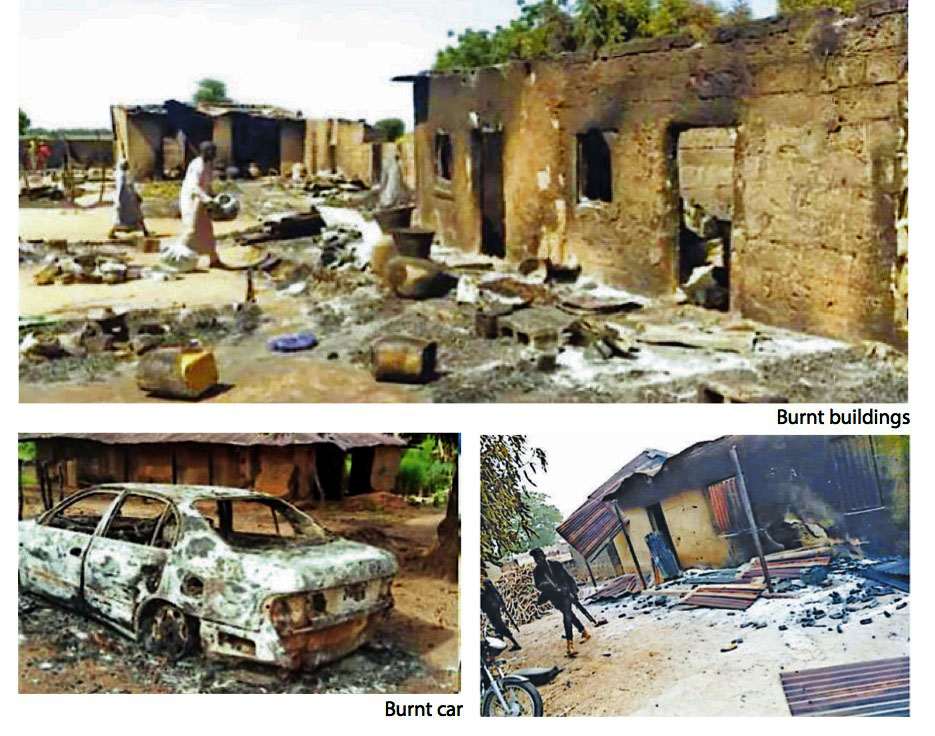
The attacks on Otukpo-Nobi in July 2026 brought renewed attention to the security situation in the area. According to the Benue State Police Command, armed assailants attacked the community on July 12, shortly after the burial of an octogenarian, Adaje Okoh, killing eight people and injuring five others. Some thatched houses and a motorcycle were also reportedly burnt.
Following the attack, the Commissioner of Police, Cletus Nwadiogbu, led tactical teams and other security operatives to the affected community to restore order and prevent further attacks. The police also said additional operational assets were being deployed to vulnerable areas.
Earlier in July, security operations had been intensified in parts of Ohimini and Otukpo following reports of attacks and the movement of armed men. The reported operations covered communities including Ankpechi, Ogelewo and Ondo-Ugboju, while Idekpa Forest was identified by the police as an area requiring particular attention because of alleged criminal activity.
The security response was further intensified following a visit to Benue by the Inspector-General of Police, Olatunji Disu. However, a newspaper reported that fresh attacks in Elulu and Agadagba communities in Ohimini, which reportedly killed three people and injured two others, occurred only days after the IGP pledged intensified, intelligence-driven security operations in the state.
The recurrence of violence despite these interventions raises a fundamental question: How can security deployments be translated into sustained protection for people living and farming in vulnerable rural communities?
Government’s security strategy
The Benue State Government has also sought to connect security with the restoration of livelihoods, particularly the ability of displaced residents to return to farming.
In July, Governor Hyacinth Alia told the Presidential Communications Team that his administration was taking measures to enable farmers to return to their fields. One proposed strategy involved allocating farmland to displaced persons while also assigning farmland to security personnel, with the intention that the latter could maintain a protective presence while farming alongside affected communities.
The governor subsequently condemned the attacks on Akpachi and Otukpo-Nobi and directed security agencies to pursue the perpetrators. The state government maintained that it was working with traditional rulers and security agencies to promote peace.
The strategy recognises a central reality of the Benue crisis: security and agriculture are closely connected. For many rural households, access to farmland determines whether they can feed their families, earn an income and recover from displacement.
A farmer who cannot safely reach the farm has lost more than access to land. The loss may extend to an entire harvest, household savings, food supplies and the means of paying school fees or meeting medical expenses.
However, the effectiveness of the government’s approach will ultimately depend on whether farmers can return to their fields safely and sustain their livelihoods beyond the immediate period of a security operation. Public assurances and deployments are important, but their impact must be assessed against conditions on the ground.
Humanitarian organisations face second battle
While security agencies confront armed attacks, humanitarian organisations face the consequences: displacement, hunger, inadequate shelter, interrupted education, family separation and the psychological effects of violence.
The scale of the challenge is substantial. In its Benue protection update published in September 2026, the United Nations High Commissioner for Refugees (UNHCR) highlighted the state’s large displaced population and the protection risks created by repeated attacks and clashes.
The agency’s reporting put the number of forcibly displaced people in Benue at nearly 500,000, making the state one of Nigeria’s largest displacement hotspots.
The International Organisation for Migration (IOM), through its Displacement Tracking Matrix, has also documented population movements following violence in the state.
In an assessment covering an incident on January 20, 2026, in Tomanyiin, Guma Local Government Area, IOM reported that a farmers-herders clash affected 194 people from 43 households. Of these, 167 people from 37 households were displaced to Gbajimba, while 27 people from six households remained in the community. Two deaths and one injury were reported, and 23 shelters were damaged. IOM’s Benue State Flash Report documented the incident and its immediate consequences.
The assessment identified food, shelter and healthcare among the most pressing needs, alongside non-food items and psychosocial support. IOM field teams conducted rapid assessments to help government authorities and humanitarian partners direct assistance to affected households.
Such figures are important for planning, but displacement is not merely a statistic. Every affected household represents people who may have left behind their homes, farms, schools, businesses and community support networks.
For families in Agadagba, Ugene and Otukpo-Nobi, recovery requires more than emergency relief. It also requires the restoration of livelihoods, access to essential services, reliable protection and a realistic opportunity to rebuild their lives.
Early Warning: From reacting to preventing
One intervention seeks to address insecurity before attacks occur.
UNHCR reported in September 2026 that an early-warning initiative known as PROTECT — Protection Risk Observation, Tracking, Early Warning and Coordination Tool — was being scaled up in Guma and Makurdi.
The system enables community members to report threats in real time, generating geographically referenced alerts that can be shared with first responders. Its objective is to narrow the gap between the detection of a potential threat and the deployment of an appropriate response.
For communities that have experienced repeated attacks, the value of early warning is clear. Timely information could help residents move to safety, alert security personnel and facilitate the evacuation of vulnerable people before violence escalates.
Other News
However, an early-warning mechanism can achieve its purpose only if credible reports are received promptly, assessed effectively and followed by timely action. Community members must also have confidence that reporting threats will not expose them to further danger.
UNHCR’s reporting further highlighted the scale of the crisis, recording 76 people killed in Benue between January and August 2026. The figure underscores the need to evaluate interventions not simply by their existence, but by whether they reduce attacks and protect lives.
Civil society’s warning
Human-rights organisations have repeatedly argued that the response must extend beyond police and military deployments to include the protection of civilians and sustained humanitarian support.
Amnesty International Nigeria has previously drawn attention to the humanitarian consequences of Benue’s displacement crisis, including shortages of shelter, food, clean water, sanitation and healthcare in displacement locations. The organisation has called for stronger protection measures and improved assistance for affected populations.
The challenges are particularly severe for children separated from their families, people whose education has been interrupted and households that have lost their sources of income. Insecurity can continue to affect survivors long after an attack has ended, through family separation, psychological distress, poor access to healthcare and prolonged economic hardship.
These broader concerns are reflected in the experiences of residents from Agadagba, Ugene and neighbouring communities.
Destroyed livelihoods, missing relatives
Chief Uloko Emmanuel, head of the Uloko family from Godwin Uloko compound in Jericho Ekenobi, described the destruction of homes, farm produce, motorcycles and bicycles during the violence. Beyond the material losses, he continues to face the uncertainty surrounding the whereabouts of his son, Emmanuel Destiny Adakole, an evangelist from Eke Ward, Edumoga District, in Okpokwu Local Government Area, who has been reported missing.
For the family, the search for a missing relative has become inseparable from the broader struggle to recover from the attacks. The uncertainty compounds the pain of losing property and raises questions about the safety and whereabouts of loved ones.
Community accounts have also identified several other people reportedly killed or missing in connection with the violence. They include Abba Ochoeke, retired Captain Enoh Christopher, Achatu Adejor, Ejembi Ameh, Sunday Adatama and Edwin Obochi. Their individual circumstances and current status require confirmation from families and relevant authorities.
Mr Ojobo Ambrose Enoh, described the difficulties confronting his family following the destruction of their motorcycles, which he said were a major source of livelihood. With his wife no longer alive to support him, the loss has intensified the family’s struggle into a one-man show to escape poverty and rebuild its means of survival.
For the family, replacing the motorcycles would mean more than recovering damaged property. It would offer a chance to restore an income stream on which their daily survival depended.
Elder Ochoeke ochoechi Akor, another affected resident, said he had been living with sadness since the attacks damaged his building and vehicle. He also said two of his cousins remained missing.
“We have fasted, prayed and still trusting God for their returns someday, somehow,” he said.
Akor explained that the situation had become increasingly difficult because the parents of the missing cousins, who live outside the state, were demanding to know the whereabouts of their children.
His account illustrates another dimension of the crisis: the burden placed on relatives who remain without reliable information about missing family members. For them, the passage of time does not necessarily bring closure. Instead, it can deepen anxiety and complicate relationships among relatives seeking answers.
Taken together, these accounts reveal the human cost behind the figures in official reports. Destroyed homes and damaged vehicles represent lost assets; ruined farms represent lost food and income; and missing relatives represent families caught between hope, fear and unanswered questions.
These testimonies remain community accounts and should be read alongside ongoing efforts to establish the full circumstances of the attacks and the status of those reported missing.
The unfinished work
The responses by government and security agencies demonstrate that interventions have been initiated. Tactical operations have been launched, security personnel deployed, intelligence-driven operations promised and directives issued for the pursuit of perpetrators. Humanitarian agencies have documented displacement, identified urgent needs and supported the development of early-warning mechanisms.
Yet the recurrence of attacks raises questions about the adequacy, consistency and long-term effectiveness of these measures.
For affected communities, the central issue is not simply whether an operation was announced, but whether it produced a measurable improvement in safety. Were further attacks prevented? Were suspects identified or arrested? Were investigations completed? Were missing persons traced? Could farmers return to their fields? Were damaged homes and livelihoods restored?
These are the questions against which the interventions should be assessed. Where the available evidence does not establish the outcome, authorities should provide clear updates rather than allowing official announcements to stand as proof of lasting progress.
The humanitarian response also requires sustained attention. Emergency food and shelter are essential, but they cannot substitute for long-term support that enables displaced families to rebuild homes, restore livelihoods, resume children’s education and access healthcare.
For residents such as Chief Uloko Emmanuel, Mrs Onyiowo Adah and Sunday Adagoli, the crisis is not an abstract policy debate. It is about whether missing relatives will return, whether destroyed farms can produce again, whether damaged homes and vehicles can be replaced and whether families can sleep without anticipating another attack.
The challenge facing Benue is therefore twofold: protect communities from the next attack and help survivors rebuild from the last one.
Until both objectives are achieved, the experiences of Agadagba, Ugene, Otukpo-Nobi and neighbouring communities will remain a reminder that the true measure of intervention is not the announcement of action, but its impact on people’s lives.
For families still waiting for missing relatives, farmers unable to return safely to their fields and residents struggling to recover lost livelihoods, security, justice and the opportunity to rebuild remain unfinished promises.