Follow Us on Google
By Denja Abdullahi
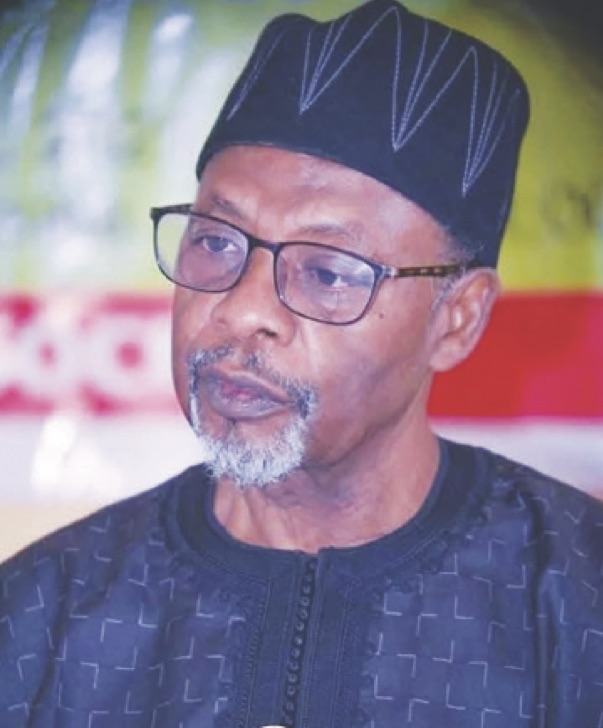
The passing of Alhaji Bello Musa Dankano yesterday on the seventh day of the holy month of Ramadan brought back memories etched in the firmament of the literary fraternity. Haruna Penni, erstwhile Registrar and founder of ANA Abuja, should be credited with linking me up with Bello Musa Dankano around the late 1990s. Haruna Penni had the penchant of going after persons with literary creativity or a pretension of it who were at various stations of the Federal Public Service. He literally dragged most of them from their stuffy offices with their noses buried inside sterile files to contemplate the subversive glamour of literary engagements of all kinds. I must have met Dankano in one such foray.
Dankano was already a director in one of the federal ministries when I met him through Haruna Penni. He had this self effacing aura around him but quick to bring up incongruous things or react to situations that often dissolved in mirth or roarious laughter. Soon I was introduced to his earliest published pieces A Season of Locusts (1999) and Petrol Station (2004). The marks of an unrelenting satirist are in both texts,one exploring political chicanery and the other the menace of the ubiquitous “Bamburutu” (petrol smugglers) plaguing the society respectively. The first of his published texts that struck a strong cord in me was the autobiographical fiction, My Cousins and I (2005), about his growing up in an intricately interwoven extended family system with royal connection in the Malumfashi area of Katsina State. The world he describes in the book is one I am familiar with as I traversed it physically and with literary eyes during my NYSC service year in Malumfashi between 1990-1991.
The book brought back fond memories and explained some cultural nuances I was reflecting upon during my stay there. Beyond that, the book has a unique historical sweep that is well linked with the evolution of a modern socio-political system. It is comparable in style and the treatment of cultural heritage with Camara Laye’s The African Child. I was so moved by it to write a review entitled “In Search of a Lost Tongue”, which was widely published in the literary pages of major national newspapers of the time. From that time onwards, I decided to pay close attention to his works.
More books came from him such as The Last Caravan and Other Stories (2006), which I, again, reviewed in a piece entitled “Bello Musa Dankano and his Caravan of Stories”. That work is pure speculative fiction coated with Northern Nigerian cultural cum religious flavour. It is as interesting as Abubakar Imam’ s “Magana Jari Ce” and has its own contemporary narrative sophistication. It is like a piece that came before its time from that part of the country. I became his private critic and literary friend, urging him to write more and giving myself the task of interpreting his writings to the reading public. He later shared an unpublished work with me which he titled “Amala Politics” in which he pillories in satirical delight the stomach infrastructure politics played in Northern Nigeria often coated in moralistic hues and false religiousity. I wondered why “Amala Politics “and not “Tuwon shinkafa Da Miyar Kuka Politics” or “Danwake Politics?”. He laughed and told me he would think more about it. The work in question is a mixture of genres (drama and prose), but after subjecting it to the editorial honing of Mazariyya publishers, it came out as Mirror (2008 or 2010?) with the drama cut out. Still, it is a book that will leave its readers reeling with laughter as memorable characters unveil themselves within a charged political atmosphere. Reading the book now, one can conclude that politics does not change. The chicanery of politicians remains the same and the gullibility of the masses appears inerasible.
Other News
As I read Dankano’ s texts, I began to have a feeling that he was not getting the right critical attention or literary approbation commensurate with his talents. Beyond platforms provided by persons like Ibrahim Sheme’s “Writestuff” in “New Nigerian” newspaper and later Sumaila Umaisha, no one else was talking about this writer from the North. The literary scholars in the Northern Nigerian academies might then be cutting their teeth; maintaining their usual self-sabotaging critical distance from what they should ordinarily contend with or were busy themselves trying to be creative writers.
I got some literary journalists from the Lagos-Ibadan press linked with Dankano, and that was how Henry Akubuiro and others began promoting his writings on their platforms. Not having the right kind of publishing that comes with intentional promotion and marketing was part of the problem why Dankano’s works have not crossed many borders in spite of their literary qualities. Some of his books had restrictive online publication such as under iuniverse and were therefore not widely circulated. Those published locally were not promoted. He was aware of this problem as he declared to me in an interview published in 2006 in “The Public Agenda” newspaper that “Our Local Publishers are Lazy.” There is a point there. Talent and literary qualities are not enough in the making of a popular writer. Good publishing and intentional promotion are imperative to bring the works of a writer to wider reckoning. It is just like a talented musician without a good producer and promoter or a footballing wizard without a good agent.
A good case in point to illustrate this is the relationship between the writer, Abubakar Gimba, and the publisher, Dilibe Onyeama of Delta books. One can say it was Dilibe Onyeama of Delta Books that brought the works of Abubakar Gimba to national and global reckoning. Added to this is the lifelong critical fixation of Prof A.K .Babajo on the works of Abubakar Gimba. Today, most good pieces from Northern Nigeria are never well published and even if published, critics maintain their distance borne out of puerile sentiments. At best, the critics harvest the texts to gain promotional points in essays published in journals that very few people bother about. The writer, thus, remains in obscurity and the gems in his writings are locked away from the world that should benefit from them.
Bello Musa Dankano has crossed the bridge which all of us must cross sooner or later. In remembering him , I reflect on a song of the Hausa singer and poet, Dan Anache, that contemplates on old age and death and that of Mudi Sipikin about the living’s projection about life around his body after death. Bello Dankano is alive in his works which can be engaged and re-engaged by those interested. Someone like him must have unpublished pieces lying around in his closet or study. I believe I have one of his unpublished manuscripts which he sent to me in 2011. I am not sure if he got it published. It is titled “Grains of African Philosophy: Hausa Proverbs and anecdotes compiled and Translated.” It is multilingual and contains valuable pieces, anthologised and modernised in the “Dankanosque” style of sense and hilarity in an unobtrusive embrace.The manuscript may be in the custody of others, too. If it has not been published before now, I will recommend it to the Dr Bukar Usman Foundation for possible publication in collaboration with Bello Musa Dankano’s estate.
May the soul of Alhaji Bello Musa Dankano rest in perfect peace. Amen.