Follow Us on Google
From Desmond Mgboh, Kano
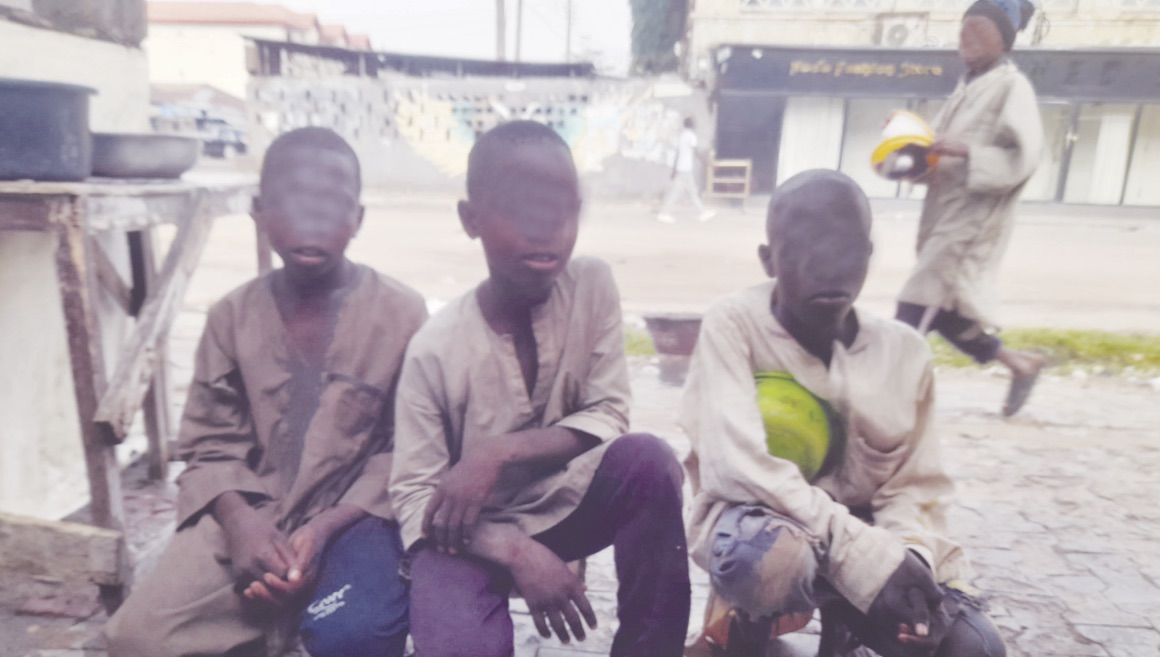
On this July evening, along Ballat- Hughes/ Igbo Road, Kano, Kano State, what seemed a normal lifestyle in the ancient city said a lot about the prevailing hardship in the country. As darkness fell, two unrelated adults, including one on a bandaged leg, positioned themselves at strategic locations from where they were quietly approaching pedestrians to ask for financial help.
Voice low so that the other ear would not hear, they would plead for assistances to take care of their basic needs such as food, transport fare, unpaid hospital bill and so on. And once they were given “something” out of pity or grace, they would wait and move to the next person after a while.
Begging to survive has become one of the latest innovation to surviving the hard times in the ancient city, where thousands are jobless, many more have unsteady incomes and almost all- low, middle and high income earners- are faced with the spat of hunger occasioned by the dwindling economy.
It is now a common to beg. And tales of begging exploits are many. Usually, an able -bodied person, sometimes fairly –dressed walks up to a target to ask for help. Sometimes he gets, sometimes he does not.
Mama Toyin (not her real name) is a very popular face in this begging business in Sabon-Garri, an area that is the heart of the capital. A woman of about 55-65 years, fat and heavily built, it is either she has no children of her own or her children had all abandoned her to her inglorious fate in her old age.
She barely speaks. She often walks alone. And her target groups are fun-seekers at open beer parlors or people relaxing outdoors in the night in the area. She stands fixed by their table sides until “something” drops. And then she walks away as silently as she came.
There are others like her who are searching the streets for helpers. These distraught mothers carry their minors along during their begging missions, strapping the youngest behind their backs, while the remaining two or three stalk after them. That way, their convoy invokes maximum pity at first sight as they push the minors to beg for alms.
Begging is, also, a common game women play in the state given their often fake, expensive and larger- than- life lifestyles which are no longer sustainable. Some of these women beg and reward their givers with their bodies while others collect, smile and disappear, never to return.
“These days, the act of begging in Kano has gone online; it is no longer an offline thing as it used to be when you need to see the beggar before you can give. You simply give by transfers. Early morning greetings, darling messages and reminders from female
acquaintances have become the biggest headache for Casanovas or what is locally known as “Womanizers” according to Sylvester Iwah, a local artist/painter who has done a number of paintings on poor people in grief and hunger.
He noted that the bracket of beggars in the state today have increased to include married and unmarried persons even as he stated that their online demand lines are usually the same and are now too familiar.
“Please send me recharge card”, “My data has finished” “Help me with T fare (transport fare) to go to work, “My final year project needs to be typed”, “ Help me complete my house rent” “My children have been driven out from school” or “My father and mother are sick in the village” he recalled.
There is also a new pattern of begging that takes place in places of worships soon after service. Except with keen eyes, it passes unnoticed in many cases or is mistaken for charity at work.
On many occasions after services, brethrens quietly approach their fellow members, especially the rich ones among them with one touchy story and prayer for financial help. After worships is usually considered a golden hour to beg and get generously as the intended givers have themselves just finished praying to God and cannot resist an act.
There are also beggars at major traffic junctions in the ancient city. Bowls in their hands and sometimes with touching melodies, they sing for help and pray for the helper. Severally chased away from the traffics by successive governments, the beggars disappear after each anti- begging government policy only to gradually return as the heat goes down. Mostly older men and women and largely persons with one form of disability or the other, they approach car owners at the traffic for help.
Another category are young school- aged boys and girls who rush to wash up windscreens in-between the traffic breaks and quickly turn up to demand for reward. It does not matter if they were never contracted or if the car owner himself is broke. What matters is that they must be rewarded!
Okechukwu Nwaroh, a trader inside Sabon – garri market (Abubakar Rimi Market) told Daily Sun that the prices of food items had gone well off the roof and regular income earners and law- abiding Nigerians can no longer afford to feed themselves anymore with what they earn as salaries.
He observed that a tuber of yam is selling for about N6000 and above in different markets, the same size that was bought for N1,500 a year ago when the present government came on board while adding that the cost of rice, beans, garri and maize, which were affordable in the recent past have all soured to the sky.
He observed that the same loaf of bread that sold for N400 and N500 early last year is now selling for N1500 while pepper, onions and tomatoes that were typically cheap and bought for nothing in the state are no longer affordable or available to the poor.
“How do you want these people to survive, without complimenting it with some form of begging? Who can save Nigerians if not God in heaven” he reasoned.
Many respondents expressed anger over the present hardship, but displayed sympathy to “Those who just have to beg to stay alive”, saying that begging is still better than stealing or killing for money.
Toyin Hadijat, an Ekiti born –stylist who works at Jaba area in the state capital, urged the administration to take urgent steps to ease the hardship in the land so as to remove many Nigerians from the shameful begging list.
She urged government to get the local refineries back and to encourage Dangote Refinery to start working so as to ease the overall costs of petroleum products, which would positively affect the economy.
She also tasked government to take steps to revamp the agricultural sector, asking them to tackle the insecurity problem that has chased the farmers off their farms.
“If farmers are free to go to farm, there would be food items and the prices of many basic food items would come down. And many ordinary Nigerians will be able to buy food for their hungry families” she stated.