Follow Us on Google
From Isaac Anumihe and Idu Jude, Abuja
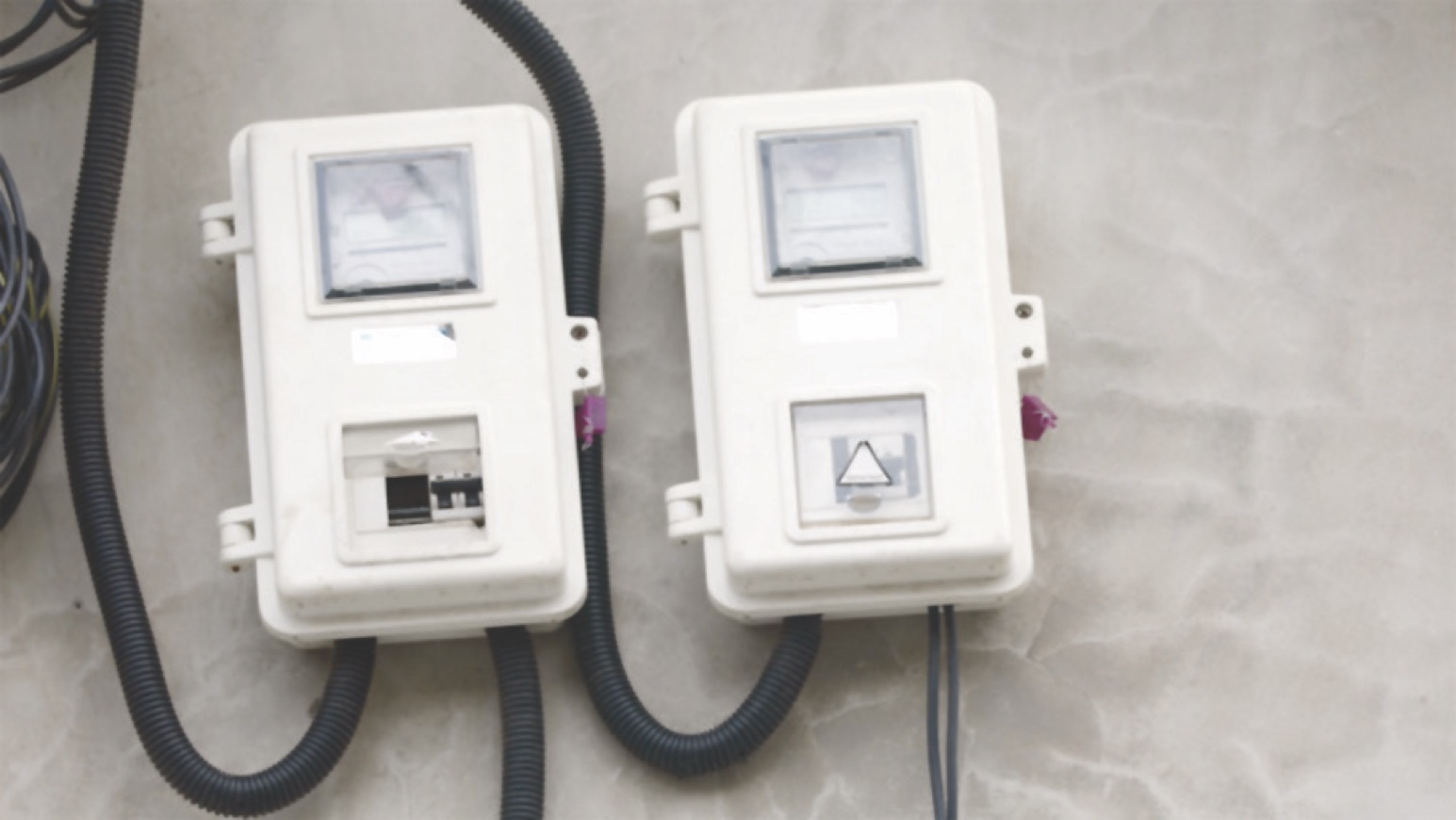
Meter Asset Providers (MAP), and electricity consumers are at loggerheads over installation fees.


While some installers charge a minimum of between N20,000 and N25,000 to install a single-phase meter, others take between N30,000 and N40,000 to install a three-phase meter.
Although, the federal government provided free meters for Nigerians, the subject of controversy is the installation fee.

Whereas the consumers argue that the meters are a federal government project given to the consumers free (to bridge the metering gap), the installers maintain that they are not on the payroll of the electricity distribution companies (DisCos) and so the consumers should pay them for their work.
Because of the misunderstanding, consumers are rejecting the meters. According to one of the installers, Segun Abdulrasheed, they are not on regular salary. So, they pay themselves from the installation fees. So far, he had not experienced any resistance that could lead to rejection because he can install with any amount of money.
National President, Association for Public Policy Analysis and Executive Director, Consumer Protection Advocacy Centre, Chief Princewill Okorie, submitted that the DisCos are operating in a very criminal manner and the government is neither monitoring them nor punishing them.
Okorie stated: “This is not the first time the free meter programme is being talked about. In 2020, National Mass Metering Programme (NMMP), was supposed to be free but in most cases, people paid for the meters. In 2018, Meter Asset Providers (MAP) came on board. They said that if people paid, they would refund them. How many have they refunded?
“We made a freedom of information enquiry in Abuja Electricity Distribution Company (AEDC) and they said that in their franchise area, 444,000 households have got the meters and they have refunded only 124,000 out of 444,000. Why are they not refunding in full? And which agency of government is monitoring them and enforcing compliance?
“As we speak, in Imo State, in my community, they don’t give bills and there’s no meter there. Enugu Electricity Distribution Company (EEDC) would tell you that they have installed the meters but they would not show you where they installed the meters. They violate people’s rights. They criminalise the power sector.
“I sent somebody to EEDC’s office to obtain a meter. They told him to pay N45,000 processing fee after which he would pay N238,000 for the meter. For free meter, he would pay N45,000 first and wait till when it will arrive. They are not even promoting the free meter programme.
“So, who is enforcing the distribution of the meter? The Minister was talking about free meters. Which committee has he set up to enforce it? What’s the Presidential Metering Initiative (PMI) doing? What strategy have they put in place to checkmate DisCos from fraudulently implementing the free meter policy? What is Economic and Financial Crimes Commission (EFCC) doing? What’s Independent Corrupt Practices and Other Related Offences Commission (ICPC) doing? What is the police, doing?. If it’s the government’s policy that the meters are free, shouldn’t those who violate it not be arrested and prosecuted? Why are the DisCos above the law?
“Band A and Band B alone, is robbery supported by government?. So, it’s like the DisCos are empowered by government to rob the citizens.”
President-General, Coalition of Nigerian Youth Leaders (CONYL), Comrade Goodluck Ibem, accused the DisCos of conniving with the metering companies to perpetrate fraud.
According to him, the DisCos give meters to those who have outstanding bills so that they would fraudulently retrieve their money. But for new buildings, they have to buy the meters.
“What they are doing is a high level of illegality. They are not installing free meters. They are charging for those meters. They are not giving meters to those who deserve them.
Other News
“They are giving meters to those they fraudulently gave estimated bills. They give some households a bill of N81,000, N90,000, N100,000 a month. Some households have N1.5 million or N2.5 million debts. Then they will give you meter and include all the estimated bills in the meter.
“So, as soon as you recharge, they will take your money. For instance, if you recharge N20,000, they will take N17,000 and leave you with N3,000. Sometimes, out of N20,000 they would take N19,000 and leave you with N1000 which is a high level of criminality. If you have a new building, they will not give you a meter. They will ask you to pay for the meter. What they are giving us are not free meters. They are criminally using the free meters provided by the federal government to extort unsuspecting customers. I am telling you what I have seen and what I have experienced. So, what the federal government should do is to withdraw the licences of those that derailed from the directives of the president and the federal government. The federal government means well for the people but the DisCos have planned to deal mercilessly with customers.
“Everybody is blaming the federal government when it’s not the federal government”s fault. The DisCos have excessive greed for profit. Because of this, so many businesses have closed down. The level of unemployment has increased because companies who rely on power to render services can no more provide services with profit. They are losing so much. So, they have to close shop because of the wickedness of the DisCos. The federal government should license more DisCos and withdraw the licences of the old DisCos who have shown wickedness to Nigerians,” he said.
Meanwhile, President, Consumer Protection Network, Comrade Kunle Olubiyo, thinks differently. He reasoned that the cost of a single-phase meter is N180,000 and that of the three-phase meter is N360,000. So, the N5,000 or N10,000 installation fee is insignificant compared to the value of the facility.
“Meter installers are not staff of the DisCos. They are outsourced components of the value chain. Most of them are not on stable salary. So, when they install they would be expecting people to give them transport. They don’t have a stable income or salary to the best of my knowledge. They just hang around. From what I know, the company doesn’t pay the installers. But such (fees) are usually stipends – not something that’s significant.
“There are places that have a history of meter bypass, DisCos will be forced to move the pole. In most cases, the distance from the pole to the house is something that has to be reviewed by the drivers of the metering scheme so that that component should be built into the total cost of each installation of meter.
“You know we don’t have a perfect situation. It’s a learning process. But by and large, single-phase meter is N180,000 and three-phase meter is N360,000. So, if at the end of the day you pay N10,000 for installation compared to the cost of the meter, I think it’s still a win-win. But where customers have to pay at all, the regulators should be firm on refund of customer payment” he said.
When Daily Sun sought the opinions of consumers, their frustration was thick enough to be cut with a knife.
For instance, Mr. John Ogundele, a lawyer, burst out his resentment over the whole gamut of privatisation. He saw the programme as a reflection of a leadership failure in Nigeria.
“Many times, people have called for the review of the privatisation policy. But because those who are major shareholders are top politicians, their voices were overwhelmed. Among the beneficiaries of privatisation are ex- presidents, ex-governors and senators. Such shenanigans also exist in other sectors of the economy and this is bad for the country. Nigerians are supposed to be metered. It is not as if the products are not available but power consumers cannot afford the price of the meters. I think there should be a meeting point between the government and the DisCos on how to carry out free and fair metering of the Nigerian masses” Ogundele, submitted
A hair stylist, Mrs.Natalie Ejovwoke, expressed a deep frustration with the situation as she battles to raise about N130,0000 to purchase and install a meter for her business. She said her frustration got to a point when she was no longer able to foot the bill for the estimated payment.
She said: “The worst of it all is that getting the meter is not as easy as people think. In the beginning, they told us that the meter is free but what we are witnessing nowadays are various types of meters from different companies and with different prices as well. So, everyone including me, is confused about the free metering of Nigerians.”
Mr. Innocent Onodi, operates a beer parlour. He commented that before the free meters arrived, he had already bought his meter to avoid the fraudulent estimated bills. So, he was not caught up with the high installation fees of the free meters.
“I really don’t want to talk about the issue of NEPA (DisCos). It is quite unfortunate that no policy works in Nigeria. Since the privatisation of the power sector, the policy never worked.
“I am saying this because the DisCos have failed to fulfill their own side of the bargain by providing adequate light, adequate facilities, or maintaining regular supply of electricity. The issue of metering the Nigerian power consumers remains an albatross.
“Even as a tenant, I was forced by the situation to buy my own meter instead of taking the free ones. I couldn’t pay the exorbitant fees of the estimated bill,” he stated.
Ozouri Johnson lamented the high installation fees of the meters, saying that it’s a deliberate attempt to defraud unsuspecting Nigerians of their hard-earned money.
“I can tell you that it is a deliberate attempt to defraud Nigerians. And I’m justified by saying this, owing to the high installation fees of the meters which ab initio was said to be free to all citizens of Nigeria.
“First, it was the federal government alone that sold meters. Suddenly, it became the business of everyone with installation fees rising above the roof,” he lamented