Follow Us on Google
• It’s embarrassing to think I’ll supervise assault on journalist – Council boss
• Media advocacy group kicks, as law firm drags LG chairman to court
By Lukman Olabiyi
In a democracy, the presence of journalists at public institutions is not only expected, it is essential. They document governance, give citizens access to information, and hold power to account.
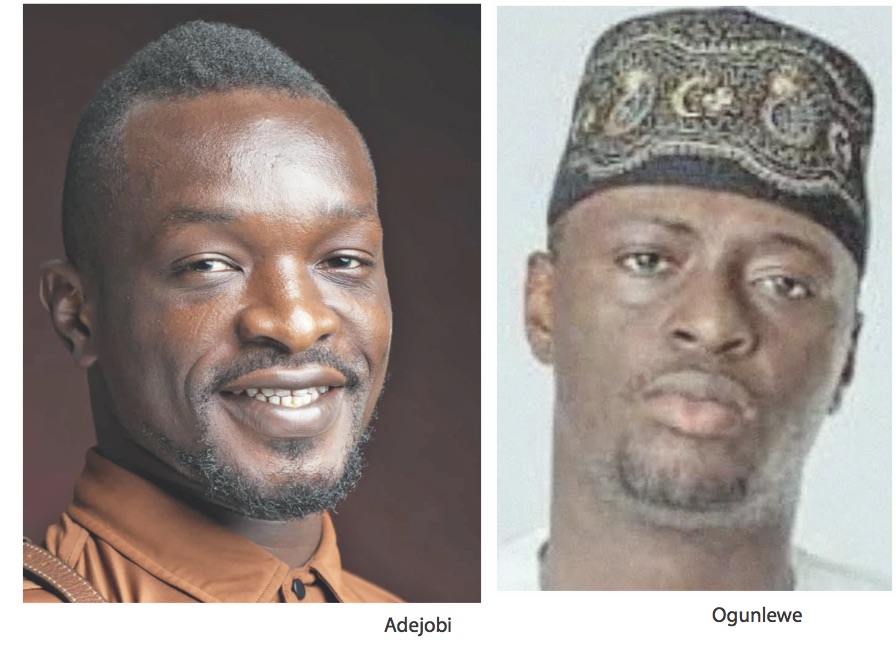
But for Habeeb Adejobi, a journalist with MITV, what should have been a routine assignment at the Kosofe Local Government Secretariat in Lagos State turned into a traumatic encounter that has since ignited outrage, conflicting narratives, and renewed concerns about press freedom in Nigeria.
Adejobi’s account is chilling. On March 11, 2026, he said he received a tip from a senior colleague about an ongoing screening exercise for newly appointed supervisors and special advisers at the Kosofe Local Government.
Sensing the public importance of the event, he promptly made his way to the council secretariat, arriving at about 4 p.m. upon arriving there, like many journalists trained to follow due process, Adejobi said he first attempted to notify key officials of his presence.
He tried reaching the council chairman and the information officer, but both were unavailable. He then contacted a councillor who confirmed that the screening was still in session.
He decided to wait within the premises of the secretariat, he set up his camera, preparing to capture reactions once the exercise was concluded.
It was a familiar routine, one he had carried out many times before, including at the same council.
But what followed, he said, was not routine.
A man approached him and asked if he was the journalist on the ground. After confirming his identity, Adejobi said the man informed him that the chairman had ordered him to leave the premises.
Surprised, he tried to explain that he had already reached out and was simply waiting to do his job.
He also requested to see the chairman directly to clarify the situation. Moments later, the chairman, Moyo Ogunlewe, arrived. According to Adejobi, the interaction quickly turned tense.
The chairman reportedly demanded his identification card, which he admitted he did not have on him at that moment.
Before he could fully explain himself or present alternative verification, he alleged that the chairman ordered those around him to seize his camera.
What happened next, Adejobi recounted, was shocking and swift.
“The same man who had first approached me suddenly began to hit me. At first, I was confused. I could not understand what was happening. Then the beating intensified,” he said.
He described being struck with a plank as officers of the Nigeria Security and Civil Defence Corps (NSCDC), attached to what he called a “Special Task Force,” joined in the assault.
“They began to punch and hit me from different directions, “Within seconds, the situation spiralled out of control,” he recalled.
Caught in what he described as a chaotic and hostile environment, Adejobi said he struggled to maintain his balance as blows rained down on him.
In the midst of the assault, he said his attackers demanded that he delete images from his camera.
“I kept asking, ‘Is it now a crime to come to a public institution to cover an event? But no one answered,” he said.
Eventually, he was dragged away and taken to the Area H Police Station. Even there, he claimed, his ordeal did not immediately end.
His phone was seized and he was brought before the Divisional Police Officer in the presence of the chairman’s Chief of Staff.
It was only after the intervention of the DPO, he said, that the situation de-escalated and he was allowed to leave to seek medical treatment.
But the damage had already been done.
Adejobi said his camera was damaged during the struggle, and the physical injuries he sustained left him in severe pain throughout the night.
The following day, he visited a clinic, where he received medical attention and medication.
Yet, beyond the physical pain, he said the emotional and professional toll has been even harder to process.
“What hurts me the most is not just the beating, I never imagined that the chairman of Kosofe could act in such a manner,” he said.
Adejobi noted that he was familiar with Ogunlewe’s background as an educated individual and a lawyer, as well as the son of a respected political figure, former minister Adeseye Ogunlewe.
He said that made the experience even more difficult to reconcile.
Adejobi also expressed shock over claims that he was a “fake journalist” or even an “assassin” allegedly sent by political opponents.
“An assassin with a camera? That accusation is both shocking and heartbreaking,” he asked.
According to him, he had previously covered events at the same council alongside other journalists and had no reason to be treated as a threat.
As his account began to circulate, it sparked widespread reactions, particularly among media professionals and civil society groups concerned about the safety of journalists.
However, the Kosofe Local Government chairman has strongly denied the allegations.
Ogunlewe offered a sharply different version of events.
He said he personally noticed a man setting up a camera within the council premises and approached him to ask about his identity.
According to him, the individual claimed to be from a television station but failed to provide valid identification.
“He had no identification card and had nothing to show he was a genuine journalist,” Ogunlewe stated.
He further claimed that the individual initially presented himself as being from Arise Television, raising further suspicion when reports later identified him as an MITV journalist.
According to the chairman, the situation did not involve any assault.
Instead, he said the individual was taken to the Ogudu Police Station for questioning due to inconsistencies in his claims and inability to properly identify himself.
“It is embarrassing to think that I would supervise the beating of a journalist,” Ogunlewe said, adding that he is the son of a former senator and minister and would not be associated with such conduct.
He suggested that the incident was politically motivated, alleging that his opponents were behind what he described as a smear campaign.
“Nobody was attacked in our local government. My political opponents are at work,” he insisted.
But the denials have done little to quell the growing concerns raised by media rights advocates.
The Journalists for Democratic Rights (JODER), a prominent media advocacy group, has condemned the alleged attack in strong terms, describing it as a serious violation of press freedom.
In a statement, the organisation’s Executive Director, Adewale Adeoye, said the incident was “embarrassing and unacceptable in a democratic setting.”
He warned that such actions evoke memories of the repression faced by journalists during Nigeria’s military era, a period marked by censorship, intimidation, and violence against the press.
“It should not happen in a democracy. The violation of the rights of a journalist in the course of his official duty is condemnable in the strongest terms,” Adeoye said.
JODER called on the police to conduct a thorough investigation and ensure that anyone found culpable is held accountable.
The group also urged the Lagos State House of Assembly to look into the matter, particularly the role of individuals allegedly involved in the assault.
Beyond condemnation, the incident has also taken a legal turn.
A law firm, Giwa Legal, has filed a formal petition on behalf of Adejobi to the Assistant Inspector General of Police at the Force Criminal Investigation Department in Lagos.
The petition dated March 16, alleges multiple offences, including assault occasioning harm, criminal intimidation, unlawful seizure of property, obstruction of lawful duty, abuse of office and unlawful detention, all contrary to the Criminal Law of Lagos State, 2015.
According to the petition, Adejobi was carrying out a lawful assignment when he was attacked by individuals acting under the authority of the chairman.
It further alleges that he was forcibly taken to the police station and prevented from communicating freely.
The petition calls for a comprehensive investigation and the prosecution of all those found responsible.
For many observers, the case underscores a broader issue, the precarious environment in which Nigerian journalists often operate.
Despite constitutional guarantees of press freedom, incidents of harassment, intimidation and violence against journalists continue to be reported across the country.
From covering political events to investigating corruption, reporters frequently face risks that go beyond the demands of their profession.
What makes the Kosofe incident particularly significant is the setting, a local government secretariat, a public institution where transparency should be paramount.
If Adejobi’s account is accurate, it raises serious questions about the treatment of journalists by public officials and security personnel. If the chairman’s version holds, it highlights the need for clearer protocols on media access and identification.
Either way, the incident has exposed gaps that demand attention.
For Adejobi, the experience has left lasting scars, both physical and emotional. Yet, he remains resolute in telling his story, not just for himself but for the profession he represents.