Follow Us on Google

•Death, retirements deplete number of teachers across states
•State govts battle to fill gaps as teachers lament shortage of manpower •Some states yet to recruit teachers in 16 years
By Okey Sampson (Umuahia), Olanrewaju Lawal (Birnin Kebbi), Ighomuaye Lucky (Benin), Emmanuel Adeyemi (Lokoja), Tony John (Port Harcourt), Noah Ebije (Kaduna), Oluseye Ojo (Ibadan), John Bassey (Zamfara), Scholastica Hir (Makurdi), Laide Raheem (Abeokuta), Aniekan Aniekan (Calabar), Stanley Uzoaru (Owerri), Obinna Odogwu (Awka), Lateef Dada (Osogbo), Billy Graham Abel (Yola)
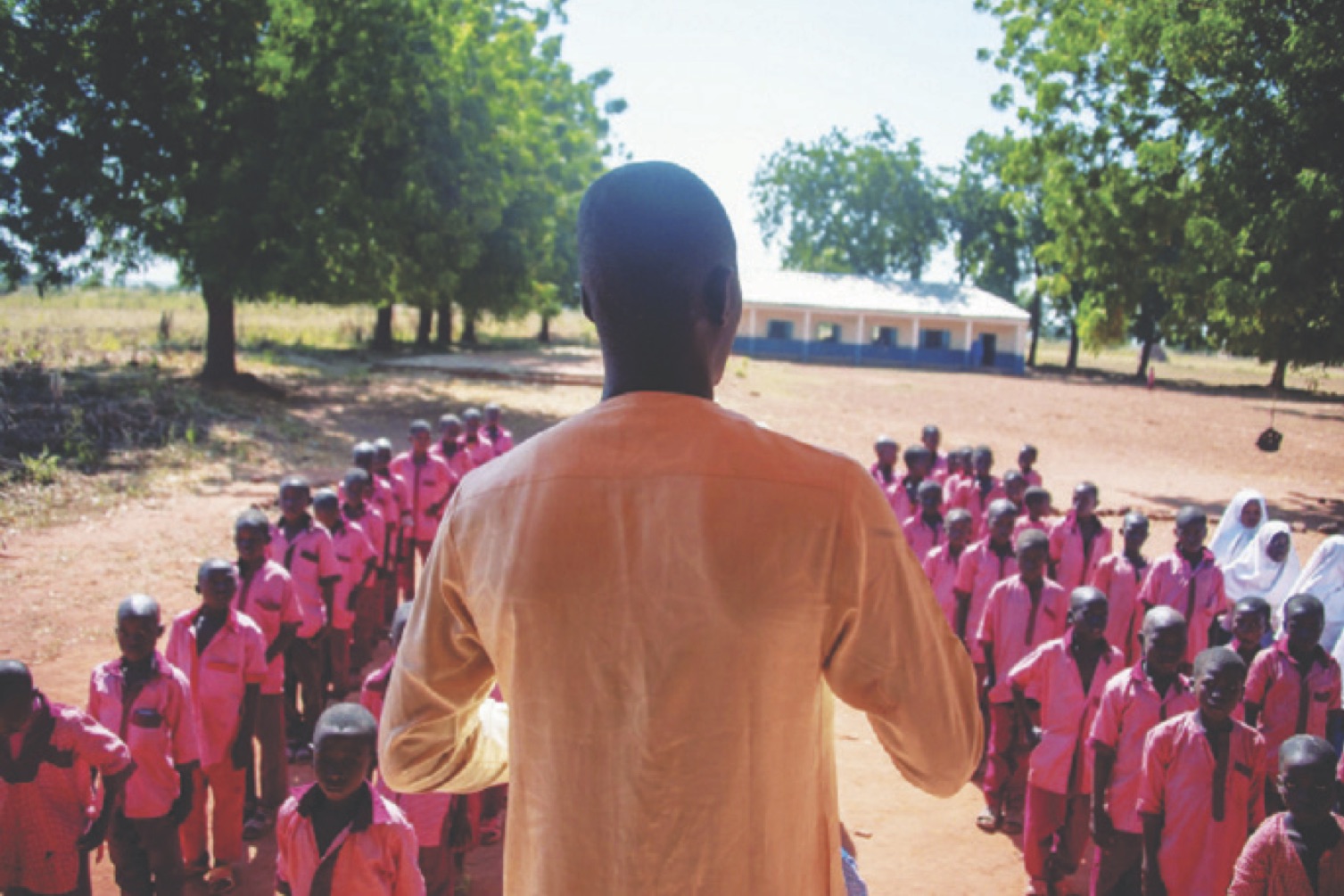
Primary and secondary schools across the country are passing through a difficult phase in the history of education in the country. In some states, teachers were until recently, not recruited into the states’ civil service for between four and ten years. In some states, it took a longer period.
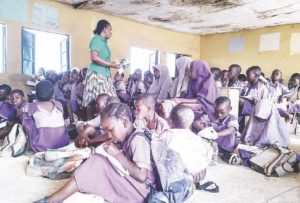
Over the years, the non-recruitment of teachers has led to a huge gap in teaching and learning as some schools exist without teachers in some subjects. The rot in the system has also led to the relegation of the teaching profession to the background. In many of the states, primary and secondary schools exist not only with a grossly inadequate number of teachers, but also lack of basic instructional materials.
Very often, teachers groan under the yoke of poor welfare packages, low income, delay in the payment of their salaries and in some cases nonpayment for months. However, as a remedial measure, some state governments are now making frantic efforts to revive basic education even though such states still have a long way to go.
Abia
In Abia State, the government said it has started massive reconstruction of schools and employment of teachers in public schools after years of neglect.
An official of the Nigerian Union of Teachers (NUT), who simply gave his name as Ofor said before now, education in the state suffered underfunding and infrastructural decay. But he said things are changing for the better with the government renovating schools in the state and employing more and qualified teachers.
“To my understanding, the state government is renovating schools, and it said it recently employed 5,394 teachers. “We have it on good authority that the state government is planning to employ an additional 4,000 teachers that will bring the total number to nearly 10,000.”
Although he was not forthcoming on the exact number of teachers in public schools, checks revealed that over 40,000 teachers are on the state payroll.
Unlike in public schools, there is no uniformity in the salary of teachers in private schools in the state. However, only a few private schools in the state pay their teachers up to the new minimum wage. For many, their graduate teachers receive far below the minimum wage, while the school certificate holders are paid about N30, 000 per month.
Edo
In Edo State, recruitment of teachers was stalled until the present government came into being. Chairman of the NUT, Edo State chapter, Imaruagheru Lucky, said the last time the state and local governments recruited teachers was over 18 years ago. He disclosed that in 2025 the state government recruited over 5,000 teachers with a promise to recruit another 3,000.
Imaruagheru explained that they are still awaiting the last batch of the 3, 000 teachers to be recruited by the state government.
He put the number of teachers that are currently serving in the state primary and secondary schools at about 13, 000. The labour leader put the average salary of government teachers at N117, 000 while salaries of teachers in private schools in the state vary from one school to another.
A private school teacher who preferred anonymity claimed that some teachers receive salaries as low as between N20, 000 and N60, 000 in the state.
Kebbi
The Kebbi State government under the administration of Governor Nasir Idris has recruited over 2,000 teachers since he took over in 2023.
In 2025, the state screened 2,000 teachers and announced an intention to recruit more teachers for both primary and secondary schools. Commissioner for Basic and Secondary Education, Dr. Halima Bande disclosed that a census of teachers and pupils conducted across the state showed that over 700 teachers were teaching the same subject before the administration of Governor Idris came on board.
“We know the importance of the ratio of teachers to the students. We can’t know these unless we take the census of our teachers and pupils. In fact, we went beyond that, by conducting a census on teachers by subjects,” the commissioner said.
A random survey in Birnin Kebbi, showed that the least salaries earned by teachers in private schools are N20,000 with lower school fees.
Kogi
Public primary and secondary schools in Kogi State are gasping for breath as teachers who have retired from service are not being replaced while the pupils and students suffer. A huge number of the schools are in a dilapidated state with little or no teaching and learning facilities.
Saturday Sun gathered that several memos were written to the state governors in the last 10 years, but there was no response. About 12,700 teachers are needed in secondary schools and about 14,500 needed to fill vacant positions in primary schools, excluding support staff like cleaners, laboratory attendants, guards and other administrative staff.
It was also said that the administration of former Governor Yahaya Bello employed only 1,000 secondary school teachers in 2020 instead of the 3, 000 the state government promised. Even then, the teachers have continued to be paid N50, 000 as salary since they were recruited.
Although the state chairman of the NUT could not be reached, an executive member of the union in the state declared that primary school education in the state was as good as dead.
He cited some big primary schools in the state that have pupil population of more than 500 with only 30 teachers, a figure that has further gone down. The teacher further disclosed that for over 18 years no primary school teacher has been recruited by the state government.
“Primary school education is seriously suffering in Kogi State because no local government council chairman has access to the monthly allocations,” the teacher said.
It was learnt that most of the secondary schools, especially in the rural areas, are currently being funded by host communities and the Parents-Teachers Association (PTA) who, sometimes hire teachers and pay them some miserable amounts so as to keep the children in school.
Rivers
Rivers State operates two main agencies for public school teachers – the State Universal Basic Education Board for primary schools and the Rivers State Senior Secondary Schools Board for secondary schools.
There are ongoing recruitment efforts for teachers in Rivers State for 2026/2027, with specific qualifications needed for primary (NCE) and secondary (B.Ed, HND + PGDE, or M.Ed) school roles.
Governor Siminalayi Fubara recently approved the recruitment of 5,000 teachers. Out of the 5,000, 3,000 are billed to go to basic and primary schools, and 2,000 to post-primary institutions. He had earlier approved the confirmation of 1,000 teachers of Government Demonstration School, who protested non-recognition by the former administration.
Recent figures for the accurate number of teachers in the state are not available across the over 268 schools in Rivers. Checks revealed that the 2018 number for secondary teachers is the most specific number and the new recruitment drive indicates a substantial effort to increase the teaching workforce. On salaries of private school teachers, it was gathered that salaries can vary a lot based on the school’s reputation, location (like Port Harcourt versus rural areas), qualifications and experience.
Douglas Membere, an educationist analysed salaries of private school teachers thus: “Entry level 0-2 years experience: ₦25,000 to ₦60,000 per month. For NCE or Diploma holders at an entry level, it could be around ₦30,000 per month in some schools. “Mid-level 2-5 years experience: ₦60,000 to ₦120,000 per month. Senior/Experienced (5 years experience or advanced degrees): This is where salaries climb significantly.
Kaduna
Officials of the Kaduna State chapter of the NUT were not forthcoming on statistics relating to recruitment and current total population of public school teachers in the state. Findings, however, indicate that the most recent recruitment of teachers in the state was in March 2025, when the state recruited about 7,900 teachers as part of efforts to boost public education. And, using the 2022 data, Kaduna State had about 38,097 teachers employed in public primary and junior secondary schools.
Among these, 33,419 are in public primary schools, while 4,678 are in junior secondary schools, bringing the total to 38,097 teachers. These figures do not include private school teachers, who are employed outside the public system.
In the private schools, available reports indicate that many teachers earn ₦30,000 to ₦45,000 per month on average.
Oyo
In Oyo State, the government recruited teachers for 2,508 public primary schools and 695 public secondary schools under Governor Seyi Makinde’s administration.
Dr. Nureni Adeniran, Executive Chairman, Oyo State Universal Basic Education Board (SUBEB), said the administration recruited 5,678 teachers and 80 caregivers to address the shortage of teachers in the 2,508 public primary schools in the state. The last recruitment was done in January 2025.
In May 2019, when the governor came to power, there were 19,583 teachers in the public primary schools in the state. As of February 2026, public primary schools in the state have 16,481 teaching staff, and 505 non-teaching staff, making a total of 16,986
Also, the chairperson of Post Primary Schools’ Teaching Service Commission (TESCOM) in the state, Mrs. Olubukola Oladipo, said the current administration increased the staff strength in the state’s secondary schools from 13,730 in 2019 to 26,436 after about six years in office. The state government, she said, recruited 10,500 teaching and non-teaching staff in 2024 and early 2025, comprising 7,500 teaching and 3,000 non-teaching staff.
Other News
It was discovered, however, that some schools pay between ₦25,000 and ₦40,000 per month for low tier or low-fee private schools, especially in semi urban areas; ₦40,000 to ₦70,000 for average private schools; ₦70,000 to ₦120,000 per month for average private schools, which are more established in urban centres like Ibadan.
Zamfara
Zamfara State plans to employ 2,000 teachers into primary and secondary schools within the state to strengthen the entrepreneurship confidence in pupils and students of the state. This was disclosed by the Permanent Secretary at the state Ministry of Education, Hajiya Yahaya Shanteli.
According to her, the last recruitment of teachers into primary and secondary school was conducted in the times of former Governor Sani Yerima who was the first Governor of Zamfara State (1999 – 2007). There was no other recruitment despite the death and retirement of many teachers in the past two decades.
Within the last two and a half years, the state has recruited 500 teachers. The initial plan was to recruit 2, 000 teachers based on the need of basic schools. The initial 500 were science teachers. A portal for the recruitment of another 500 has been opened. The reason is to build entrepreneurship confidence in the school pupils and students.
From current school data, there are 9,152 teachers in the state. Of this number, 6, 040 are serving in primary schools, 1,410 are serving in Junior Secondary Schools and 1, 062 are for Senior Secondary Schools. It was alleged that most of the private schools within the state do not consider professionalism in selecting their teachers. The teachers who were employed with National Certificate on Education, NCE qualification are poorly paid, as the average salary is said to be between N22, 000 and N25, 000.
Benue
In Benue State, the Governor, Rev. Fr. Hyacinth Alia recruited over 9,000 primary school teachers in 2024 to bridge the gap caused by shortage of teachers in the state’s public primary schools.
Chairman of the NUT in Benue State, Terna Akuma, who confirmed this, told our correspondent that the state had about 15,000 teachers at the primary school level before saying the number was depleted to about 8, 000 due to deaths and retirements of members.
He said, “Last year 9,700 teachers were recruited for primary schools alone because there was no manpower at that level at all. Before now, we were about 15,000 but we had a lot of retirees and deceased members, leaving us with about 8,000 before the last recruitment.” The Permanent Secretary at the State Ministry of Education and Knowledge Management, Helen Nambativ stated that “a proposal has been made to recruit 10,000 teachers for secondary schools in the state. It has been approved and the process is on-going. Very soon it will be regularised.”
She disclosed that the state currently has about 18,000 teachers, assuring that Governor Hyacinth Alia is committed to increasing the number of teachers to boost the quality of education in the state for better outcomes for learners.
Meanwhile, our investigation reveals that the average salary of teachers in Benue private schools depends on the school, the management and the teachers bargaining power at the time of recruitment. While in some schools, the salary fluctuates between N25,000 and N30,000 for degree and NCE holders, and N10,000 to N15,000 for secondary school leavers, in some other schools, degree holders earn about N60,000 while NCE holders are paid between N50,000 and N35,000.
Ogun
According to Comrade Samson Oyelere, Secretary, NUT in Ogun State, before the coming of the current administration in the state, the government did not recruit teachers into primary and secondary schools in the state for 12 years.
Meanwhile, Governor Dapo Abiodun’s administration has recruited no fewer than 4,000 teachers.
“Out of those 4,000 teachers, 2,000 had received their appointment letters. The remaining 2,000 are still working as interns for the next two years and after the completion of the two years, they would receive their permanent letters of appointment also,” he said.
On the salary of public school teachers in the state, the Ogun NUT State Secretary, disclosed that “As far as public school teachers are concerned, the least earning a teacher can collect is N103,874.”
On the average salary of private school teachers, Oyelere, noted that this cannot be determined by the state government since private schools are not under the purview of the state government. There are 511 secondary schools and over 1,300 primary schools in the state.
“As of today, you know some are retiring and some are coming in, we have 10,775 teachers who have permanent appointments in primary school, while we have 11,362 teachers in secondary schools, as at the last count.
Cross River
In Cross River State, the number of teachers in the school system is not certain because of the high number of retirements in the civil service in recent years. The education system in the state appears to be seriously understaffed.
The state education commissioner, Prof. Stephen Odey admitted that over 20,000 teachers are required to address the shortage of teaching staff in public schools across the state.
Prof Odey added that the Bassey Otu-led administration would embark on massive employment of teachers to bridge the gap in the coming years and the employment would be carried out in phases due to paucity of funds.
Similarly Gregory Olayi, the State Chairman of the Nigeria Labour Congress as well as Nigeria Union of Teachers said the primary and secondary school system in the state presently faces acute shortage of personnel. He said up to 6,000 are needed in the primary school system. In the secondary science section, he said at least 4,000 teachers are needed despite 200 recently recruited in the state.
He added that in the Secondary Education Board, there has been no recruitment in the last 16 years.
He said some primary school teachers also face the challenge of irregular and incomplete payment of salaries. For private schools, teachers are not faring better, particularly in schools in rural areas in the area of emolument as most teachers in private schools in the state receive an average of N40,000 per month.
Anambra
In Anambra, available information at the state’s Post Primary Schools Service Commission (PPSSC) showed that as of February 18 this year, teachers in the government owned secondary schools in the state are 8,368 in number.
At the Anambra State Universal Basic Education Board (ASUBEB), available records show that the public primary schools in the state have a total of 9,024 teachers. Put together, the state has a total of 17,392 teachers across its public primary and secondary schools spread across the 21 Local Government Areas of the state. The last teachers’ recruitment exercise in the state took place in 2024 to fill the gaps left by teachers who had retired from service.
As for the average salary of teachers in private schools in the state, the least according to unconfirmed reports is about N70,000 in big or well-known schools.
A reliable source in a private school in Awka who did not want to be named told the reporter that some private schools in the state pay as high as N200,000 depending on the teacher’s qualifications and how good they are at the job. The source added that the subject a teacher handles could also determine the amount they’re paid, as science subject teachers earn more.
For smaller private schools, Saturday Sun gathered that the amount could range from N25,000 to N50,000 depending on the teacher’s qualifications and the subject they’re teaching.
Imo
In Imo State, the governor, Hope Uzodimma has not recruited teachers since he came on board but has trained 5, 000 teachers who are still waiting to be recruited according to reliable government sources.
Meanwhile, another anonymous source told our correspondent that teachers in private primary and secondary schools are paid a maximum of N15, 000, but this could not be verified.
Osun
There has been no recruitment of teachers in the primary and secondary schools in Osun State in the last four years, findings have shown.
The secretary of the NUT in the state, Julius Adeojo, confirmed that teachers only retired without replacement, saying “it’s like all our classrooms are virtually empty.”
Speaking with Saturday Sun, Adeojo said “former Governor Adegboyega Oyetola recruited when he was about to go but the 1, 500 teachers were sacked.” On the number of teachers currently in service, Adeojo said, “I may not be too accurate because teachers are moving nearly every week. Presently, I know there are less than 4,000 secondary school teachers in Osun.
“In Osun, there has been no recruitment for the past three and half years. No single teacher is employed. You can’t get an accurate number of teachers. Every week, teachers are retiring. That’s why I said we cannot get accurate data. But I know that there is a serious shortage of teachers.
“I told them on an occasion that Kwara has 16 local government areas, but primary school teachers in Kwara are about 21,000 plus. The present government in Ekiti has recruited about three or four times. The man in Oyo keeps recruiting. He has employed about 19,000 teachers,” Adeojo said.
A proprietress in one of the private schools in Osogbo, Mrs. Julianah Feyisipe, said the average salary of teachers is N50,000. Though, she noted that some are paying N70,000 while some are paying, even below N50,000.
Adamawa
Chairman of the NUT in the state, Abubakar Faisal, described the state government’s approach to education as “structured, deliberate and teacher-focused,” noting that welfare improvements and sustained recruitment have repositioned the sector.
Teacher recruitment has also formed a central pillar of the administration’s reform strategy. The state government approved the recruitment of about 2,000 post-primary schoolteachers and approximately 5,000 primary school teachers. The move addressed long-standing staffing gaps across the state’s public school system. Recruitment is on-going at the post-primary level. About 5,000 applicants have undergone interviews, and the process of deployment into various secondary schools is in progress. The governor has further declared that another 5,000 teachers will be recruited in the coming years.
Adamawa State has also implemented the ₦70,000 minimum wage for its workforce, including teachers. Secondary school teachers now earn above the ₦70,000 threshold, while discussions are on-going to address variations affecting some primary school teachers. In addition to the minimum wage, the state government approved a 27.5 per cent Teachers’ Enhancement Allowance, which has been incorporated into teachers’ salaries.