Follow Us on Google
• Nigerians beg bandits for money, invite insurgents to states, communities
• We’re evolving strategies to meet modern security challenges –Police
“Instead of remaining invisible, some now appear willing to showcase their lifestyles, communicate directly with audiences and cultivate online attention.
“The result is a new form of criminal visibility that combines fear, curiosity and influence.”
By Oluseye Ojo (Lagos) and Molly Kilete (Abuja)
For years, the story of banditry in Nigeria was largely confined to remote forests, deserted villages and dangerous highways.
It was a grim tale told through reports of midnight attacks, mass abductions, cattle rustling, killings and ransom negotiations.
The perpetrators operated from hidden camps deep inside vast forests stretching across Zamfara, Katsina, Kaduna, Sokoto, Kebbi and parts of Niger State, as well as Borno, Yobe, Adamawa and other states in the North East, while their victims struggled to survive the devastating consequences of insecurity.
Today, however, bandits are no longer confined to the forests. They are increasingly finding visibility in the digital space.
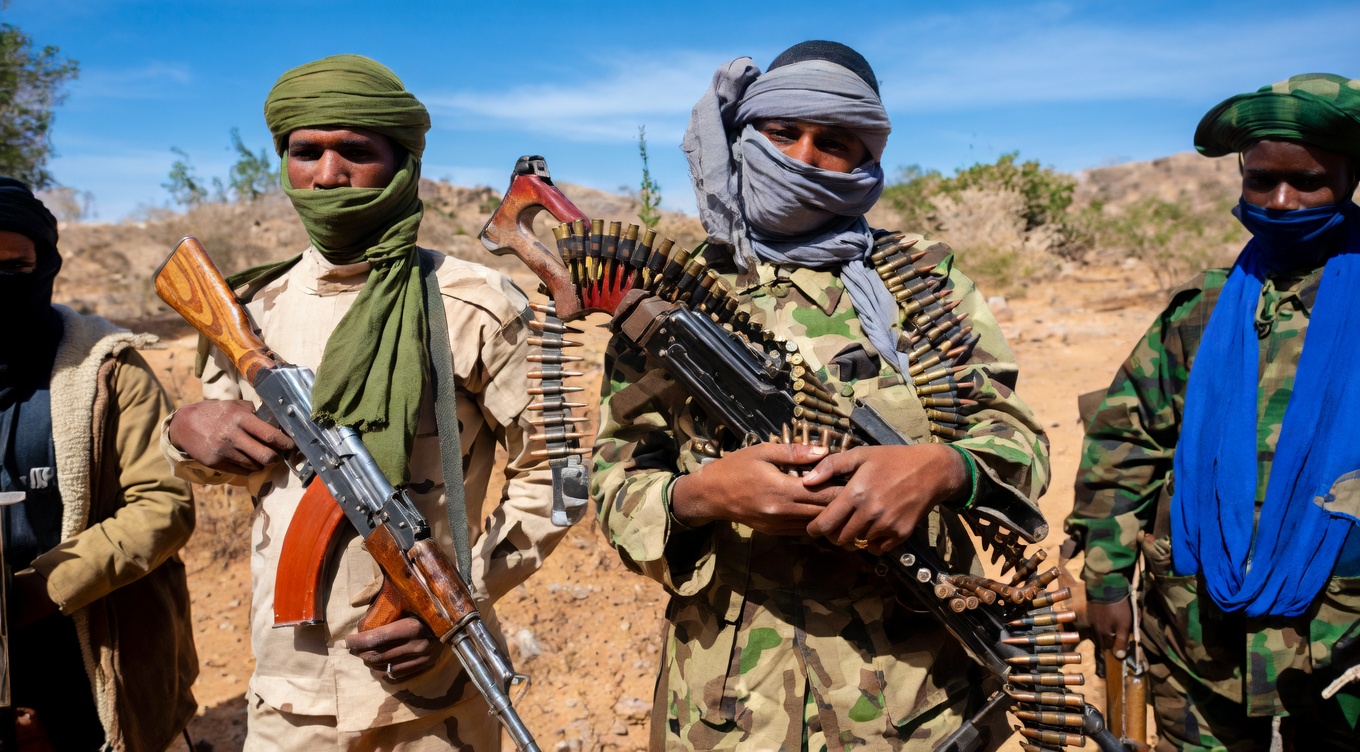
They are now appearing on social media platforms, particularly TikTok, where they livestream, display wealth, interact with followers and project influence to audiences far beyond the communities affected by their activities, mostly in Northern Nigeria. Bandits are now flanked by belts of 7.62mm ammunition, an AK-47 and sub-machine guns.
The development is now making TikTok, which began as a platform for entertainment, dance challenges and comedy skits, to confront a troubling reality.
Findings showed that they now use TikTok and Facebook videos to frame their violence as a justified’ rebellion or retaliation’ against marginalisation, and called it their own version of survival or hustle.
Criminality and social media
The recent circulation of viral TikTok live streams allegedly featuring suspected bandits sparked widespread outrage across Nigeria.
In some of the videos, men believed to be operating from forest hideouts appeared displaying large bundles of cash, while interacting with viewers in real time.
The broadcast attracted thousands of comments, shares and reactions, turning what many expected would be universally condemned content into a subject of national fascination.
Security observers said the phenomenon called attention to how digital platforms could inadvertently provide visibility to actors who previously depended on anonymity.
A security expert, who preferred to remain anonymous, stated: “Historically, bandit groups thrived in secrecy. Their operations depended on remaining hidden from security agencies and the public. But social media has changed that dynamic.
“Instead of remaining invisible, some now appear willing to showcase their lifestyles, communicate directly with audiences and cultivate online attention.
“The result is a new form of criminal visibility that combines fear, curiosity and influence.
“More disturbing is that some Nigerians have been asking the bandits to send money to them. How can a sensible Nigerian do that?
“These people have either killed some people to get the money or forced families to sell their property to raise ransom. How do you expect such money to bring good things for you?
“All I can say for now is that those of us in the security agencies know what to do about the development. We are already doing the needful.”
Rise of ‘bandit influencer’
Findings showed that one of the most troubling aspects of the phenomenon is the apparent transformation of some suspected criminals into social media personalities.
Names such as Sule Yellow and his associate, Auta, became widely discussed after reports linked them to viral live streams that attracted significant public attention.
While security agencies continue investigations into such activities, analysts noted that the broadcast revealed a sophisticated understanding of how social media algorithms work.
Investigation showed that platforms such as TikTok reward engagement. The more shocking, controversial or sensational a video becomes, the more likely it is to attract views, comments and shares.
The ability to communicate directly with thousands of people allows suspected criminals to shape narratives, project strength and create an image of invincibility that may not reflect realities on the ground.
Figures like Bello Turji and other tech-savvy militia leaders probably understood that the algorithm rewards bravado. He was one of the bandits that made names on social media. He was the most visible and brazen bandit kingpin in the North West. He operated primarily out of Zamfara and Sokoto States. His foot soldiers, according to findings, routinely utilised social media platforms to release video manifestos, display sophisticated arms, and counter state narratives.
Dogo Giɗe (Abubakar Abdullahi Maru), is another heavily armed commander in Zamfara, Katsina, Kaduna, and Niger states. He was known for major school abductions. His network utilised digital channels to project absolute control over rural farming communities and enforce illegal local taxations.
Also on the list is the late Kachalla Halilu Sububu Seno (Halilu Buzu). Before he was neutralised in a high-profile military operation in Zamfara State, he was a dreaded arms supplier commanding over 1,000 men. His vast wealth from illegal gold mining and arms trafficking might have laid the structural blueprint for younger bandits to flaunt resources online.
Also, Ali Kachalla (Ali Kawaje) is an infamous leader based in the Kuyambana Forest known for downing a Nigerian Air Force Alpha Jet. His younger militia members were among the earliest waves of forest fighters observed, leveraging mobile devices to upload intimidating war-front content.
In the same vein, Auwalun Daudawa, was said to be the chief mastermind behind the Kankara schoolboys abduction in Katsina State. His brief, highly publicised repentance and subsequent return to the trenches, sources said, showed how bandit actors oscillate between mainstream media spotlights and forest networks.
Also Kachalla Maude was a notorious commander, who terrorised the Batsari and Safana axes of Katsina State before his capture by the Civilian Joint Task Force (CJTF).
Ado Aleru was also a heavily wanted kingpin, who generated immense national outrage when he was given a traditional chieftaincy title in a particular state.
Fear to Fame
It was further gathered that the most unsettling development is how online audiences sometimes respond to such contents from the suspected bandits on social media.
Some live streams reportedly attracted admiration, praise and even requests for financial assistance, rather than universal condemnation.
Comment sections often reflected a complex mix of reactions. While many viewers condemned the broadcasts and expressed concern about insecurity, others treated the live streams as entertainment.
Some users reportedly requested money, posted account details and interacted with the broadcasters as though they were celebrities or influencers.
Invitation to suspected bandits
A perusal of TikTok showed that some Nigerians themselves have been extending requests for friendship to the suspected bandits in the social media. They have also been inviting them to come to different parts of Nigeria , including Mowe Ibafo axis of Ogun State, Ibadan and Ogbomoso in Oyo State, Osun State, Lagos, Sagamu in Ogun State , Kaduna State, and some states in the South East
One of such requests was posted by an account in TikTok, which goes by the name, ‘tifeh1236’. The owner of the account posted on the comment section of one of the live streams by a suspected bandit on the TikTok: “Come to Mowe Ibafo pls.”
Some days later, gunmen struck in Mowe, killing a soldier, while policemen were injured, and killed four other captives during a failed rescue operation.
One person, who goes by the name ‘Aroni Ede’ on the social media platform, also wrote in Yoruba on the social media.
He said: “Last week, this lady, who goes by the name tifeh1236, posted in the comment section of bandits on Tiktok that they should come to Mowe Ibafo.
“Yesterday morning, the bandits attacked Mowe. They killed a soldier. Policemen got injured, and four civilians were sent to heaven prematurely.”
Another account, salamsakam1, also posted in the comment section of a live stream by bandits: “We can’t wait to see you guys in Ogun State (Shagamu to be precise).”
The post in the comment section also included “Can we be friends? I wan join abeg”, by Macon666; “When are you coming to Ibadan”; “Please come Osun State”, by Nobleman2220; “We can’t wait to see you guys in Lagos”” by billingchase1; “ Are you still coming to Ogbomoso?” posted by tiktkpoliceofficer’; as well as “Come to Anambra’, by Chief Egosinachi; and “ When are you coming to Ilorin?”
Some Nigerians are also on the TikTok, condemning the development and asking security agencies to clamp down on the people behind live streams, the bandits, the people requesting money from and friendship with the bandits, as well as those inviting them to different communities.
Economics of desperation
The reports that some viewers allegedly received money transfers after participating in livestream sessions generated intense public debate.
Although no official list of recipients has been released by law enforcement agencies, the reports raised important questions about the relationship between poverty, social media and criminal influence.
Danger of normalising crime
For sociologists and security analysts, the greater threat may not be the videos themselves but the messages they communicate.
In regions where opportunities are limited and unemployment remains high, the public display of wealth by suspected criminals could send dangerous signals to young people.
National Publicity Secretary of a Yoruba pan-political organisation, Afenifere, Mr. Jare Ajayi, when contacted, warned that the glamorisation of criminal lifestyles could contribute to recruitment efforts by organised criminal groups.
He noted that by portraying themselves as powerful, wealthy and untouchable, such actors might seek to attract admiration and potential followers.
“The battle against banditry therefore extends beyond military operations. It also involves challenging the narratives that make criminality appear attractive. Kidnapping and banditry must be made unprofitable,” he stated.
Social media challenge
Critics argued that global technology platforms often struggle to respond effectively to security-related content emerging from African countries.
Available information showed that videos could attract thousands of views before moderators intervened. By the time content is removed, screen recordings might already have been downloaded, shared on WhatsApp groups and reposted across multiple platforms.
Security agencies and digital battlefield
Experts noted that social media content could reveal valuable information about geography, movement patterns, associates and operational methods.
The reported arrest of Sule Yellow after security agencies monitored his online activities pointed attention to the growing importance of digital intelligence in modern security operations.
For investigators, according to sources, social media platforms have become important sources of evidence and intelligence.
It was argued that the same technology that allows suspects to project influence could also expose them to detection.
Police evolving strategies to meet modern security challenges –FPRO
The Force Public Relations Officer (FPRO), Anthony Placid, when contacted for his comments on the issues raised,, appreciated Saturday Sun’s commitment to investigating pressing security concerns.
He noted that as the Nigeria Police Force (NPF) continues to evolve its strategies to meet modern security challenges, it is crucial that the public understands the operational realities, successes, and complexities behind the issues.
Bandits and live sessions on social media
Lately, bandits have been seen holding live sessions and flaunting huge ransom money on TikTok, Facebook, and other platforms. Why is it difficult for the police to track and arrest them?
In his response, be said: “The Nigeria Police Force is fully aware of this disturbing trend of ‘cyber-enabled banditry’, where criminals attempt to use social media for psychological warfare, intimidation, and false bravado.
“However, it is a misconception that they are untraceable. Just recently, a notorious suspected bandit, Sule Yellow, who gained viral notoriety for flaunting ransom money on TikTok live sessions, was successfully tracked and arrested through a coordinated intelligence operation.
“The operational difficulty lies in the terrain and the nomadic nature of these criminals. Bandits do not operate from fixed addresses or permanent technical hubs; they are constantly on the move across vast, contiguous forest reserves, spanning multiple states in the North West and North Central zones.
“They access telecom signals dynamically, often using intercepted devices, solar-powered mobile boosters, or roaming across borders.
‘Furthermore, digital tracking provides geographical coordinates that often map to dense, difficult terrains. “Launching an immediate kinetic assault requires tactical precision to avoid collateral damage, especially when hostages may be held in the vicinity.
“The police, in synergy with the military and sister agencies, rely on a mix of digital forensics and ground intelligence to strike at the most opportunistic, high-yield moments, proving that while these bandits can broadcast online, they cannot outrun the law indefinitely.”
Nigerians asking, receiving money from bandits
Placid also spoke on the cases of Nigerian youth asking for and receiving money from bandits through social media by sending their account numbers. Is the police aware of this, and how is it being handled?
According to him, the NPF is actively monitoring the developments. He added that it’s deeply concerning to see a segment of Nigerian youth, trivialising national security or attempting to ‘financialise’ relationships with designated terrorists and bandits under the guise of ‘online giveaways’ or social media banter.
”Let me be unequivocally clear: receiving funds from, or providing financial channels to, a designated criminal or terrorist group is a severe federal offence under the Terrorism (Prevention and Prohibition) Act.
“The police handle these incidents through our Cybercrime Unit and the Force Intelligence Department (FID).
“When these accounts come to our radar, either through ongoing financial intelligence monitoring, inter-agency reports from the Nigeria Financial Intelligence Unit (NFIU), or direct digital surveillance, the accounts are flagged, and Post-No-Debit (PND) orders are instituted.
“We investigate the intent behind these transactions. If it is established that an individual knowingly engaged or solicited funds from these elements, they are treated as accomplices, terror-finance enablers, or beneficiaries of crime proceeds, and prosecuted accordingly.”
Arresting bandits through account details
Some youth are openly encouraging the bandits on social media and getting money. A certain male character claimed he got N100,000, after which his benefactors – suspected bandits – reportedly told him to get the sum of N100 million ready for them. Why can’t the police arrest those engaging these bandits through their account details?
The FPRO said the case of the individual who claimed to receive N100,000 only to be blackmailed or targeted for a N100 million extortion “ highlights the dangerous reality of playing with fire. Social media clout-chasing can quickly morph into a severe security threat.
“The police can and do make arrests in these circumstances, but the public must understand the procedural timeline. To arrest an individual based on financial details, the police require formal reporting, actionable intelligence, or a court order to lift banking secrecy and trace the account ownership.
“Often, these viral claims occur in a vacuum; they are talked about online, but no formal report or official intelligence is lodged with the police by the victims or witnesses.
“Additionally, many of these characters use pseudonyms, VPNs, and proxies online, and the bank accounts provided may be compromised, stolen, or registered under false pretences (mule accounts).
“The Nigeria Police Force is systematically working with the Central Bank of Nigeria (CBN) and commercial banks to close these loopholes.
“We urge citizens: if you possess specific account details or identities of persons engaging with bandits, bring that intelligence to the police so we can execute swift legal arrests.”
SIM cards and linking them to NIN and BVN
Some years back, Nigerians went through challenging times re-registering their SIM cards and linking them to NIN and BVN to aid security agencies. How have these modes of identification helped the police in fighting insecurity?
The FPRO, Placid, who commended the exercise, noted: “The integration of SIM cards with the National Identification Number (NIN) and Bank Verification Number (BVN) remains one of the most significant foundational pillars of our modern internal security architecture. It has drastically reduced the anonymity that criminals previously enjoyed. These identity frameworks help the police in several ways.
He added that the benefits included narrowing the search and evidence gathering.
“They allow our forensic investigators to map out the communication networks of kidnapping syndicates, identify their logistics suppliers, and trace the flow of illicit wealth.
“They provide airtight digital and financial footprints that are indispensable for successful prosecution in courts of law,” he said.
Placid stated further that the public must realise that identity integration is not a magical instantaneous solution to physical crime, especially when dealing with nomadic bandits.
“Bandits frequently bypass these systems by stealing SIM cards from their victims, using identity-theft techniques to register lines through compromised agents, or operating in remote border areas where they utilise foreign telecom networks. The identity tools are highly effective, but they are part of a broader, multi-layered security strategy that includes physical border control, community policing, and tactical field operations.”
The FPRO also responded to a question framed thus: In other climes, when ransoms are paid, bills are marked or accounts are easily traced. Why is this difficult in Nigeria?
His words: “The comparison to ‘other climes’ is valid, but we must look at the structural and operational differences:
“In many developed nations, the financial ecosystem is highly digitalised, and cash transactions are heavily restricted, making large volumes of physical cash stick out.
“In Nigeria, the high volume of cash in circulation within informal markets makes tracking unmarked cash incredibly difficult once it enters general circulation.
“Furthermore, marking bills effectively requires advance notice and controlled drops. In many Nigerian cases, families pay ransoms secretly without involving the police or providing the required timeline to mark bills, out of fear for the safety of their loved ones.
“When the police are kept in the dark, our ability to apply these forensic tools is neutralised.
“When ransoms are paid into bank accounts, they are traced. However, modern bandits rarely use their own legitimate bank accounts. They utilise sophisticated networks of ‘money mules’, often rural folks whose identities are stolen, or unsuspecting individuals whose accounts are hijacked.
“Alternatively, they immediately move the funds through a rapid succession of digital micro-finance platforms, point-of-sale (POS) operators, or cryptocurrency assets to obscure the trail before traditional banking blocks can be instituted.
“The Nigeria Police Force, through the Office of the National Security Adviser (ONSA), is continuously working with tech platforms, like TikTok, which recently removed millions of non-compliant videos and stopped tens of thousands of illicit live sessions in Nigeria, and financial regulators to tighten these systems.”
Online interaction with bandits
The FPRO, Placid also made a final appeal to Nigerians on their safety. Security, he said, is a collective responsibility.
“We urge the media to help us sensitise the public: do not romanticise or interact with bandits online, report suspicious financial and digital footprints early, and trust the police with timely information so we can secure our communities.”