Follow Us on Google
By Rita Okoye
The global fight against tuberculosis (TB) continues to face formidable challenges, particularly in dense urban environments where the disease can spread rapidly. However, a transformative approach is emerging from the intersection of public health and advanced technology, championed by experts like Babatunde O. Owolabi. His ongoing research, “Predictive AI-Driven Epidemiology for Tuberculosis Outbreak Prevention in Achieving Zero TB City Vision,” presents a compelling roadmap for leveraging artificial intelligence to finally bring TB under control in cities worldwide.
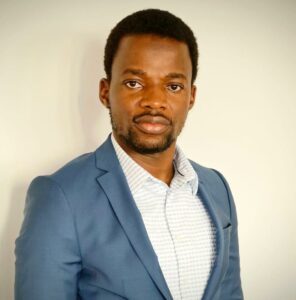
Babatunde, an accomplished cybersecurity and public health professional with over a decade of experience leading high-impact healthcare and digital e-health initiatives, understands the intricate dance between disease dynamics and urban complexities. “Tuberculosis is not just a medical challenge; it’s a societal one, exacerbated by urban density, health disparities, and fragmented data,” states Babatunde, an expert in safeguarding health information systems and driving compliance with global security standards. His work underscores the urgent need for innovative tools to preempt outbreaks before they escalate.
Traditional epidemiological methods, while foundational, often rely on retrospective data, limiting their ability to forecast future trends with the necessary precision. This is where predictive AI steps in as a game-changer. “AI allows us to move beyond simply reacting to outbreaks; it enables us to predict them, giving public health officials the invaluable gift of time,” Babatunde explains, highlighting the shift from a reactive to a proactive public health paradigm. The “Zero TB City” initiative, a global effort to eliminate TB at the municipal level, critically depends on such forward-looking capabilities.
The core of Babatunde’s research lies in the integration of predictive AI into urban TB surveillance systems. By harnessing vast and diverse datasets – including clinical records, demographic profiles, geospatial data, and real-time social determinants – AI models can unearth subtle patterns and predict emerging TB hotspots with remarkable accuracy. This comprehensive data integration is crucial for building a nuanced understanding of disease spread that eludes conventional analysis.
While he was addressing a cross section of the TB Actors, TB survivors, Civil Society Organization and international partners at the joint TB review meeting at Lagos Island general hospital on site visit in June 2022, he details the superiority of machine learning and deep learning approaches over traditional statistical methods. These advanced algorithms are adept at handling the ‘noisy’, incomplete, and non-linear data that is typical of real-world TB epidemiology. This robustness is vital in dynamic urban settings where data collection can be inconsistent and complex.
Specific AI techniques, such as Bayesian inference, recurrent neural networks, and ensemble learning frameworks, are explored for their ability to dynamically adjust predictions based on new data inputs. This adaptability means that the models can continuously learn and improve, offering more timely and accurate outbreak warnings as new information becomes available. Such iterative learning is paramount for effective disease control.
One of the significant contributions of this research is its focus on how AI can model spatiotemporal trends, identify high-risk populations, and optimise resource allocation. This goes beyond mere prediction; it provides actionable insights. For example, AI can direct limited resources to specific neighbourhoods or demographics most vulnerable to TB, ensuring maximum impact from public health interventions.
Moreover, he delves into the critical ethical, infrastructural, and policy considerations necessary for deploying AI-driven epidemiological tools. Babatunde emphasises the need for transparent algorithms, robust data governance, and proactive community engagement. “Technology is only as effective as the ethical framework it operates within,” he asserts, stressing the importance of trust and public acceptance for successful implementation.
The paper presentation provides a comprehensive roadmap for operationalising AI within the context of the Zero TB City campaign. It bridges the gap between digital innovation and tangible public health impact, offering practical strategies for city authorities and health organisations. This includes guidelines for data sharing, model validation, and ongoing monitoring to ensure AI systems remain fair and effective.
Cities like Chennai, Ho Chi Minh City, and Karachi have already made strides with “search-treat-prevent” models, demonstrating the potential of aggressive case-finding and preventive therapy. However, Babatunde’s ongoing research highlights that integrating AI can overcome limitations in scalability and coordination, which often hinder sustained progress. AI offers the digital infrastructure needed for real-time surveillance.
“Our goal is to create truly intelligent surveillance systems that can see around corners, preventing suffering and saving lives before the disease takes hold,” Babatunde articulates, envisioning a future where TB is not just treated, but systematically prevented through intelligent foresight. This proactive stance is essential for meeting ambitious global targets, such as the End TB Strategy’s aim for a 90% reduction in TB deaths by 2030.
The integration of AI also addresses the persistent issue of underdiagnosis and underreporting of TB cases, which currently fuels transmission cycles. By enhancing diagnostic precision and optimising intervention timing, AI technologies can address long-standing bottlenecks in TB control. This means more accurate data, leading to more targeted and effective interventions.
Babatunde’s work at the Grant Management Unit, Lagos State Ministry of Health, Nigeria, further underscores his practical understanding of public health implementation.
His insights are not merely theoretical; they are grounded in the realities of managing health programmes and leveraging digital tools for optimal outcomes. This practical experience lends significant weight to his academic contributions.