Follow Us on Google

“Isolation is a self-defeating dream.”
—Carlos Salina de Gortari
By Omoniyi Salaudeen
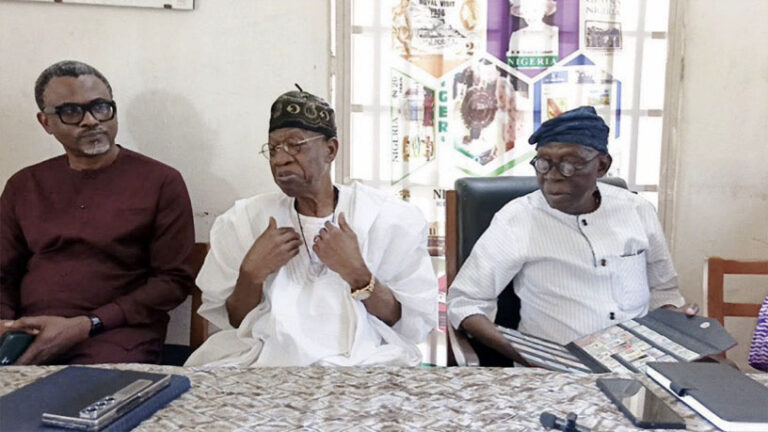
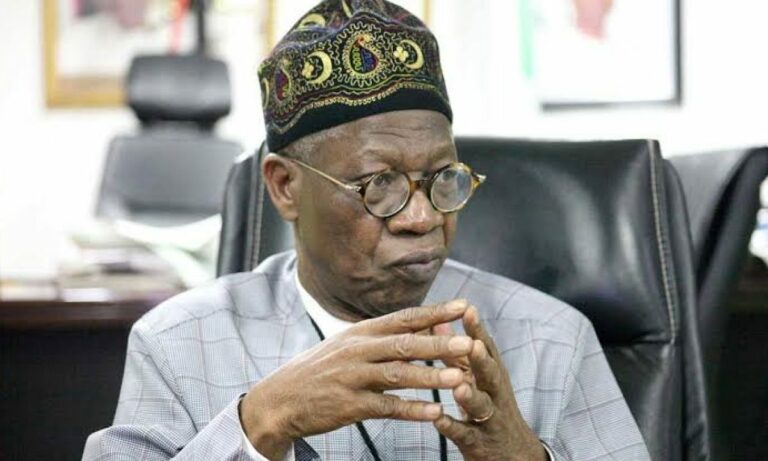
Former Secretary to the Government of the Federation, Babachir Lawal, is back in the headlines after his sudden withdrawal from the opposition coalition. His blistering criticism of the ADC primaries that produced Atiku Abubakar as the party’s presidential candidate for the 2027 election has cast him as an unlikely hero and self-styled champion of democratic ideals. In a sharp break from his past posture, Lawal described the primary as “massively rigged” and argued that the process eroded confidence in the party’s internal democracy.
He is yet to announce his next political destination, and he is unlikely to do so until he resolves what looks like a crisis of identity.
His rapid shifts over a short political cycle highlight the volatile, highly transactional nature of Nigerian opposition politics. Nigerian politics rewards loyalty until it stops paying. Then it rewards reinvention. Lawal has mastered both. By aggressively pivoting away from both Peter Obi and Atiku Abubakar, the former SGF finds himself stranded in a self-inflicted political wilderness. But this is not his first reinvention. It is the third in 10 years. Playing the faith card in 2023, Lawal emerged as one of the most vociferous critics of the All Progressives Congress (APC) Muslim-Muslim ticket of Bola Tinubu and Kashim Shettima. Positioning himself as a defender of Northern Christian interests, he broke away from his long-term ally, Tinubu, and endorsed Peter Obi of the Labour Party.
This move was packaged as a principled, pro-democracy stand against religious exclusion. Lawal held press conferences, granted interviews, and mobilised Christian groups. For months, he was the face of “CAN politics” in the North. And when Obi ultimately finished third with 6.1m votes, Lawal was left without a direct line of influence to the incoming administration. The Labour Party had energy, but no structure. Obi had goodwill, but no governors. Lawal’s gamble on a “new Nigeria” movement collided with Nigeria’s old reality: elections are won by parties with ward chairmen, not Twitter trends.
Recognising that the Labour Party alone might not defeat the APC, Lawal became a major proponent of a grand opposition coalition. He threw his weight behind the African Democratic Congress (ADC), championing it as the ideal alternative vehicle to rescue Nigeria. The logic was sound. ADC had ballot presence in all 36 states. It had no toxic baggage. It could serve as a neutral platform for Atiku’s PDP structure, Obi’s LP base, and disgruntled APC members. At this stage, his rhetoric focused entirely on democratic ideals, institutional integrity, and building a formidable front to challenge the status quo.
Other News
Lawal sold ADC as the party of ideas, not personalities. He argued that Nigeria needed process over power. For a man who once controlled the SGF office, it was a dramatic rebranding: from establishment insider to democratic crusader. But coalitions in Nigeria rarely die from external attack. They die from internal arithmetic. The questions every member asks is: “Who will be the candidate?” “If not me, what do I get?”
Like a pack of cards, the grand coalition experiment quickly fractured during the ADC presidential primary. When former Vice President Atiku Abubakar emerged as the party’s 2027 flagbearer, reportedly defeating figures like former Rivers State Governor Rotimi Amaechi, Lawal immediately rebelled. The numbers matter here. Atiku has run for president six times since 1993. He has the PDP machinery, donor networks, and name recognition. Amaechi had ministerial experience and South-South support. But Atiku had delegates. In Nigerian primaries, delegates vote. Delegates follow money and structure. After the outcome, Lawal made a swift exit from the party and launched an aggressive media campaign, shouting allegations of rigging. At every opportunity to appear on national television, he claimed he had first-hand evidence that the ADC primaries were heavily rigged in Atiku’s favour, questioning how Atiku won despite not doing much campaigning. The ‘not campaigning’ line is politically potent. It paints Atiku as an imposition. But it also exposes Lawal’s dilemma: if Atiku won without campaigning, it means the delegates had decided before voting started. That is not rigging. That is structure. Atiku’s camp fired back through his media team, dismissing Lawal’s tirade as a “cocktail of bitterness and political revisionism,” daring him to present actual evidence rather than throw a tantrum because his preferred candidate lost. The exchange revealed a deeper truth: Nigerian opposition coalitions collapse the moment power-sharing is discussed. Everyone agrees on “remove APC slogan.” Nobody agrees on “who replaces APC.”
Lawal’s current dilemma stems from an inability to anchor his loyalty to any single political movement, leaving him politically isolated. By alienating Tinubu in 2023, abandoning Obi’s structure, and now waging open warfare against Atiku and the ADC leadership, Lawal has run out of major platforms. This is rare even by Nigerian standards. Politics here is forgiving. Defectors are welcomed if they bring value. But Lawal didn’t just leave parties; he attacked them on moral grounds. He called the Muslim-Muslim ticket “anti-Christian.” He called the ADC primary “massively rigged.” Moral accusations are hard to walk back. His identity crisis clothed in the garb of democratic ideals is the classic story of a political strategist who tried to play the role of kingmaker across multiple courts, only to find himself locked out of all of them. Kingmakers succeed when kings win. When kings lose, kingmakers become liabilities. Having stampeded himself out of relevance, Nigerians are now waiting to see his most viable next move. Will he attempt a reconciling return to the APC fold, or try to carve out a completely new, independent third force? Both paths lead to a dead end.
In Nigeria’s typical street-level politics, grassroots currency dictates relevance. Once a political figure loses institutional backing and fails to command a loyal voting bloc at home, his influence is reduced to media optics. Television appearances create noise. Ward meetings create votes. Lawal is loud on cable networks. But can he deliver his polling unit in Hong LGA, Adamawa? Can he deliver Hong LGA for any candidate in 2027? The answer determines whether he is a player or a commentator.
The cost of an APC return is permanent demotion. If he crawls back to the APC, the reception will be cold. In politics, defectors are welcomed back based on the value they bring to the table. Having openly sabotaged Tinubu’s ticket in 2023 on religious grounds, a return now would look entirely mercenary rather than principled. APC stakeholders, especially in the North-East, would immediately neutralise him. He wouldn’t be returning as a kingmaker; he would be a political supplicant.
Interestingly, during his recent TV interview, Lawal let slip that if he ever needed money, he could simply call President Tinubu and get it. Atiku’s camp immediately weaponised this, using it to show that Lawal’s ideology is highly elastic and tied to establishment safety nets. That five-second clip did more damage than 10 press conferences. It framed him as an “establishment man” playing opposition. In Nigerian politics, perception is reality. Once voters believe your principles have a price tag, every future stand looks like negotiation.
As it stands, Lawal’s case is a good characterisation of a general without an army. Carving out an independent path requires structure, deep pockets, or immense organic popularity, the kind Peter Obi leveraged in 2023. Obi had youth energy, social media, and diaspora funding. Lawal possesses none of these at the moment. Even at his local level, he cannot confidently guarantee his ward in Adamawa State. The local political machinery in Adamawa belongs to the major structures of the PDP, APC, and now Atiku’s loyalists in the ADC. Adamawa is Atiku’s base. Lawal fighting Atiku in Adamawa is like fighting Aregbesola in Osogbo. The terrain is hostile. After falling out with Obi, abandoning the broader opposition coalition, and getting into an ugly media war with Atiku over the ADC primary, other opposition figures will view him as toxic. No serious coalition will trust him with internal strategy if he is prone to throwing tantrums and exiting the moment his preferred outcomes, like a Rotimi Amaechi victory, fail to materialise. Coalition politics requires patience. It requires losing today to win tomorrow. Lawal’s exit pattern suggests he wants to win every internal battle. In a coalition of egos, that means you fight alone.
Ultimately, Babachir Lawal has run out of moves because he mistook media visibility for political structure. In the harsh math of Nigerian elections, statements on national television do not count as votes. 100,000 retweets do not equal 100,000 ballots. By alienating the APC, the Obi movement, and now the Atiku/ADC apparatus, he has effectively completed his own political retirement. He is left as a commentator rather than a player—a general whose only remaining army is a collection of press releases.
The lesson for 2027 is clear. Nigeria’s opposition does not need more voices. It needs fewer egos and more institutions. Until then, every principled exit will look like another man searching for a vehicle after missing his flight. Lawal will remain relevant on TV. But relevance on TV is not power in Nigeria. Power is in LG chairmen, ward agents, and ballot boxes. And on that score, the former SGF currently has none.