Follow Us on Google
By Doris Obinna
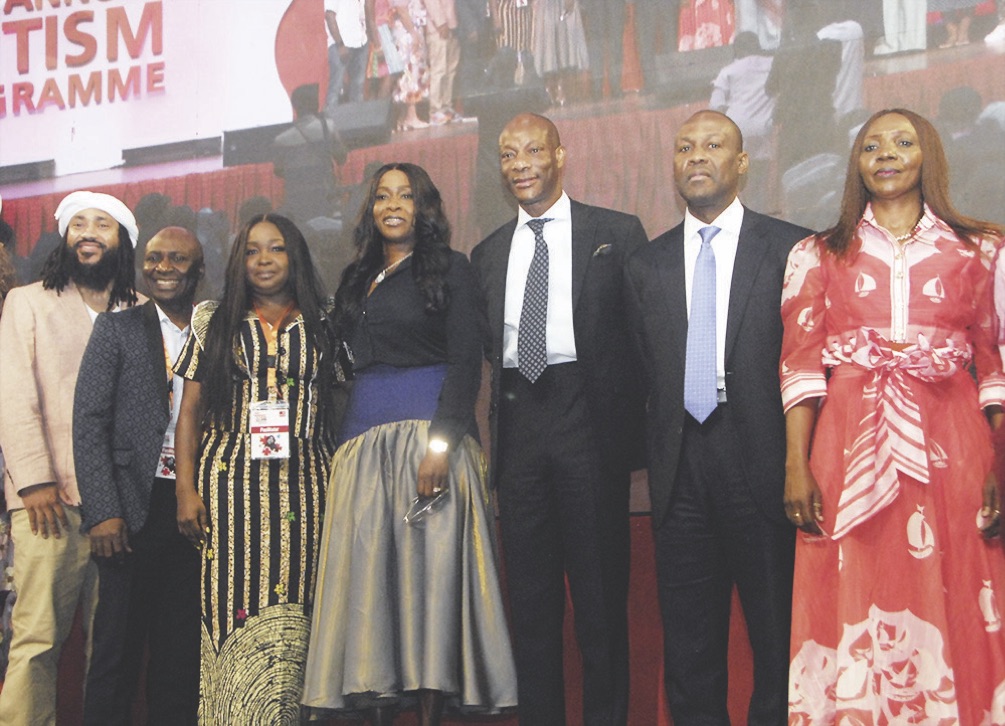
Advocates in the field of autism have urged a decisive shift from mere awareness to tangible, community-driven action at the GTCO Autism Advocacy Programme.
The event, which held in Lagos, marked a significant turning point in autism advocacy in Nigeria and beyond, with stakeholders calling for systemic change and greater grassroots engagement.
Group Chief Executive Officer, GTCO, Mr. Segun Agbaje, stressed the transformative journey of the Autism programme. “The Orange Ribbon Initiative began in 2009 as our commitment to advocate for children with neurodevelopmental disorder and to support the families and caregivers who nurture them. What started as a simple but focused effort has grown to shape how we advocate, listen, and respond.”
Adjunct professor, Endicott College, Massachusetts, USA, Lanre Duyile, reiterated that diagnosis with autism does not mean the same kind of support. He explained the concept of “same diagnosis, different realities” for autism patients, pointing out that just because ten people are diagnosed with autism doesn’t mean they need the same kind of support:
“I don’t know how parents in Nigeria are managing. Services are expensive. There’s little government support, and it’s often private organisations like GTCO that’s stepping in.” He called for deeper systemic involvement through research, policy development, and local partnerships.
Educational Psychologist, Osezusi Bolodeoku, described autism intervention as a divine calling shaped by her own developmental delays and the experience of raising a neurodivergent son: “This is a calling. You don’t just decide to do this. You’re nudged, either by life or by divine purpose.
Other News
“We’ve come far in terms of awareness. But now it’s time to accept and act. Awareness turns the lights on. Acceptance is seeing clearly. Accommodation is what we do about it; it’s the action.”
Founder, Cradle on Special Needs Initiative, Solape Azazi, echoing the need for grassroots involvement disclosed that her organisation has collaborated with local councils and health sectors to extend autism support beyond urban centres. She also challenged the “single story” of autism, advocating for more nuanced narratives and person-centred approaches.
One of the panelists, Rashard Dobbins, emphasising the use of arts in autism advocacy added that his after-school program helps neurodivergent children express themselves through music, dance, and visual arts.
Dobbins, who is founder of The House of Hip-Hop in Detroit, Michigan, underscored the difference between inclusion and empowerment: “Equality is getting everyone in the room. Equity is making sure they can all get up the stairs.”
A parent Abdulhamid Abdullahi, recounting the challenges of raising two children on the autism spectrum a three-year-old boy with mild autism and a younger daughter with a rare neurological disorder linked to a missing purpose chromosome, described the journey from confusion to understanding.
“It starts with observing patterns. When development doesn’t follow expected paths, you begin to ask questions. You read. You research. And eventually, you start to understand neurodivergence.”
While he acknowledged the existence of government facilities such as the Federal Neuropsychiatric Hospital and paediatric clinics, Abdullahi asserted that more needed to be done. “Many professionals still don’t fully understand these children’s needs. There’s a stigma, and that blocks real support. We need a shift in belief, in compassion, and in action,” he said.