Follow Us on Google
From Felix Ikem, Nsukka
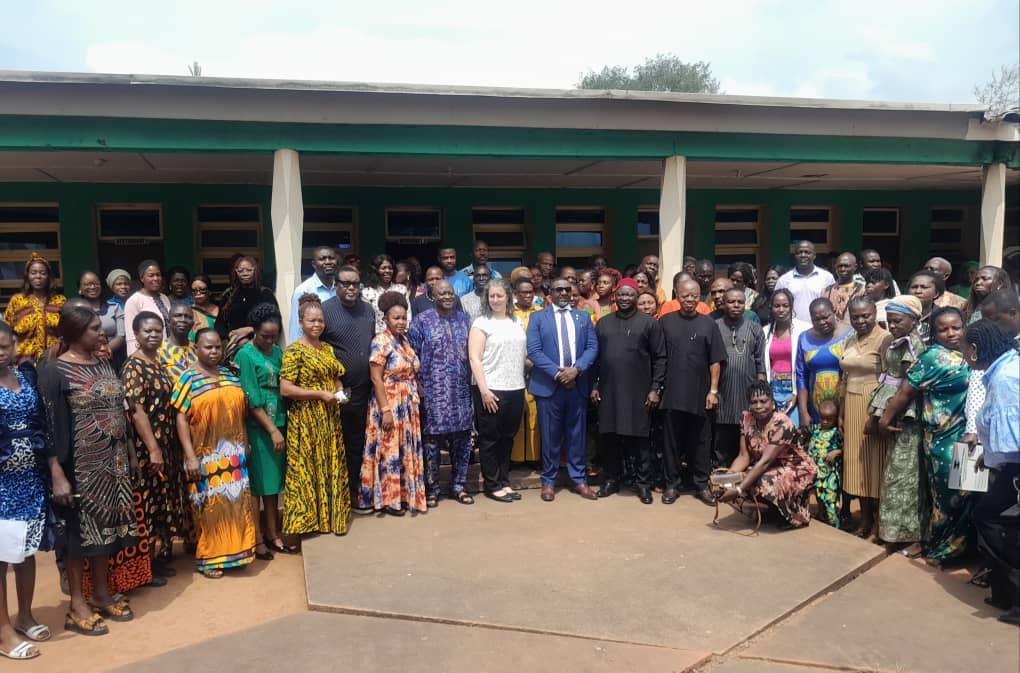
Over 200 farmers from Nsukka, Enugu State, extension agents from the Enugu State Ministry of Agriculture and researchers from the University of Nigeria, Nsukka (UNN) have benefitted from a training workshop on the application of proven knowledge and technologies for locally led adoption.
Organised by the African Technology Policy Studies Network (ATPS) at the University of Nigeria, Nsukka (UNN), with the theme “Phase 2 Capacity-Strengthening Training for Farmers, Agricultural Extension System, and Researchers to Support Inclusive Knowledge Brokering and Increased Climate Resilience.”
Declaring the 2-day training workshop open on Monday, Hon Patrick Ubru, Commissioner for Agriculture and Agro-Industrialisation, Enugu State, commended ATPS and its partners for bringing together those he described as “key stakeholders whose work is central to the future of agriculture in our region.”
“For us in Enugu State, agriculture remains a critical pillar of rural development and economic stability. However, as climate conditions continue to evolve traditional farming practices alone are no longer sufficient. Farmers must be supported with the knowledge, innovations and technologies that enable them to adapt and remain productive.
“This is why locally led adaptation is so important. Solutions to climate challenges must be grounded in the realities of farming communities. Farmers must be active participants in designing adaptation strategies, while researchers generate evidence-based innovation and extension agents bridge the gap between scientific knowledge and practical application in the field.
“This makes the role of the agricultural extension system more important than ever. A strong system ensures that farmers receive timely guidance on improved seeds, climate-smart farming practices, pest management, soil health, and better market opportunities,” he said.
The commissioner noted that the state government under the leadership of Governor Peter Mbah recognises the importance of building a modern, technology-driven climate climate-resilient agricultural sector.
“I commend APTS, West African Green Economics Development Institute (WAGEDI), WAGEDI, IPAR, and International Development Research Centre, Canada (IDRC) for their continued commitment to strengthening climate resilience agriculture across Nigeria and West Africa,” he said.
Executive Director of the ATPS, Prof. Nicholas Ozor, explained that smallholder farmers in Nigeria and Senegal were facing intensifying climate threats with extreme droughts, floods, rising temperatures and soil degradation, which, according to him, undermine food security and livelihoods.
He said that ATPS is a transdisciplinary network of researchers, policymakers, and private sector actors promoting Science, Technology, and Innovation (STI) for sustainable development in Africa, with its headquarters in Kenya, and 30 national chapters across Africa to foster research, policy advocacy, and capacity building in areas like agriculture, energy, and health.
He noted that the training which has been on for three years now has helped the researchers, extension agents and farmers to co-generate, transfer, and adopt proven locally led adaptation technologies, ensuring equitable and inclusive climate resilience.
Ozor explained that the project was supported by the Real Crown Canada called the IDRC.
According to him “IDRC have supported us in a project called ‘strengthening the capacity of extension agents and farmers to use proven knowledge and technologies to support locally led adaptation in Nigeria and Senegal.”
In a remark, Prof Chidi Onuoha, Executive Director, WAGEDI, said that the trainings have impacted positively on the extension system, adding that new technologies and locally led adoption have improved productivity and reduced wastages.
Also, in a remark, Prof Madukwe Michael, National Coordinator ATPS, Nigeria chapter, said that LLA shifts climate action control to local actors, which according to him ensures that communities most affected by climate change drive the planning, decision-making, and implementation of resilience strategies.
“LLA prioritizes local knowledge and addresses structural inequalities, focusing on sustainable, inclusive approaches,” he said.
Marie-Eve Landry, Program Officer, IDRC Canada, said that the project is part of Canada’s foreign affairs and development efforts, noting that IDRC champions and funds research and innovation within and alongside developing countries to drive global change.
She explained that the SCALE project (Strengthening the Capacity of the Extension System to Use Proven Knowledge and Technologies) is actively transforming agriculture in Nigeria and Senegal by empowering smallholder farmers, women, and youth to adopt climate-resilient practices. Led by ATPS with partners WAGEDI (Nigeria) and IPAR (Senegal), adding that the initiative focuses on sustainable, locally-led adaptation.
According to her “We invest in high-quality research in developing countries, share knowledge with researchers and policymakers for greater uptake and use, and mobilize our global alliances to build a more sustainable and inclusive world.”
Landry said that she was impressed with the impact of the project on extension systems in Nigeria, particularly in Enugu and Ebonyi States.
Prof Joel Nwakaire, the project coordinator, said that the SCALE project addresses these systemic failures by strengthening the extension system’s role as a knowledge broker for equitable Locally Led Adaptation (LLA). This training responds to validated needs assessments revealing critical gaps in access to climate-resilient technologies, GESI-responsive knowledge sharing, multi-actor collaboration frameworks, as well as digital and financial literacy
“By bridging these gaps, the initiative empowers stakeholders to co-design and sustain context-specific adaptation, directly aligning with national priorities in Nigeria’s Enugu/Ebonyi states,” he said.
The participants were trained on community mobilization techniques, how farmers can access affordable fertilizer, Agro-ecological practices for climate adaptation, sustainable agroforestry practices for climate adaptation, among others.
The second day of the workshop in Nsukka, featured field engagement which successfully bridged the gap between academic research and practical community application.
The day commenced with a formal courtesy call on the UNN Vice-Chancellor, followed by intensive technical sessions designed for Extension Agents (EAs) and researchers.
Key training modules focused on the social dynamics of climate adaptation, including:
Collaboration Skills: Enhancing the ability of researchers and EAs to facilitate productive meetings with farmer groups.
Conflict Resolution: Developing mediation and leadership skills to harmonize stakeholder cooperation.
Gender Responsibility: Building specialized capacity for gender-responsive climate engagement.
A significant highlight was the transition from theory to practice through field visits to the Edem-Ani and Eziani communities within the Nsukka LGA of Enugu State. During these interactions, farmer groups—particularly women farmers—expressed immense joy regarding the SCALE project interventions.
They noted that the program has left them more empowered and better equipped for sustainable food production. The day concluded with sessions on converting research into policy briefs and practical innovations, ensuring that the project’s impact remains both scalable and enduring.