Follow Us on Google
The Presidency has rejected former Vice President Atiku Abubakar’s proposal for a targeted production subsidy on petrol, arguing that Nigeria lacks sufficient uncommitted crude oil reserves to sustain the scheme.
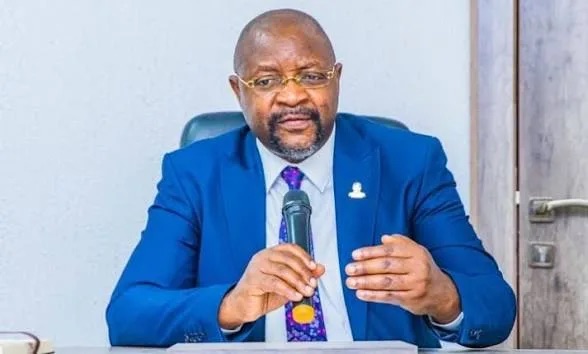
Special Adviser to President Bola Tinubu on Media and Public Communications, Sunday Dare, stated the position in a statement issued on Sunday titled “Atiku’s Demagoguery in the Face of Tinubu’s Logical Policies.”
Dare criticised Atiku, the African Democratic Congress (ADC) presidential candidate, over his recent press conference in Abuja, describing his comments as politically motivated and lacking sufficient economic justification.
Atiku had faulted the 30-day petrol discount introduced by NNPC Retail and the accompanying price modulation framework, reportedly describing the initiative as a “panic-driven gimmick.” He also accused Tinubu of adopting elements of his economic blueprint without implementing the production subsidy he believes would make the policies effective.
In response, Dare cited Finance Minister and Coordinating Minister of the Economy Taiwo Oyedele, who reportedly said on Channels Television that Nigeria produces approximately 1.8 million barrels of crude oil daily for a population exceeding 200 million.
However, the presidential aide argued that total national production should not be confused with the volume of crude oil available for the Federal Government’s discretionary use.
He explained that joint-venture arrangements and production-sharing contracts, alongside production costs, royalties and profit-oil sharing obligations, significantly reduce the government’s share of crude oil.
According to Dare, these commitments leave the state with fewer than 700,000 barrels per day of unencumbered equity crude.
He therefore dismissed Atiku’s proposal, saying a production subsidy without sufficient crude oil volumes to support it would be economically unworkable.
Dare also warned that such a policy could recreate the opacity, fraudulent round-tripping and substantial public revenue losses associated with Nigeria’s former petrol subsidy system.
The Presidency further argued that domestic refineries, including the Dangote Petroleum Refinery, require more crude oil than the government can freely provide without breaching existing international supply agreements. It said this was one reason local refiners also import crude oil.
Dare rejected comparisons between crude oil allocation and agricultural commodities such as garri and cassava, arguing that the comparison failed to account for the structure of international oil markets and contractual obligations.
He also referenced the United States, which he said produces more than 10 million barrels of crude oil daily for a population of about 330 million but sells petroleum products at market prices. He cited Qatar as another example, saying the country had significantly reduced energy subsidies despite its substantial gas reserves and relatively small population.
The Presidency also dismissed Atiku’s suggestion that the NNPC Retail discount represented a return to petrol subsidies.
According to Dare, NNPC Retail introduced the discount to mark Nigeria’s 66th Independence anniversary and subsequently extended the offer for another 30 days.
He aintained that selling petrol at landing cost for a limited period during a global crude oil price surge amounted to temporary cost absorption rather than a return to the previous subsidy arrangement.
Other News
Dare said the initiative allowed NNPC Retail to use its corporate balance sheet to cushion consumers against short-term volatility in international oil prices, with Tinubu’s backing.
He also defended the interim ex-gantry price ceiling of ₦1,350 per litre, describing it as a “structural shock absorber, not price control.”
Under the arrangement, refiners and importers are expected to absorb temporary cost increases above the ceiling and recover the difference when crude oil prices decline or exchange-rate movements provide relief.
The statement added that the ceiling would be reviewed monthly using published cost audits.
Dare argued that maintaining relatively stable petrol prices was preferable to frequent increases and reductions, which he said could trigger transport fare hikes that often remain in place even after fuel prices fall.
The Presidency highlighted other measures introduced by the Tinubu administration to address energy costs and support consumers.
These include establishing a strategic energy reserve, expanding the use of compressed natural gas (CNG), supplying crude oil to domestic refineries through the naira-for-crude arrangement and imposing windfall taxes on energy operators that benefit excessively from price surges.
Dare said CNG could be 60 to 70 per cent cheaper than petrol. He added that proceeds from windfall taxes were earmarked to support interventions such as transport vouchers and minimum-wage assistance.
The administration also plans to enforce the 2025 tax reform laws to address illegal road levies, according to the statement.
Dare further defended the removal of the petrol subsidy and the unification of the foreign exchange market, arguing that the reforms had ended a multi-trillion-naira drain on public funds.
He said the resulting savings were being distributed to the 36 states and local governments through allocations from the Federation Account Allocation Committee (FAAC).
The presidential aide also claimed that the reforms had eliminated fuel queues and closed the gap between official and parallel foreign exchange rates.
The statement also addressed Atiku’s reported description of Tinubu as a “dull student.”
In response, the Presidency said it was absurd for Atiku to describe the President in those terms, referring to Tinubu as a “first-class accounting graduate.”
Dare concluded by arguing that Nigerians should assess the competing economic proposals based on their long-term implications for the country rather than what he characterised as short-term political arguments.
The exchange highlights the disagreement between Atiku and the Tinubu administration over how to cushion Nigerians from high petrol prices, with Atiku advocating a targeted production subsidy and the Presidency defending its existing market-based framework and temporary relief measures.