Follow Us on Google

Onyedika Agbedo
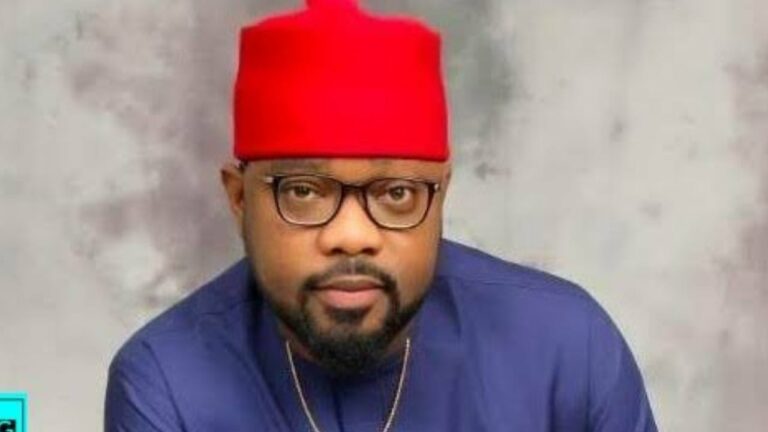
Chief Guy Ikokwu is the Grand Patron of Ohanaeze Ndigbo, Lagos State chapter, and the President of Pan-Ndigbo National Forum (PNF). In this interview, he speaks on issues surrounding the February 3 presidential election in the country, declaring that the candidate of the Peoples Democratic Party (PDP), Atiku Abubakar, has the fundamental right to challenge the result of the election in court.
Ikokwu maintains that it’s only when the legal battle is over that President Muhammadu Buhari can be adjudged as the winner of the election.
What are your reflections on the February 23 presidential election where Ohanaeze Ndigbo endorsed the candidate of the Peoples Democratic Party (PDP), Atiku Abubakar, but he lost?
Well, Ohanaeze as a cultural association is founded primarily on the belief that the Igbo culture has to be sustained. They believe that with the sustenance of the Igbo culture, there is the predication that the Igbo having gone through a civil war of three years understand till date that they can only survive by their own collective effort; and that that collective effort must be predicated on justice, equal opportunity and fair play for the development of not only the culture, but also the industrial and developmental spirit of the people. The Igbo are not born beggars and it is an antithesis for any Igbo man or woman whether in the village or urban area to go with a plate in his/her hand as an able bodied person begging for alms or a means of sustenance or survival. Even during the war itself, you hardly found such a thing. So, we believe that the new Nigeria can be enhanced more by the self-efforts of a people in any part of the country. That means we should go back to the resolution of our founding fathers after discussion with the British and among themselves that there should be regional or zonal autonomy and devolution of powers from the centre to the regional or zonal autonomous groups, so that essentially they can develop from the grassroots up and not the other way round. The people who live in those localities that know exactly what their own priorities are whether in the area of education, agriculture, healthcare or industrialisation. Whatever really matters to them, they categorise it and use it for their own sustenance and development. That is why after a lot of discussion, Ohanaeze as a cultural body, knowing exactly what the people are saying, resolved that we would follow a candidate or party that believes in restructuring of the country; a party or candidate that will give autonomy and the governance system back to the localities and build Nigeria from bottom up and not from up to down. Governing from up to down means authoritarianism, it means a unitary system of governance; it means one man or one group possessing all the powers to do what they like. So, that’s why Ohanaeze threw its weight behind Atiku and the PDP.
Why didn’t Ohanaeze support somebody like Kingsley Moghalu who is from the Southeast, and who also had very good ideas on how to rebuild the country?
A lot of Nigerians not just the Igbo believe that Moghalu has very good ideas. But it’s not an isolated matter. There were a lot of other bright minds that were allowed under the present electoral system to come out and say what they can do for Nigeria. That is why you now have 91 political parties and out of the 91 political parties, you had 71 presidential candidates. Mind you that you are not talking about 71 state House of Assembly candidates, but 71 presidential candidates, which means starting from top to bottom. When given the dossier of the presidential candidates before the election, one of the international observers remarked that Nigeria has 71 presidential candidates, the number of which is more than the number of members of the parliament in his country. It was a very significant observation, but he did say that it was a Nigerian matter. However, the issue I am raising is that if Moghalu and all these other small parties that just came up had been on the front burner for the last three or four years, one, two or three of them would have made a lot of difference because they would have started organising from the bottom-up instead of from the top to bottom. That is the issue. When you look at the result of the election, you see most of them scoring 10 votes. If they got votes from even their towns alone, they would have garnered, 200, 300, 400 or even 5,000 votes where others were scoring 200,000. So, you can see that they were what we call late starters. It is not that some of their ideas are not good; many of them are brilliant. But when you talk of modern day politics, it has to be crowded because politics is not a one-man affair anywhere in the world. So, we did the analysis and discovered that none of them could have won the presidential election. By the gathering of the votes, none of them could win even a governorship election. We just held the governorship election yesterday; not a single one of them can win a governorship election. In fact, only Moghalu’s party, the YPP, won a senatorial seat in Anambra State and the person who won that seat is Ifeanyi Uba. But then either the YPP or Moghalu did not energise Ifeanyi Uba’s victory. Both Moghalu and Uba are from Nnewi, but Uba started his political campaign about eight years before Moghalu. He has moved from PDP to APGA and now to YPP. So, his victory was essentially a personal matter. All that he needed was a platform to drive his personal agenda. So, his victory is not related to YPP or Moghalu.
With the kind of support Ohanaeze gave to Atiku, don’t you think that Ndigbo have once again boxed themselves to a corner in the scheme of things in the country with his defeat?
Well, to start with, the result of the election is not yet over. Therefore, we cannot be so definitive. The electoral guidelines and the law prescribe how the result of the exercise will be definitely announced. The judiciary has its own role to play in elections. Otherwise, why would the APC not be allowed to field candidates for the National Assembly, governorship and state House of Assembly elections in Rivers State? Does it mean that Rivers people do not like the APC at all? One cannot say that. The APC has some following in Rivers State, but when the judiciary intervenes and makes a decision, that decision stands politically. So, what I am saying is that the judiciary has a role to play in our electoral system and it is when it has played its role that an election is finally determined. So, if people say that the PDP candidate from the announcement made by INEC did not achieve victory, he still has a chance. It’s a tripartite system. You have the executive, the legislature and the judiciary. It is when all these in tandem have come to a close that you can say it’s over. So, what is left now is the judiciary, which has a guaranteed role to play in election and election disputes. In the case of Atiku, you find that lawyers and non-lawyers, party men and non-party men have different views and some have told him not to approach the judiciary. But he, his party and his own caucus studied the whole situation and have chosen to go to court to challenge the result of the election. If he proves his case in court, then the result will be upturned; but if he fails the court will uphold the result of the election as announced by INEC. These are elementary things, so why should we abuse our intelligence over elementary issues to the extent that you even see a lawyer telling Atiku not to go to court when there are precedents.
So, you are supporting Atiku’s decision to go to court?
It’s his right! It’s not a question of supporting him to go to court. I am not the candidate; he is the candidate. In 2015, Jonathan was the candidate of the PDP. I was not there when Jonathan called Buhari to concede defeat. And, in fact, there had not been a formal declaration of the winner by the INEC. But he followed his personal gut feeling because he was the candidate. Maybe he consulted a few people who are very close to him and then concluded that it was not worth the trouble.
Unlike Jonathan, Atiku has already filed his case in court. Do you think he will win looking at…?
(Cuts in) I am not the judge. That is not a good question. I am a lawyer and I am not the one prosecuting the case.
But you know that the judiciary has never nullified the result of any presidential election in this country?
But I had told you about how Rotimi Amaechi, the present Minister of Transport became the governor of Rivers State.
We are talking about the presidential election…
He is the Director General of the APC Presidential Campaign Council. Without that judicial intervention who would have known who Rotimi Amaechi is? It was by judicial intervention that he served as governor of Rivers State for eight years. The point is that there could be judicial intervention at any level.
What are your expectations from President Muhammadu Buhari during his second term, especially concerning the alleged marginalisation of the Southeast by his administration?
Buhari himself has said that he would work harder, that he would right some of the perceived wrongs of his first tenure and that he would run a more inclusive government (although that inclusiveness has now been redefined to mean having more women and more youths in his government). For Nigeria’s sake, the vast majority of Nigerians are anxious and waiting for Nigeria’s potentials to be enhanced and released. So, everybody is watchful and waiting to see whether Nigeria’s potentials would be released. And when I say everybody, the international community is inclusive, especially ECOWAS because if Nigeria sneezes, the whole of West Africa catches cold. If Nigeria’s economy and political potentials increase very much, it enhances whatever is happening in West Africa, not to talk of Africa as a continent. Having said that, more Nigerians believe that things should be better at the grassroots, the state level, and then trickle upwards than the other way round. If the second tenure of President Buhari is actualised and he says he will be willing to right some of the wrongs in his first term, the one way to do that is to devolve powers from the centre to the regional governments and the zones. That will be the very first indication that things are turning around. So, if I’m his adviser, if his mandate is actualised, I will say, ‘Mr President, now that you have been fully confirmed by all arms as president, please go to your archive and bring out the various reports about the restructuring of the country and see what powers can be devolved from the top to the states.’ Even President Buhari himself cannot ignore the fact that if the states are no longer feeding bottle states, they can pay the salaries of their workers. Some will pay more while some will pay less. That is what happens even in the U.S. All governors in the U.S don’t earn the same salary; it depends on the potentials and the Internally Generated Revenue (IGR) of the states. What I am saying has nothing to do with party politics; we are talking of the governance of the country itself, the welfare of the citizens. With devolution of powers, you will find that the states will no longer be going to Abuja every month to get feeding bottle to see if they can pay this or pay that. We would have more aggregation of efforts at the lower sectors and the economy of the states will grow. They will have capacities. You have to reverse the attitude of paying Nigerian workers salaries by borrowing money outside. It’s not workable for any economy. That’s why the 2017 budget was a failure; the 2018 budget was also a failure and the proposed 2019 budget was dead on arrival. If you keep sewing the best dress for your child from borrowed money, when will your child grow up to be able to generate enough sustainability on his own to wear good clothes from what he is generating internally. That is the truth of the Nigerian situation. It has nothing to do with party ‘A’ or party ‘B’. Today as a country, we are at the crossroad of whether to move on or to continue to fall down into the depth and it doesn’t matter who is ruling Nigeria. The question is: can we do the right thing for our people.