Follow Us on Google

From Ndubuisi Orji, Abuja
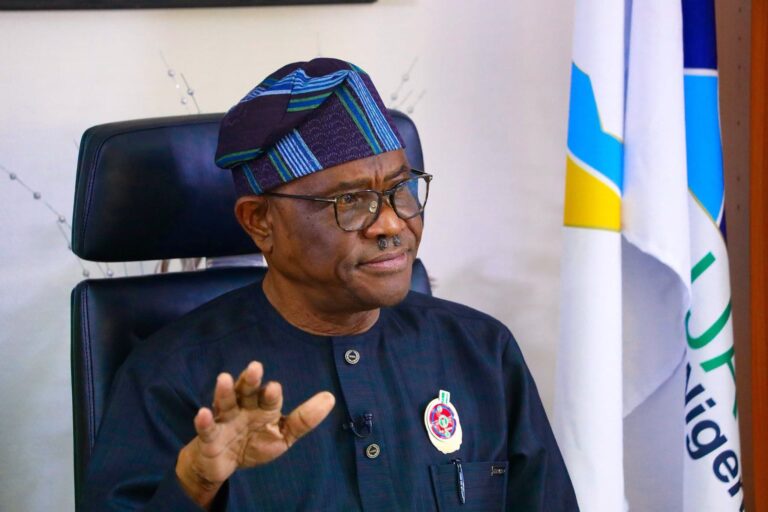
The African Democratic Congress ( ADC) Presidential Candidate, Atiku Abubakar, has lambasted the Bola Tinubu administration over the proposed plan to raise funds through a government-guaranteed bond in the Vienna Stock Exchange.
Atiku, who is also former Vice President, said the proposed Vienna-listed bond was another sign of a government that kept increasing its appetite for borrowing, while allegedly refusing to account for record revenues, fuel subsidy savings and higher crude oil prices.
The Federal Government, in partnership with the Austrian government, is reportedly planning to launch a €1.5 billion bond in the Vienna Stock Exchange to finance foreign investments in Nigeria.
The ADC candidate, in a statement by his Senior Special Assistant on Public Communication, Phrank Shaibu, said it is indefensible that while Nigerian factories are struggling with high energy cost, the government is seeking for more financing abroad, without explaining why improved revenues have failed to reduce its dependence on debt.
“This is the central contradiction Nigerians are entitled to question. The government says revenues are up. It says subsidy removal has saved enormous sums. Oil prices are substantially above the benchmark used for the 2026 budget. Yet, borrowing is accelerating, factories are suffocating under energy costs and ordinary Nigerians are still struggling to afford the basics.
“Before the Tinubu administration goes to Vienna in search of more money, it must first tell Nigerians what has happened to the money already coming in.
“The crisis confronting Nigerian manufacturers provides perhaps the clearest picture of what is wrong with the economy. Diesel has risen to about N2,000 per litre and above in some industrial locations, while the Manufacturers Association of Nigeria says energy-related expenses now consume more than half of manufacturers’ operating costs.
“Manufacturers spent about N1.34 trillion on alternative energy in 2025, yet expenditure in the first half of 2026 alone had already approached the same level. Consider what that means for a factory in Lagos, Kano, Aba or Nnewi. Before the manufacturer pays workers, buys raw materials, transports finished products, services bank loans or makes a profit, a huge part of the operating budget has already disappeared into simply keeping the machines running,” Atiku stated.
Furthermore, the former Vice President, while stating that no economy can industrialise under those kinds of conditions, noted that a manufacturer, who spends half of his operating costs on energy would eventually have to raise prices, cut production, lay off workers or close the factory.
He stated that “whichever option he takes, ordinary Nigerians pay through higher prices, fewer jobs and reduced household income, yet, at precisely this moment, the Federal Government is looking towards Vienna for another financing arrangement.”
According to him, “we are told that ESME Limited, a special-purpose vehicle involving Nigerian public institutions and Austrian interests, is preparing to issue bonds on the Vienna market to finance investments in Nigeria. But Nigerians have not been given a sufficiently clear picture of the financial structure, the size of the proposed transaction, the cost of borrowing, the repayment terms or the extent of the Nigerian government’s exposure.
Other News
“That is where the problem of transparency becomes impossible to ignore. Nigerians are constantly told that revenues have increased, FAAC allocations have risen, enormous savings have been made from subsidy removal and oil earnings have improved. At the same time, the government’s borrowing continues to grow at an extraordinary rate.
“In the first eight months of 2026 alone, the Federal Government’s borrowing from the domestic market reportedly reached N24.7 trillion, compared with N12.98 trillion during the corresponding period of 2025. That is an enormous increase in the government’s demand for capital at a time when Nigerian businesses are themselves desperately searching for affordable credit.
“The contradiction becomes even more difficult to explain when crude oil prices are considered. The 2026 budget was prepared on an oil benchmark of $64.85 per barrel, yet crude prices have moved substantially above that level. If oil earnings are exceeding projections, revenues are rising and the government has indeed saved the huge sums it claims from subsidy removal, why is the appetite for borrowing increasing rather than falling?”
Atiku contended that if the government revenues have increased, crude oil prices are above the budget benchmark and fuel subsidy savings is huge, as claimed by the government, then Nigerians deserve a transparent account detailing what has been earned, what has been spent, what has been borrowed and why additional debt continues to be necessary.
“The Vienna transaction, therefore, cannot be treated as an obscure technical arrangement known only to officials, bankers and financial advisers. Nigerians must know how much is to be raised, in what currency, at what interest rate, for what tenure and through what repayment mechanism.
“They must also know whether the Federal Government is providing any sovereign guarantee, undertaking any contingent liability or otherwise exposing public finances to obligations that may ultimately fall on taxpayers.
“This demand for openness is particularly important because the consequences of excessive borrowing are already being transmitted to the real economy. When the government absorbs enormous amounts of capital from the domestic financial market, manufacturers, farmers and small businesses are forced to compete with the state for increasingly expensive funds.
“The same businesses are simultaneously being forced to generate their own electricity, absorb rising logistics costs and sell to consumers whose purchasing power has been badly weakened. That combination is economically destructive.
“A government cannot continue boasting about rising revenues while factories spend half their operating costs on power. It cannot celebrate subsidy savings while households struggle to afford food and transportation. And it cannot benefit from an oil-price windfall while simultaneously increasing domestic borrowing and searching overseas for additional financing without explaining the arithmetic.
“This is why transparency is no longer optional. Nigerians should not require forensic accountants to collect fragments from different ministries, agencies and financial statements before understanding the condition of their own country’s finances. There should be a clear public trail from revenue to expenditure, from borrowing to projects, from guarantees to liabilities and from higher oil earnings to the public accounts.
“The Federal Government must, therefore, publish the full architecture of the Vienna transaction and provide Nigerians with a comprehensive reconciliation of its increased revenues, claimed subsidy savings, additional oil receipts and rapidly expanding debt obligations,” he stated.