Follow Us on Google

From Lateef Dada, Osogbo
The leadership of the Academic Staff Union of Universities (ASUU), Akure Zone, has called on the Federal Government to honor its commitments and prioritize education in Nigeria. The union expressed concern over the government’s approach to the education sector and urged it to ensure that its members receive a dignified living wage.
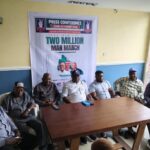
Speaking at a press conference at Obafemi Awolowo University (OAU) in Ile-Ife, Osun State, Professor Adeola Egbedokun, the coordinator of ASUU in Akure Zone—which includes chapters from Federal University Oye Ekiti (FUOYE), OAU, Ekiti State University (EKSU), and Federal University of Technology (FUTA)—stated that investing in education is essential for Nigeria’s future.
Egbedokun critiqued successive governments for their failure to adhere to agreements made with ASUU, leading to increased tensions and industrial discord that threaten the stability of public university education in Nigeria. He emphasized that education should not be treated as a commodity but as a vital tool for national development.
“ASUU National Executive Committee (NEC) observes with grave disappointment the government’s continued failure to prioritize education, treating it as a commercial commodity rather than a social investment,” Egbedokun said.
Other News
The professor highlighted concerns over the government’s undermining tactics, alleging that certain officials misrepresent the status of ongoing negotiations. He criticized the piecemeal payment of promotion arrears dating back to 2017 and the delayed release of deductions owed to cooperative societies, emphasizing that these do not resolve the fundamental issues facing the university system.
“With only a few days left in the agreed one-month window, the government must act with clarity, commitment, and integrity to reach a comprehensive and lasting resolution,” Egbedokun stated.
He noted that ASUU has rejected a proposed 35% salary increase as inadequate, labeling it a tokenistic gesture that fails to address the core concerns of salary and working conditions. He asserted that while some progress may have been made in non-monetary areas, the key issues require decisive action.
“Education, as the bedrock of national progress, deserves special attention and strategic investment—especially in a country like Nigeria, where educational infrastructure and personnel welfare have suffered years of neglect,” he added.