Follow Us on Google
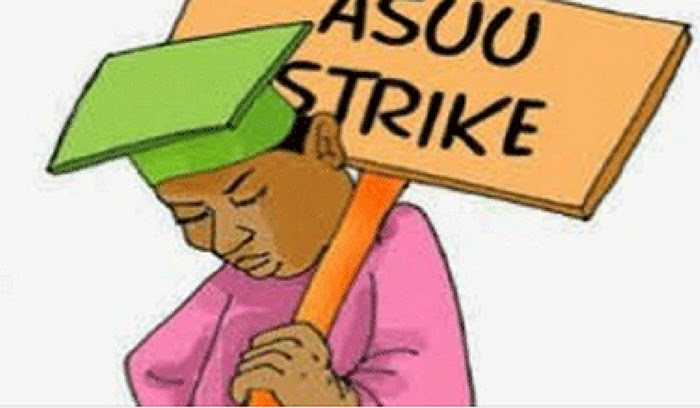
The Academic Staff Union of Universities (ASUU) has enjoined the authorities of 20 universities to prepare for industrial action over
the ailure of the federal and some state governments to implement the 2025 FGN/ASUU agreement. At the end of its National Executive Council (NEC) meeting held at the University of Abuja, ASUU urged the affected branches to issue a 14-day ultimatum before embarking on strike to draw attention to their demands.
Although most of the affected universities are owned by state governments, ASUU president, Prof. Christopher Piwuna, said an emergency meeting would be convened at the end of August or early September this year to take further decisions without prejudice to the ones taken so far.
Since most of the affected universities are owned by state governments, we urge the governors of the affected 20 universities to do the needful and avert the impending strike. Good enough, the governors have enough funds available to them due to improved federal allocation following the removal of fuel subsidy. We advise them to invest some of the windfall in education, especially varsity education. It is not tidy for some of these governors to be rushing to establish many universities when only one fully-funded university will be enough for a state.
Let the governors stop paying lip-service to the funding of their state universities. The poor state of most state universities is regrettable. The country cannot produce the most-need manpower for industrial development if our universities are poorly equipped and funded.
The governors should spare the system of another wave of industrial action when there is enough money to settle all outstanding wage issues with varsity teachers. The governors should prioritise education over other sectors. In 2020, ASUU strike lasted for nine months, from March 23 to December 23, 2020. In 2022, ASUU strike lasted for eight months, from February 14 to October 14, 2022. This annual ritual must not be allowed to continue. Governance is not about building roads, bridges and flyovers. It is also about manpower development and welfare of the citizens.
Other News
When the 2025 agreement was signed after exhaustive rounds of negotiations, there was a sigh of relief across the country and hope that the government would not renege this time. Unfortunately, we are back to square one over government’s poor implementation of the agreement with ASUU. The grievances over the years bordered on the failure of the government to fully implement the revised salary scales, the non-release of university revitalisation funds, unpaid earned academic allowances, and the withholding of salaries from previous industrial actions. The impending industrial action by the union poses a major threat to the country’s tertiary education sector and the government should not allow it to take place.
The frequent industrial action by lecturers and the poor conditions of service in the universities could lead to mass exodus of lecturers to foreign countries in search of greener pastures. This could have adverse effect on public university education in the country.
Public tertiary education in Nigeria has been systematically reduced to an afterthought by the political class. While government officials parade statistics of infrastructure commissions and some investments to unlock billions in other sectors, the real engine of national development – human capital – is being utterly neglected. Some Nigerian public universities have become glorified secondary schools, plagued by brain drain, obsolete equipment, and overcrowded lecture theaters. Talented academics are fleeing the country in droves because of welfare issues.
ASUU has consistently noted that it has exhausted every amicable channel to settle all outstanding labour issues with government. It is sad that government does not abide by agreement it willing entered into with ASUU, leading to industrial action, which is injurious to the nation’s education sector. The economic fallout of these disruptions is immeasurable. Many students are forced into prolonged academic stagnancy, extending four-year degrees into indefinite, agonising journeys. This delay defers their entry into an already hostile labour market, dampens youthful productivity, and fuels a sense of hopelessness that feeds societal insecurity. Parents are left to shoulder the psychological and financial costs of maintaining students in off-campus housing for semesters that never seem to end.
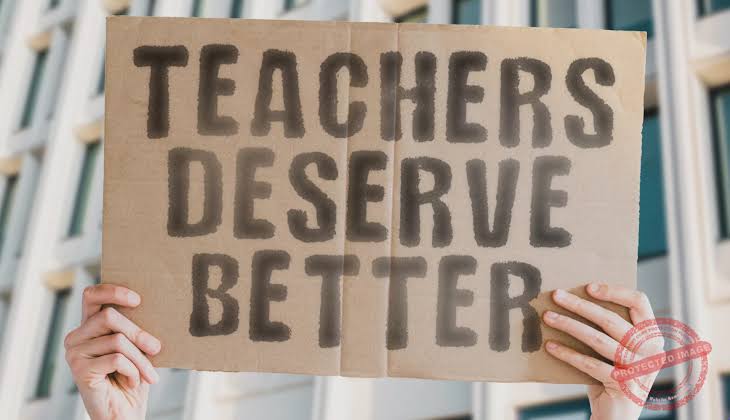
Nigeria cannot build a 21st-century economy on an educational foundation that is perpetually shut down. The federal and state governments must stop treating the 2025 agreement as inconsequential. The 14-day ultimatum is a window for genuine renegotiation, not a period for passive silence. If the government fails to act before the ASUU ultimatum expires, the looming warning strike will inevitably mutate into another total and indefinite strike in the universities. We cannot afford to lose another academic calendar on account of the impending strike. It is time for the government to honor its agreement with varsity teachers.
It is exciting that the federal government has instructed the Economic and Financial Crime Commission (EFCC) to release all recovered funds for use in the education sector. This will boost funding in the sector. With more funds, government should release the necessary subventions, harmonise the payment structures and pay backlogs of earned allowances.