Follow Us on Google
By Moses Akaigwe
No. Auto Spare Parts and Machinery Dealers Association (ASPMDA) has intensified calls for a strategic partnership with the Federal Government as it pushes to reposition Nigeria’s automotive aftermarket industry as a major driver of industrial growth and local manufacturing.
President of the association, Hon. Ngozi Emechebe, said ASPMDA was undergoing a major transformation from a traditional trading cluster into a modern automotive business hub capable of supporting the country’s industrialisation agenda.
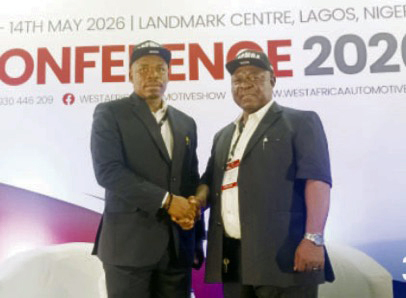
Speaking with journalists at the West Africa Automotive Show (WAAS) in Lagos, Emechebe said the association’s “Keep Nigeria Moving” was built around stronger collaboration with government institutions, regulators, and industry operators to deepen automotive development in Nigeria.
He noted that ASPMDA had evolved beyond the era of unstructured roadside trading, stressing that the association now operates from a well-organised, world-class facility positioned to support national economic growth and attract high-level partnerships.
“For years, I envisioned ASPMDA becoming a central force in Nigeria’s automotive industry,” he said. “Today, we are no longer operating like an informal market. We have built a highly organised system with a world-class environment that can support serious industrial partnerships.”
Emechebe disclosed that discussions were already underway with the Director-General of the National Automotive Design and Development Council (NADDC), Otunba Oluwemimo Joseph Osanipin, on areas of cooperation aimed at strengthening local automotive production, improving spare parts distribution, and supporting indigenous businesses in the sector.
According to him, the proposed partnership would focus on policy support, industry regulation, and operational frameworks capable of expanding opportunities for auto parts dealers and manufacturers across the country.
He also applauded the Federal Government’s vehicle financing initiatives targeted at Nigerian youths, describing the programmes as a positive step toward improving access to mobility and stimulating the automotive value chain.
On the persistent challenge of counterfeit and substandard spare parts, the ASPMDA President said the association had stepped up efforts to sanitise the market through stricter enforcement measures and closer collaboration with regulatory agencies.
He revealed that office spaces had already been allocated within the ASPMDA complex for government agencies responsible for monitoring fake products, enforcing standards, and protecting consumers from adulterated automotive components.
“We are determined to make integrity a culture within this market,” he said. “Anyone bringing products here must be ready to stand by their quality and defend them before the end user. Counterfeiting and adulteration will not be tolerated.”
Although he declined to reveal the exact sanctions for offenders, Emechebe warned that severe penalties awaited anyone caught dealing in fake or substandard products.
He further advocated stronger support for local manufacturing of automotive components, insisting that Nigerian-made parts could outperform imported alternatives if produced according to standards tailored to local operating conditions.
“Locally produced components can even serve Nigerians better than some imported products,” he said. “What matters is maintaining standards that suit Nigerian roads, climate, and usage conditions.”
Emechebe disclosed that some ASPMDA members were already involved in the production of automotive parts, while broader manufacturing partnerships could be explored in the future to expand local capacity.
However, he cautioned investors and operators against poorly structured joint ventures, warning that many business partnerships collapse due to weak management systems and lack of accountability.
The West Africa Automotive Show attracted key stakeholders from across the automotive ecosystem, including regulators, manufacturers, distributors, and dealers, who gathered to examine emerging opportunities and challenges shaping the sector in the region.