Follow Us on Google

…Nigerians in South Africa, Ministry of Foreign Affairs, Nigerian Mission, NIDCOM react
From Aidoghie Paulinus, Abuja
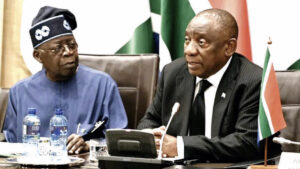
In recent years, relationship between the Republic of South Africa and Nigeria has been marred by xenophobic attacks on Nigerians living in South Africa, leading the administration of former President Muhammadu Buhari and President Cyril Ramaphosa of South Africa to establish the Early Warning Mechanism aimed at nipping the ugly incidences in the bud whenever they occur. But despite this policy approach by both governments, the ugly tide hadn’t been stemmed. Year in, year out, news coming out of South Africa has largely been centred around Xenophobic attacks. Nothing more! Not even economic growth or technological advancement.
Genesis of the crisis
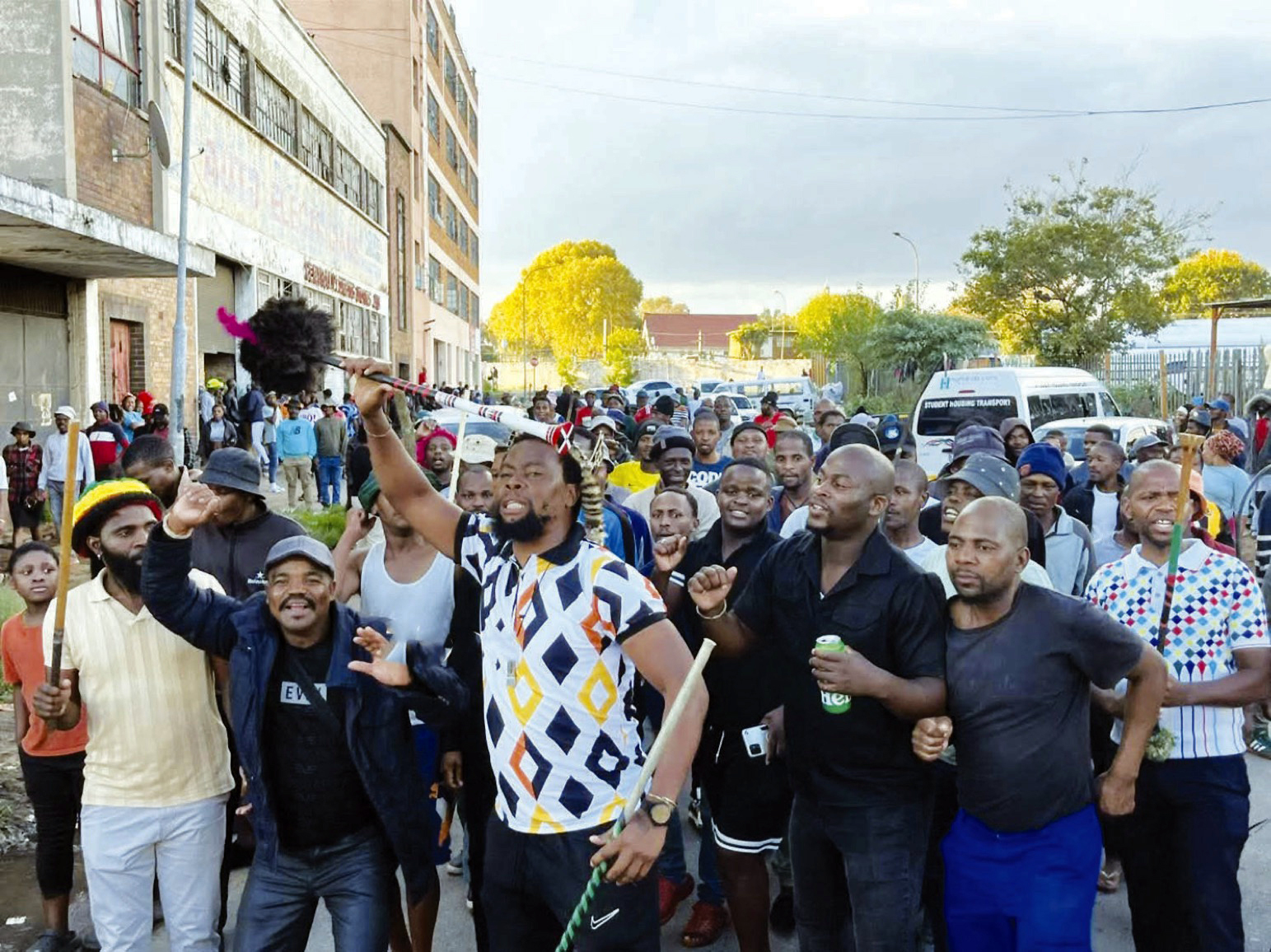
Recent reports showed a renewed xenophobic tensions and violence aimed at foreign nationals as a result of activities of vigilante groups and online threats. While there have been harassment in KwaZulu-Natal, which led to the summoning of the South African envoy in the Republic of Ghana, reports of unrest in Gauteng also gave credence to the attacks.
It is therefore not far fetched to notice that the Republic of South Africa has again visited the world with another wave of xenophobic attacks. The attacks, which are traceable to competition for scarce economic opportunities in the country, predated the 1994 era.
Available data showed that in 2008, for example, a minimum number of 62 persons were killed in South Africa as a result of xenophobic attacks. The development which came to a head in 2015, led other countries to initiate the process of repatriating their nationals out of South Africa. Nigeria, the largest country on the continent and one of the major countries at the receiving end of the attacks, was also not spared.

According to a survey conducted by Pew Research Center, a no-partisan American think-tank based in Washington, D.C, in 2018, 62 percent South Africans expressed negative sentiment about foreign nationals living and working in South Africa, believing that immigrants are a burden on society by taking jobs and social benefits, while 61 percent shared the view that immigrants were more responsible for crimes than other groups.
Current wave of violence
Recent attacks began in Johannesburg, Durban, and East London where shops and property owned by foreigners were vandalised and violence unleashed on African immigrants. Checks indicated that the attacks are fuelled by economic hardship, election-year politics, and organized anti-foreigner protests, with social media amplifying tensions.
According to the President-General, Nigeria Union South Africa (NUSA), Smart Nwobi, South African politicians are responsible for the persistent xenophobic attacks on Nigerians and other foreign nationals in the country. This, Nwobi stated, has been latched upon by the politicians in every election cycle by fuelling xenophobic attacks.
Nwobi’s who spoke with Daily Sun after the recent wave of attacks in the country, particularly in Durban, Johannesburg, and East London where foreigners, including Nigerians, were affected, said it has become a custom in South Africa to target Nigerians unprovoked, targeted them for purposes of xenophobic attacks.
“As you know that this is election year, and in the build up to the preparations for the elections, the politicians, as well as their supporters, in other to have tangible political manifestoes or tangible, achievable things to give or policies for them to win elections, the cheapest way to win election in South Africa is to divert the attention of the locals and to tell them that the people are the cause of their unemployment; the cause of their non improvements is the foreigners in the country, whereas that is not true.
“Now, it is very easy to incite the locals for them to go after foreigners, thinking that if foreigners are attacked and those people come and speak for them, are seen as heroes; are seen as people who would do better if given the chance in the ballot papers, whereas that is a cheap political gains.
“We the Nigeria Union South Africa, I am the President of the Nigeria Union South Africa, we have continued to condemn the attacks on our nationals, attacks on our businesses, attacks on other foreign migrants in South Africa,” Nwobi said.
While condemning the attacks, Nwobi disclosed that the xenophobic attacks have been extended to hospitals and schools.
“At a point in time, we were told that only undocumented, illegal foreign migrants that were being targeted. But if you see some of these Operation Dudulas and similar illegal operations, they have now resulted to saying that all foreigners must go. They have resulted to a vigilanteism kind of attacks. They are not police officers, they are not immigration officers and they are not enforcement officers. These are security operatives that are in the name of anti-migrant campaigns. They have inflicted numerous harms on our nationals,” Nwobi further said.
Plight of Nigerians/Socio-economic impact
An interaction with some Nigerians in South Africa revealed the conditions in which Nigerians survived in the country.
Jola-Michael Abayomi, who spoke with Daily Sun, said xenophobic violence is a very complex situation which is not caused by one thing, but by a combination of economic, social, and political factors.
According to Abayomi, “Economic frustration happens to be the main driver. South Africa has high unemployment, poverty and inequality rates. A great percentage of the South African locals believe foreigners are taking their jobs, and business opportunities. This creates resentment, especially in the poorer communities.”
Speaking further, Abayomi said when people feel economically excluded, they may direct anger toward visible outsiders.
“Competition over resources is one of the major factors. Foreign nationals (including Nigerians) are often active in small businesses and informal trade, while some locals feel excluded or outcompeted economically. Political and social tension is another factor created by some politician or groups to exploit anti-foreigner sentiment for support. Misinformation and rumours are mostly part of the reasons to quickly trigger violence.
“These factors are the major reasons for the scapegoating and blaming of migrants for crime, unemployment and economic- decline,” he also said.
On the plight of Nigerians in danger-prone areas, Abayomi explained that Nigerians living in high-risk areas like informal settlements or inner cities face serious challenges of physical danger such as assault, looting of shops, harassment and intimidation, even as some are forced to prove their legal status or leave the country.
“Violence often happens suddenly and spreads quickly. People are sometimes forced to flee from their home, leaving everything they own and sometimes, separated from families. The rate of discrimination and stigmatization is worrisome, stereotyping and verbal abuse has become a norm,” Abayomi explained.
Dwelling on the socio-economic impact on Nigerians, he disclosed that the effects go beyond physical harm as they deeply affect livelihoods and wellbeing.
“Loss of businesses and income – Shops owned by Nigerians are often looted, burned, and destroyed. This leads to financial ruin and unemployment.
“Fear of attack discourages, entrepreneurship, long-term investment, even students and professionals face limited opportunities. The psychological and emotional impact the victims experience such as stress, anxiety and trauma will reduce investment opportunities.
“Strained diplomatic relations – Attacks have caused tensions between Nigeria and South Africa, affecting cooperation. There is also social exclusion. Nigerians may become isolated from communities, limiting integration and social mobility, and I believe this will cause a strain in the diplomatic relations,” Abayomi concluded.
Another Nigerian living in South Africa, George Omagbemi Sylvester, said xenophobic attacks against Nigerians and other foreign nationals in South Africa are rooted in a volatile mix of economic hardship, political opportunism, and deep-seated social frustration.
He also said with persistently high unemployment and inequality, many citizens particularly in marginalized communities, view immigrants as direct competitors for limited opportunities.
“This perception, though often unsupported by empirical evidence, is fuelled by misinformation and amplified by reckless rhetoric from opportunistic figures seeking political relevance. Compounding this crisis is the troubling pattern of police brutality and selective enforcement, where some victims report harassment, intimidation, or neglect at the hands of those meant to protect them. Weak institutional responses and inconsistent law enforcement further embolden perpetrators, creating a dangerous environment where violence can erupt with little consequence.
“The plight of Nigerians, especially those residing in high-risk areas such as informal settlements and inner-city commercial zones, is both alarming and unacceptable. Many live under constant threat; businesses are looted, homes are vandalized, and lives are disrupted without warning. Nigerian entrepreneurs, who often build their livelihoods through resilience and self-reliance, are frequently targeted during outbreaks of violence. In some cases, interactions with security agencies worsen their vulnerability, as reports of profiling and heavy-handed policing deepen fear rather than provide reassurance. Even those with valid documentation are not immune, as mobs rarely distinguish between legality and prejudice. This climate of fear has forced countless individuals into displacement, financial ruin, or psychological distress, with some choosing to abandon years of hard work to seek safety elsewhere,” he said.
Omagbemi further said socio-economically, the consequences are devastating.
“The destruction of businesses and loss of income have pushed many Nigerians into economic instability, eroding their ability to support families both locally and abroad. Beyond material losses, the human cost (trauma, injury, and in some cases, loss of life) cannot be overstated. Diplomatically, repeated incidents have strained relations between Nigeria and South Africa, raising serious questions about regional solidarity and the commitment to Pan-African ideals.
“If left unaddressed, xenophobia (compounded by institutional failures) will continue to undermine social cohesion, economic progress, and Africa’s collective vision of unity, demanding urgent, decisive, and sustained intervention,” Omagbemi maintained.
Foreign Ministry, Nigerian Mission, NIDCOM speak
Contacted over the development, the Ministry of Foreign Affairs, said the Early Warning Mechanism put in place by both governments is still very much in force.
The Ministry of Foreign Affairs who stated this through its Spokesperson, Kimiebi Imomotimi Ebienfa, also said through the Early Warning Mechanism, both the Nigerian High Commission in Pretoria, and the Consulate General of Nigeria in Johannesburg, are engaging effectively with the host authorities and the South African Government has issued a statement, warning its nationals to stop attacking foreigners in the country.
Also speaking, the Acting High Commissioner of Nigeria to South Africa, Alex Ajayi, said the situation is relatively calm.
Ajayi however said there have been isolated tensions in some areas involving foreigners, but were not specifically aimed at Nigerians.
He added that the Mission and Consulate have been engaging with the host authorities and the priority is the wellbeing of the people.
Ajayi said: “There is no evidence for now that Nigerians are being singled out. What is going on is attempts by few individuals to capitalise on current political temperature to advance their narrow interest. As you may probably be aware, SA is going to the poll for municipal election in November and some oppositions are trying to gain currency by deflating situation.
“Missions have issued advisory to Nigerians on proper rule of conduct bordering on vigilance, being observance, and precautionary.
“Series of meetings have been held since 8 April up till last Friday in East London to de-escalate tension, foster understanding, seek protection and, ensure safety protection for our nationals.”
On its part, the Nigerians in Diaspora Commission (NIDCOM), said the issue of the xenophobic attacks in South Africa is currently at the ministerial level, with the Minister of State, Foreign Affairs, Bianca Odumegwu-Ojukwu, leading the discussion, while NIDCOM awaits the outcome of the meeting.
The Head, Media, Public Relations and Protocol Unit, NIDCOM, Abdur-Rahman Balogun, told Daily Sun that Nigeria and the Republic of South Africa signed a Memorandum of Understanding on early warning signal mechanism which so far has not been implemented by South Africa.
“This should be done in time. Meanwhile, NIDCOM reiterate its caution to Nigerians in South Africa to follow the advisory issued by the Consul General and other stakeholders,” Balogun said.