Follow Us on Google

The House of Representatives seems to have found its voice. In the last couple of days, the House has been taking President Muhammadu Buhari to task over his actions and inactions in the administration of the country, especially in the area of security.
Unlike the Senate, which has perpetually been on warpath with the executive arm of government, the Green Chamber has been very conciliatory in its relationship with the Presidency. But it seems the honeymoon days are over.
For two consecutive legislative days this week, the need to cut the President to size dominated discourse in the parliament.
It all started on Tuesday’s plenary, when lawmakers called on the House to commence impeachment proceeding against President Buhari for alleged violation of the 1999 Constitution( as amended).
On Wednesday, the House in an unprecedented move, resolved to summon the President to appear before it to explain what the government is doing to stop endless killings across the country.
The lower chamber was not done, as it equally passed a vote of no confidence on all the service chiefs and urged President Buhari to replace them immediately.
At the commencement of plenary on Tuesday, the Speaker, Yakubu Dogara, had read a letter from the President informing the House that he has spent $496million for the purchase of Tucano Aircraft from the government of the United States of America (USA). He sought the approval of the House, so that the expended fund can be included in the 2018 Appropriation Bill currently being processed by the National Assembly.
In the letter entitled: “Supplementary input into the 2018 Appropriation Bill: Purchase of Super Tucano Aircraft from the United States Government” dated April 13, 2018, Buhari had said he spent the money without appropriation “in the expectation that the National Assembly would have no objection to the purchase of this highly specialised aircraft, which is critical to national security, I granted anticipatory approval for the release of US$496,374,470.00. This was paid directly to the Treasury of the United States Government.”
As soon as the Speaker finished reading the letter, Kingsley Chinda, a Peoples Democratic Party(PDP) lawmaker from Rivers State raised a Point of Order. The Rivers born lawmaker said the President’s action was an infraction against the 1999 Constitution( as amended) and called on the House to propose appropriate sanctions.
“There is no where in our law that talked about anticipatory approval. We cannot sit down and allow this to take place. You are talking about anticipatory approval, is this House a rubber stamp?
“It is an impeachable offence. There is no infraction that is worse than this. Let us not continue to sleep. I propose that we commence impeachment on Mr President,” Chinda argued.
When he was done, another PDP lawmaker, Sunday Karimi from Kogi State took it up. Karimi stated point blank that the House should write the President and inform him in clear terms that he has breached the constitution and should be prepared to face the consequences.
Initially, it seemed as if it was only the PDP lawmakers that were gunning for the President’s jugular, however, as the debate progressed, Aliyu Madaki, an All Progressives Congress (APC) lawmaker from Kano State supported the call for the House to give the President a left hand of fellowship.
Other members of the ruling party also joined the clamour on the need to initiate impeachment proceedings against Buhari for allegedly breaching the constitution.
After several hours, Dogara, based on the intervention by Emmanuel Orker-Jev ruled that the matter would be slated for proper debate at a latter date.
Orker-Jev had contended that going by the House rules, the letter can only be debated after it is has been slated for second reading.
If that deft move by the Speaker gave President Buhari any respite, it was only momentary.
On the next legislative day, the “onslaught”against Buhari in the Green Chamber resumed as the lawmakers lampooned him for failing in his duties to protect the country.
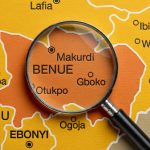
The trigger this time was a motion by Mark Gbillah on the attack on Naka Community in Benue, allegedly by soldiers, and the unending killings in the state by herdsmen.
One of the contributors to the debate, Nicholas Ossai in his submission noted that “ the current ruling party has failed, the president has failed, he has failed to proscribe the herdsmen, we must act, the president has to go.”
What is not known to a lot of persons is that the summon of President Buhari was not among the original prayers of the motion.
Lawmakers were still dancing around the issue, with the deputy speaker, Yusuf Lasun proposing that all the 360 members of the House should meet with Buhari in Aso Rock on the matter, when Bashir Babale hit the nail right on the head.
In an amendment to the prayers of the motion, Babale, an APC lawmaker from Kano State said: “We should summon Mr. President, he is the chief security officer of this country.
“What has Mr. President been doing to address all these security challenges? We need to know. I move that we should summon Mr. President.”
For me, the decision of the House to read the riot act to Buhari on the security situation is a step in the right direction in the search for a solution to the rising insecurity challenges across the country.
In as much as I support the decision of the House to summon President Buhari to appear before them to explain the effort by the government to address the ugly situation in the country, I am not excited about it.
For too long, the lawmakers have been barking too much without biting. Although the 1999 Constitution (as amended) gives enormous power to the legislature to checkmate the executive, our lawmakers act as if they are subservient to the executive.
However, methinks that beyond summoning the President, the House must demand a concrete plan of action from Buhari on how to contain ruinous herdsmen, and other bandits wrecking havoc across the country.
Whatever action plan the executive arm comes up with as its strategy to tackle insecurity in the country, must be monitored closely by the House, and by extension, the entire National Assembly.
Besides, the House must also take its various security committees to task on how it has performed its oversight functions in recent times.
But one wonders how far the Green Chamber can go on this issue. What would the House do, if for instance, Buhari refuses to honour its summon? Can the lawmakers muster the courage to pursue this venture to a logical conclusion?