Follow Us on Google
By Fred Itua, Abuja
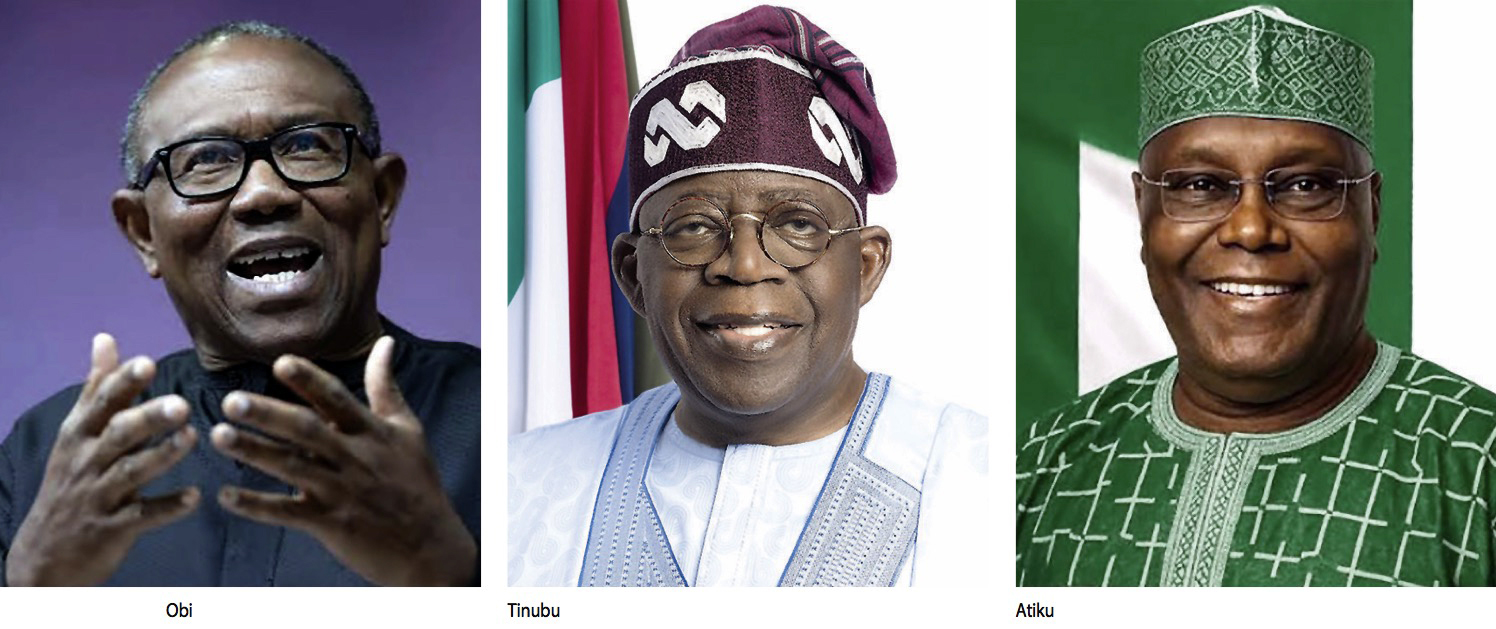
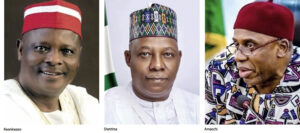
Campaigns for the 2027 general election open officially next Tuesday, August 19. Under the timetable released by the chairman of the Independent National Electoral Commission (INEC), Professor Joash Ojo Amupitan, presidential and National Assembly candidates now have until January 14 to make their case. Governorship and state assembly contests follow from September 9. Between now and polling day, three tickets will crowd the airwaves with slogans. Beneath the slogans sit a smaller set of hard questions that will decide how Nigerians will vote.
Security: War without end date
No issue will command more attention on the campaign trail than security, because no issue touches more households directly. Human Rights Watch’s latest country assessment found that roughly 2,938 people were kidnapped in the North West alone between July 2024 and June 2025, more than 60 per cent of all reported kidnapping incidents nationwide. Zamfara, Kaduna, Katsina and Sokoto bore the heaviest toll. A National Bureau of Statistics report covering an 11 month period in 2023 and 2024 put the nationwide death toll from insecurity above 600,000, concentrated overwhelmingly in the North West and North East.
Military operations have delivered real results in places. Security officials point to more than a thousand kidnap victims rescued in a single year, and Kaduna State, once among the worst affected, has recorded a marked decline in banditry and mass abductions under Governor Uba Sani, whose administration has leaned on intelligence led operations and expanded community policing. That improvement will feature prominently in APC campaign literature this season.
But the broader trend line has not turned. Nextier’s Nigeria Violent Conflicts Database recorded casualties from farmer herder conflicts rising from 188 to 322 between January and December 2025, and researchers have noted a growing overlap between that violence and organised kidnapping, a sign that rural insecurity is evolving rather than easing. Attacks once confined to remote forest corridors have crept closer to major towns. One recent assault on Gurfata village, inside the Gwagwalada Area Council of the Federal Capital Territory itself, underlined how close that insecurity now sits to the seat of government.
Voters in the affected states will want more than a promise of continuity. They will want specifics; troop deployment numbers, funding for state policing structures, and a credible account of why banditry has proven so difficult to dislodge after a decade of federal intervention. Any candidate who treats security as a settled achievement, rather than an unfinished project, will incur the fiercest scrutiny of the entire campaign.
The economy: Tinubu’s heaviest burden
Economic management will be the second dominant theme, and it is the one on which President Bola Ahmed Tinubu carries the heaviest burden. Annual inflation stood at 15.91 per cent in June, with food inflation running hotter still at 17.52 per cent, according to the National Bureau of Statistics. The naira, which closed 2023 trading at roughly 899 to the dollar, has since weakened past 1,360. The national minimum wage, raised to 70,000 naira a month, buys only a fraction of what it did in dollar terms three years ago.
However, there is a case for the Tinubu administration to make. The Mastercard Economics Institute projects Nigeria’s economy will expand by 4.0 per cent in 2026, ahead of the projected global average of 3.1 per cent, and cites fiscal reform and easing inflation pressure as reasons consumer confidence is recovering. Mastercard’s own data shows discretionary spending on travel and lifestyle services rising through the first half of last year, a signal, Tinubu’s foot soldiers will argue, that the worst of the post subsidy shock has passed. The All Progressives Congress (APC) will lean heavily on that projection, alongside state level revenue gains such as those recorded in Kaduna, where internally generated revenue rose from N13.6 billion in 2021 to more than N81 billion last year.
The opposition will make the opposite case with the same conviction. A macroeconomic recovery measured in percentage points means little to a household that still cannot afford a bag of rice at the price it commanded three years ago. Both African Democratic Congress (ADC) and Nigeria Democratic Congress (NDC) strategists have signalled that they intend to make the naira’s depreciation, and the erosion of the minimum wage’s real value, the centrepiece of their economic message, arguing that growth statistics are a poor substitute for a currency Nigerians can actually trust.
Whichever side of that argument voters find more persuasive, the economy will be the single hardest subject for any candidate to discuss without sounding either defensive or dismissive, and it will be raised at every rally regardless of the topic the organisers intended to address.
Agriculture: When farmers cannot afford to farm
Agriculture deserves its own heading during this electioneering cycle. This is because it has become inseparable from both the security and the economic debate. The Famine Early Warning Systems Network projects that between 31.8 million and 35 million Nigerians will face acute food insecurity during the June to August 2026 lean season, the highest figure ever recorded in the country. The Food and Agriculture Organisation has linked that deterioration directly to conflict in the major food producing states of the North West and North Central, where farmers are abandoning land they no longer consider safe to cultivate.
The All Farmers Association of Nigeria has been explicit about the compounding pressures. Its vice president, Daniel Okafor, has said that soaring costs for fertiliser, improved seed and labour are making farming increasingly unprofitable even where security allows it to continue. Smallholder farmers, who account for more than 70 per cent of Nigeria’s food output according to the association, are the group least able to absorb those costs.
This is where agriculture stops being a standalone policy chapter and becomes the clearest illustration of how Nigeria’s problems compound one another. Insecurity drives farmers off their land. Reduced output drives up food prices. Rising food prices deepen the inflation crisis dominating the economic debate. Any candidate serious about the cost of living will have to be equally serious about rural security, input costs and the rebuilding of agricultural extension services, because none of those three problems can be solved in isolation from the other two.
Power: A grid still not built to hold
Few issues expose the gap between national statistics and lived experience as starkly as electricity. Nigeria’s national grid recorded its first collapse of 2026 in January, when generation fell from nearly 4,000 megawatts to zero within the space of an hour, plunging most of the country into darkness. It was not an isolated event. The grid had already suffered a partial collapse in December 2025, and industry analysts have noted that even when the system is functioning, total generation typically hovers between 4,000 and 5,000 megawatts against an estimated national requirement of 30,000 megawatts.
Debt across the power sector, spanning generation, transmission and distribution companies, stood at N6.8 trillion by early 2026, according to sector data, with liabilities reportedly growing by roughly N200 billion a month. In April, 69 per cent of the grid’s installed capacity of 13,625 megawatts sat idle, largely because of gas supply constraints and deferred maintenance.
Not every part of the country has suffered equally. Aba, in Abia State, has continued to enjoy stable electricity throughout recent national blackouts because it operates on an independent 188 megawatt supply through Geometric Power, a model energy analysts have urged the federal government to replicate across the country. That contrast, a functioning city sitting inside a failing national grid, will give every campaign a ready made talking point about the merits of decentralised power. Whichever candidate offers the most credible plan to expand that model, rather than simply promising to fix the national grid once more, will have found a genuine point of difference on an issue that affects every business and household in the country.
Other News
Technology: A story politicians are are unwilling to tell
Nigeria’s political class has historically treated technology policy as a footnote. That will be harder to sustain in 2027. The country’s digital economy is projected to reach $18.3 billion in revenue this year, up from $9.97 billion in 2021, and the telecommunications sector alone contributed more than 9 per cent of real GDP in 2025. Nigeria hosts five technology unicorns — Interswitch, Flutterwave, OPay, Andela and Moniepoint, and startups raised more than $3 billion in disclosed funding last year, a third more than the year before.
The government has set an explicit target of raising the sector’s contribution to GDP to 21 per cent, and has launched Project BRIDGE, an initiative aimed at laying 90,000 kilometres of fibre optic cable to connect every state and local government area, alongside the 3MTT digital skills programme, which officials describe as the largest of its kind in the world. A National Digital Economy and E-Governance Bill, expected to pass this year, would give the National Information Technology Development Agency significant new authority to regulate artificial intelligence, including risk classification and mandatory algorithmic transparency.
For a campaign trying to speak credibly to Nigeria’s young and increasingly online electorate, modernisation is not an optional theme. It is where a meaningful share of future jobs will actually be created, and candidates who can speak fluently about broadband penetration, startup financing and digital skills training will be speaking directly to a demographic that has already shown, in 2023, that it can decide an election.
Education: Millions missing
Nigeria boasts of the largest out of school population in the world, and the exact scale of the crisis remains disputed even within the government circle. The Minister of Education, Dr Maruf Tunji Alausa, put the figure at roughly 15 million children in April, while UNICEF’s most recent assessment places it at 18.3 million, split roughly evenly between primary and junior secondary age children. Save the Children Nigeria has cited a broader figure of 28 million children and adolescents lacking access to either formal schooling or digital learning altogether. Whichever number is closest to accurate, two thirds of Nigeria’s out of school children are concentrated in the North West and North East, the same regions worst affected by insecurity.
More than a million children have reportedly been moved into school through the Adolescent Girls Initiative for Learning and Empowerment, and government officials often cite the training of nearly a million teachers and the distribution of 7.8 million textbooks over the past year. Twenty four Nigerian universities now rank among the global top 1,000, up from 21 previously. Yet, education’s share of the 2026 federal budget fell to 6.1 per cent, down from 7.3 per cent the year before, and well short of the international benchmark of 15 to 20 per cent of public expenditure. That gap between rhetoric and resourcing will be one of the more uncomfortable lines of questioning any candidate will face on the campaign trail.
Healthcare: An unfulfilled promise
Healthcare will feature less prominently than security or the economy, but it will not be absent. Successive governments have promised to expand the Basic Health Care Provision Fund and to strengthen primary healthcare centres across the country’s 774 local government areas, and Kaduna State’s decision to upgrade at least one primary healthcare centre per local government area into a specialised centre of excellence has been cited by the APC as a model worth scaling nationally. The test for every camp will be whether that kind of investment can be extended to states with far weaker fiscal capacity, particularly in the North East and North West, where insecurity and malnutrition compound one another.
The World Food Programme has separately warned that roughly 5.4 million Nigerian children under five are suffering acute malnutrition, including 1.8 million cases severe enough to be fatal without treatment. This statistic that sits at the intersection of the food security, healthcare and poverty debates all at once.
Governance: The trust every other promise depends on
Corruption will not dominate the campaign in the way security or the economy will. It will run beneath both of them. Transparency International’s Corruption Perceptions Index has consistently ranked Nigeria among the weaker performers globally, and the figure matters here for a specific reason. Every promise made on the campaign trail, on security funding, on subsidy reform, on power sector debt, depends on the assumption that public money reaches its intended purpose. Voters have grown sceptical of that assumption. Successive administrations have announced anti-corruption drives that produced headlines without producing convictions that stuck, or recovered assets that were ever fully accounted for.
The APC will point to ongoing efforts at fiscal transparency, including open contracting initiatives some states have adopted, and to reforms at the Central Bank of Nigeria (CBN) aimed at reducing the discretionary allocation of foreign exchange that once fuelled large scale arbitrage. The ADC and NDC will argue, with equal force, that a government cannot credibly campaign on anti-corruption while presiding over a power sector debt approaching N9 trillion by year end, much of it accumulated through unresolved billing disputes and unpaid subsidies that auditors have struggled to fully trace.
Whichever argument voters find more convincing, the credibility of every other promise made this campaign season will rest, at least in part, on whether candidates can demonstrate that public institutions have actually become harder to exploit, not merely that new committees have been formed to say so.
Migration and housing
Beyond the headline issues sits a set of pressures that will still shape how individual families will vote. Rapid urbanisation has placed enormous strain on housing in Lagos, Abuja and other major cities, where rents have risen sharply in naira terms even as household incomes have not kept pace. Irregular migration, the phenomenon young Nigerians describe simply as japa, continues to draw skilled workers, healthcare professionals prominent among them, toward Europe, North America and the Gulf. The trend jas been acknowledged as both a safety valve for domestic unemployment and a long term drain on the country’s human capital.
Candidates who address migration only as a security or diaspora remittance issue, without acknowledging what is pushing people to leave in the first place, will likely find that framing unconvincing to voters most affected by it.
Jobs and the youth vote
Every one of the issues above converges on a single demographic question. A 2025 report by Plan International Nigeria and Action Aid put youth unemployment at 53 per cent, and named joblessness, insecurity and weak governance as the forces pushing young Nigerians toward migration, cybercrime and other risky coping strategies. Roughly 1.7 million graduates leave Nigerian universities and polytechnics every year into a labour market that is not expanding fast enough to absorb them.
INEC’s Continuous Voter Registration exercise, which closed on July 26, added more than 10 million names to the national register, and voters aged 18 to 34 accounted for roughly two thirds of every new registration recorded. That is the same demographic that broke decisively for Peter Obi in 2023, and every campaign will now be competing for its attention. Whether any of the three tickets can convert youth anxiety over jobs and opportunity into actual votes, rather than into the disillusionment that produced 2023’s record low turnout of 26.72 per cent, may matter as much to the outcome as any single policy promise made on the campaign trail.
Strip away the rallies, the branded vehicles and the slogans, and the 2027 campaign will be contested on a narrower and more consequential set of questions than the noise suggests. Can any candidate offer a credible, resourced plan to end the cycle of banditry and kidnapping in the North West and North East, rather than another round of troop deployments announced after each new attack? Can any candidate explain, in terms an ordinary household will accept, why the naira has weakened so sharply and what will actually stabilise it? Can any candidate connect agricultural policy to food prices in a way that acknowledges farmers cannot produce what they are too frightened to plant? Can any candidate present a power sector plan that goes beyond another promise to fix the national grid, given that the grid has failed the country repeatedly for over a decade regardless of who has held office? Can any candidate speak convincingly to a youthful, newly registered, economically anxious electorate about where the next generation of jobs will actually come from?
None of these questions will be settled by a single rally, however well attended, or by a single manifesto launch, however glossy. They will be tested over five months of town halls, market visits and televised debates, in front of an electorate that has grown noticeably less patient with rhetoric since the last election. That impatience is itself a fact worth reporting. It will shape not only what candidates will say between now and January, but how closely journalists, election observers and ordinary Nigerians will be listening for the difference between a promise and a plan.
These are the questions Nigerians will be listening for between now and January. The candidate who answers them with specifics, rather than with the familiar language of aspiration, will have done more to earn the presidency than any rally attendance figure or endorsement announcement will ever demonstrate.