Follow Us on Google
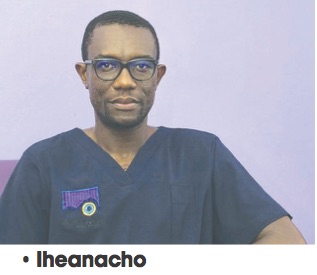
Ocularist is a specialist eye practice dedicated to making artificial eyes. Artificial eyes are prosthetic or a cover up used to replace the lost eyes. In this interview, Medical Director, Ocularist Eye Clinic, Dr Okpara Iheanacho, explains the roles of an ocularist.
Tell us, what an ocularist does to the eye
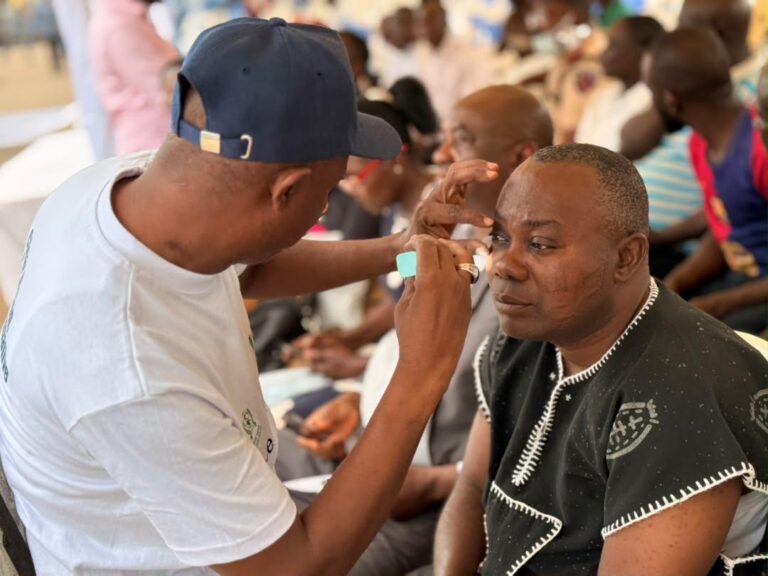
Ocularist is a specialist eye practice that makes and fixes artificial eyes. For example, someone with a damaged eye or one who lost an eye through accident or failed surgery or infection during which at that point when the eye is removed, that patient is traumatized, and the psychological state of the patient is being affected. At this point, we feel the gap by providing artificial eyes. Even though the person cannot see with artificial eyes because you can only see with your natural eyes, what we do is restore emotional balance as well as the facial appearance and confidence of that patient to live a normal life.
What is the difference between an optician and ocularist?
An optician is a technician that fixes or makes your lenses in a frame while an ocularist makes artificial eyes. Now, these prostheses are made to a proper fit where people cannot tell the difference from your natural eyes.
Can an ocularist be called a doctor?
Not really. We have ocularists who are ophthalmologists or optometrists that specialise as ocularists. Ocularists profession is like that of an art, so, we have artists i.e those who are into fine art who are specialised in ocularist. An ocularist must not necessarily be a doctor. Anyone who is interested in becoming one can go for the training although; there is a basic for it. Currently in the UK for you to become an ocularist, you have to go for a six years internship to be certified ocularist.
For instance, I trained in India after my school of Optometry. There are not many schools for ocularists, as there are none in Nigeria. In Nigeria you either be trained in optometrist or optician.
Choice of ocularist, is it lucrative?
No, it’s not lucrative. I started ocularist practice in Nigeria thirteen years ago. And the reason is this; I remember many years ago when I was doing my internship in optometry and I found that we have a lot of challenges for patients who have lost their eyes. Have you seen patients with large eyeballs, those patients they have been told to remove that eye, but a lot of them refused because they’re not sure of getting it properly handled, especially the African continent! Now for you to get an appointment in the UK, you have to book months ahead; so you can imagine the cost implications, which include, flight ticket, accommodation and others, it’s a whole lot of challenges, by the time you look at it all, you are not able to foot the bill.
So what we’re doing here is we are able to bridge that gap, to reduce the cost to get customized solutions and services. So I won’t say because it’s lucrative, but it’s sort of helping the society and helping monocular patients (people who have lost one eye) and also improving eye care. There are also other specialities in the surrounding area of the eye.
How often do you get patients that need artificial eyes?
In Nigeria, we are only thirteen ocularist specialists. And whether you like it or not, we are not enough to do this work. Yes we are creating that awareness in our little way; however a patient comes in at any consulting day. We have two weeks of consulting in Lagos, and two weeks of consulting in Abuja. We have at least two patients on each consulting day.
Many people don’t know anything about this. But we have to keep engaging them through our social media handles. We have patients who are actually shy. They don’t want to come to the hospital reason we make our clinicals as private as possible. Every patient is treated with utmost privacy.
How affordable is it to get an artificial eye?
Affordability is a challenge. If you check the cost, you would be talking about two thousand five hundred dollars for one artificial eye considering how expensive things are in Nigeria, so, an average person cannot afford it. In the developed world it’s founded by insurance companies through the health insurance scheme. But here, we don’t have such opportunities, especially for healthcare. The most important healthcare condition insurance covers are life threatening conditions, but we forgot that if a person is living with just one eye, the person would be traumatized, especially when the person has no hope for a solution because he can’t afford it, it could even lead to depression.
This is where we come in, we charge 50 per cent of the cost, when you convert it, and still a lot of people cannot afford it. If you are now telling the government or non-governmental organizations (NGOs) to try to subsidize for these people they may not see the need, because they believe it’s not life threatening. The only thing they believe is when someone has a heart or kidney problem. But we don’t look into the mental issues, those things that affect the mental health of the individual or his self esteem. So, it affects patronage.
Do you have a professional body or an association?
What we have is a forum. You know before you form an association, you have to have quite a number of people. In West Africa, what we were able to do is to mark our presence in Cameroon, Ghana and others. In the whole West Africa, we’re not up to ten, in Nigeria we are not up to three, so, we know ourselves.
What is the driving force?
I decided to do this because of the need. As at that time, there was no ocularist. Even after returning from my training, my colleagues were like; after all these while, are you sure you have the market for this? Am I sure people really need this? But I actually saw the need. When I returned from my training in 2011, our first patient appeared in 2012. You know it’s after seeing your first patient that is when you know you have started. So we spent one year without patronage.
Plans for partnership
We are always open for partnership with anyone including the government. I mentioned earlier that our major challenge is affordability; most people can’t afford the cost. What do we do over this challenge, we create partnership. We’re going to look at philanthropist partnership. To sponsor one or two patients who can’t afford it. The patient would not receive full subsidy, they have to pay a little amount, and then we can also add, so that we can make it go round.
Last word
In my 13 years of being an ocularist, it has actually exposed a lot of things about eye care, being an ocularist has actually endeared me to appreciate eyesight more, which we don’t appreciate in our society. In fact, it’s when these patients come in then you know how much they pay, that is when you begin to know how much of value your eyesight is. So the person, who has an eye sight, does not know what God has done for them.
When patients tell their stories, it’s quite touching. One, it could be a story of ignorance, a story of compromise of health, because you want to save money and you don’t reach out to the right practitioner. Wrong diagnosis, even during birth of children, this has exposed me to offering counseling, but to some patients, counseling doesn’t hold water for them. Some patients even come with glaucoma. This has exposed me to the good, the bad and the ugly about the eyes in its entirety.
I tell people to please not compromise their eyes, you have to spend money and there is no amount of money you spend on your eyes that is too much for your eye. We use our eyes every day. Something we use every day, you are supposed to care for it.