Follow Us on Google
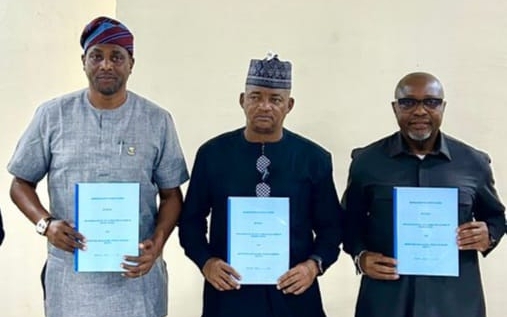
Nigeria’s advertising and gaming sectors are set for a regulatory reset following a new partnership between the Advertising Regulatory Council of Nigeria (ARCON) and the Federation of State Gaming Regulators of Nigeria (FSGRN) aimed at creating uniform standards for gaming advertisements across the country.
The two bodies sealed the agreement through a Memorandum of Understanding (MoU) signed in Lagos, introducing a coordinated framework designed to eliminate the long-standing inconsistencies that have characterised advertising rules in Nigeria’s rapidly expanding gaming and lottery industry. The harmonised regulatory system is scheduled to take effect on April 1, 2026, ushering in a new era in which gaming and lottery operators will follow a unified set of advertising guidelines when promoting their products across television, digital platforms, outdoor media, and other communication channels nationwide.
The move comes in the wake of the Supreme Court ruling on National Lottery regulation, delivered in November 2024, which significantly reshaped Nigeria’s gaming regulatory structure. The judgement stripped the National Lottery Regulatory Commission (NLRC) of oversight powers outside the Federal Capital Territory and affirmed that gaming regulation falls within the constitutional powers of individual state governments.
Since that landmark decision, many of Nigeria’s 36 states have begun restructuring their gaming regulatory frameworks to reflect their newly affirmed authority over the sector.
However, the absence of uniform advertising rules across states created operational complexities for gaming companies operating in multiple jurisdictions.
The new agreement between ARCON and the federation of state regulators seeks to close those regulatory gaps.
Under the MoU, both organisations will jointly design and implement an integrated advertising governance structure that aligns federal advertising standards with the operational requirements imposed by state gaming authorities.
Speaking to journalists after the signing ceremony, ARCON Director-General Olalekan Fadolapo said the agreement would restore order to a sector previously marked by fragmented regulatory oversight.
According to him, the absence of coordination among state regulators had created administrative bottlenecks and inconsistencies in an industry widely considered high-risk.
“What we stand to gain is sanity in the regulation and operation of gaming in Nigeria. If we allow all these things to be done in silos, it is going to create more problems,” he said.
Fadolapo explained that although the Supreme Court ruling transferred gaming regulation to state governments, the regulation of advertising still falls under federal jurisdiction through ARCON.
The MoU, he said, provides a practical mechanism for aligning these two layers of authority to ensure that advertising practices across the gaming industry remain consistent with national standards.
Under the new framework, gaming operators planning nationwide advertising campaigns—especially those running on television networks, online platforms, or other national media channels—will now comply with a common regulatory structure that complements state gaming laws.
Other News
This approach, according to regulators, will reduce compliance uncertainty while ensuring that marketing communications across the industry adhere to responsible advertising standards.
“The association has 25 members. Within this framework of the MoU, we now have 25 member states where we can say there is a single advertising regulatory framework,” Fadolapo added.
The ARCON chief also described the collaboration as an example of practical cooperative federalism, reflecting the broader governance approach being promoted by President **Bola Ahmed Tinubu.
He stressed that effective regulation of complex and rapidly evolving industries such as gaming requires closer collaboration between federal and state institutions.
“Through policies and guidelines, the President is amplifying true federalism. With true federalism, there is a need for state and federal government agencies to cooperate and partner in areas where we need each other,” he said.
Industry observers believe the harmonised advertising framework could mark a turning point for Nigeria’s gaming ecosystem, which has experienced rapid growth in recent years driven largely by mobile technology, online betting platforms, and expanding youth participation.
Analysts say the lack of unified advertising standards had previously created reputational risks and regulatory uncertainty, particularly for companies operating across multiple states.
With the new agreement, regulators aim to strengthen consumer protection by ensuring that gaming advertisements are responsible, transparent, and compliant with established advertising ethics.
Stakeholders also expect the harmonised rules to enhance investor confidence by creating a more predictable regulatory environment for operators seeking to expand their footprint in Nigeria’s fast-growing gaming market.
Beyond regulatory clarity, the framework is expected to promote better oversight of marketing practices in an industry often associated with social and financial risks, particularly among young consumers.
By aligning state gaming regulations with national advertising standards, regulators say the initiative will ensure that the sector continues to grow within a structured and accountable framework.
As the April 2026 implementation date approaches, operators across Nigeria’s gaming industry are expected to begin adjusting their advertising strategies and compliance systems to align with the new nationwide guidelines.
Regulators say the partnership between ARCON and the Federation of State Gaming Regulators marks a major step toward building a more coordinated, transparent, and credible gaming industry capable of supporting sustainable growth across Nigeria’s evolving digital economy.