Follow Us on Google
The Nigerian Upstream Petroleum Regulatory Commission (NUPRC) has revealed that 43 Field Development Plans (FDPs) approved this year have the potential to unlock 1.7 billion barrels of crude oil and 7.7 trillion cubic feet of gas.
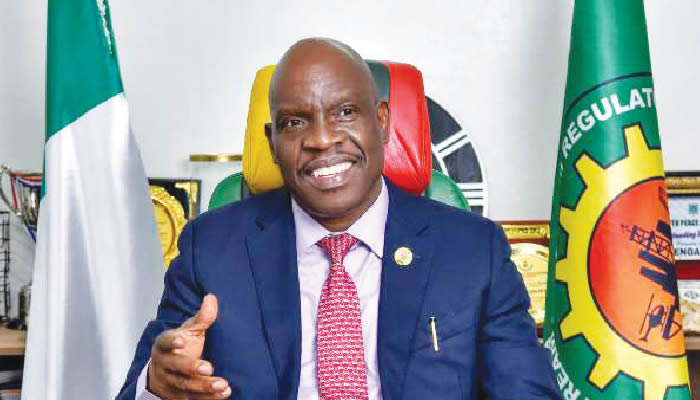
The Commission’s Chief Executive, Engineer Gbenga Komolafe, disclosed this at the 43rd Annual International Conference and Exhibition (AICE) of the Nigerian Association of Petroleum Explorationists (NAPE) in Lagos on Monday.
Represented at the event by NUPRC’s Director of Subsurface Development, Emmanuel Mac-Jaja, Komolafe said the FDPs signal a resurgence in investment in Nigeria’s upstream sector.
Speaking on the theme, “Revitalising the Nigerian Petroleum Exploration and Production: Strategies for Energy Security and Sustainable Development,” he said: “In 2025 alone, 43 new Field Development Plans (FDPs) were approved, unlocking 1.7 billion barrels of oil and 7.7 trillion cubic feet of gas, backed by over $20 billion in committed capital.”
He highlighted major Final Investment Decisions (FIDs), including $5 billion for Bonga North, $500 million for Ubeta Gas, and $2 billion for Shell’s HI Gas Project, unlocking nearly 2 trillion standard cubic feet of gas. The Commission Chief further noted that indigenous participation continues to deepen, with local acquisition deals exceeding $5 billion, signaling growing confidence in homegrown players.
Other News
Komolafe observed that Nigeria is at a defining moment in global energy, one characterized by transition, transformation, and opportunity. “While the global shift toward renewables is gaining momentum, oil and gas will remain indispensable for decades to come, particularly in developing economies where energy access remains a critical challenge,” he said.
On upstream reforms driving growth, he outlined initiatives aimed at repositioning Nigeria’s sector for long-term progress, including advanced data systems using cutting-edge technologies like stress field detection, an upgraded National Data Repository to de-risk exploration, and continuous acreage licensing providing a transparent framework for global competitiveness.
He also highlighted Project One Million Barrels, an initiative to restore and grow daily production through rig reactivation and well optimization. Deepwater expansion through cluster development and shared infrastructure is helping to reduce costs and accelerate first oil, while frontier basin development leverages the Petroleum Industry Act (PIA) to explore untapped basins.
On investment trends, Komolafe noted that rig activity has risen from eight in 2021 to over 40 today, reflecting renewed investor confidence. He also stressed environmental stewardship, pointing to initiatives such as gas flare commercialisation, the Decade of Gas, and the Presidential CNG Initiative, all aimed at turning waste into wealth. The NUPRC’s Upstream Decarbonisation Framework integrates methane monitoring, carbon capture, and access to carbon finance, while the Host Community Development Trust, powered by the HostComply platform, ensures transparency, accountability, and shared prosperity for oil-bearing communities.
Engineer Komolafe expressed confidence that the ongoing reforms would firmly position Nigeria as a global energy hub, driving economic growth, energy security, and sustainable development for the nation.