Follow Us on Google
By Adedapo Emmanuel Alawode
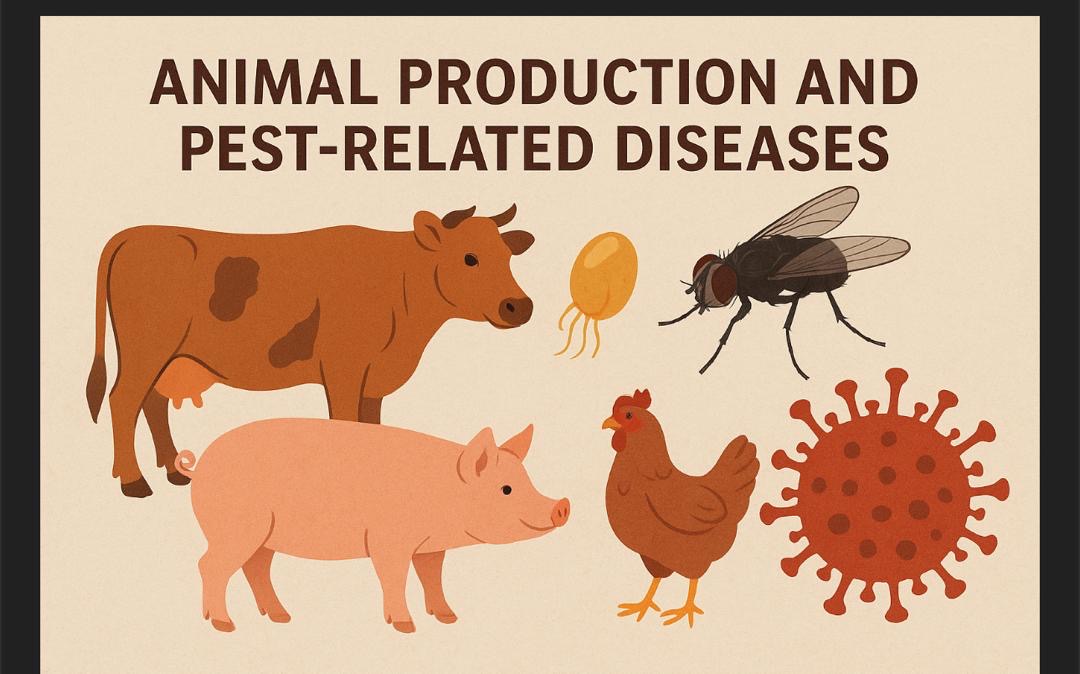
Animal production is crucial for food security, with the provision of essential products like meat, milk, eggs, leather, and wool. It also supports the livelihoods of many, especially in rural and developing regions. However, this industry faces manifoldchallenges against productivity, animal health, and economic stability. One of the most persistent and harmful issues is the presence of pests, which found inimical to the overall well-being of domestic animals.
There is a reported case of the death of a pig recently from a village in Plateau State of Nigeria caused by a five-lined skink that jumped onto the body of the pig, leading to its sudden indisposition and eventual death. This event calls for a discussion of this kind.
It is probable that the swineherd had ignored the presence of skinks among the pigs with an erroneous belief that they are non-venomous lizards. But every animal farmer must protect their farm in the holistic sense of protection; including keeping the animals away from pests. These organisms not only reduce production efficiency but also act as vectors for various diseases, posing threats to both animals and humans.
In the first place, ectoparasites, including ticks, mites, lice, and flies, make their home on the skin or outer body of animals. They can inflict direct harm through blood-feeding, irritation, and skin lesions, resulting in a number of health challenges. In a similar fashion, endoparasites such as nematodes (roundworms), cestodes (tapeworms), and trematodes (flukes), live in the gastrointestinal tract and other internal organs. These pests can severely disrupt nutrient absorption, leading to stunted growthand decreased fertility, among other health problems. Severe infestations can even be fatal, especially for young or immunocompromised animals.
Moreover, certain pests, technically known as disease vectors,play a crucial role in spreading diseases that affect both animals and humans. For instance, mosquitoes are known to transmit Rift Valley Fever and various arboviruses; tsetse flies are responsible for spreading trypanosomiasis, commonly known as sleeping sickness, particularly in sub-Saharan Africa; sandflies carry Leishmania parasites, which can impact both dogs and humans. These diseases, carried by vectors, can severely reduce animal populations and lead to significant economic losses, primarily due to rising treatment costs and trade restrictions.
While pigs, for instance, are often thought to be pretty tough against snake venom owing to their thick skin and unique genetics, there are still some reptiles like rattlesnakes, forest cobras, puff adders, among others, that can be a real danger, especially if the pigs are young, hurt, or in a weakened state.
There are also economic and social considerations. In areas where animal agriculture is a key part of the economy, pest infestations can create a remarkable effect throughout the entire supply chain, impacting processors, retailers, and consumers alike.
On mitigation strategies, a well-rounded approach is required in tackling pest-related issues. In the first place, Integrated Pest Management (IPM) can be employed in bringing together biological, cultural, mechanical, and chemical strategies to sustainably manage pest populations. Some examples are:Rotational grazing to break the life cycles of parasites; utilizing biological control agents like predatory insects; and thoughtful application of acaricides and dewormers. Additionally, vaccination and Breeding could be employed; creating and implementing vaccines for pest-related diseases, and breeding livestock that are resistant to pests. The animal farmer can equally consider surveillance and early detection through consistent monitoring of animal health and quick identification of pest outbreaks through veterinary networks. Yet, education and farmer training is vital. This can be achieved by raising awareness about effective pest management practices and equipping farmers with skills in disease recognition and control techniques.
At summation, pests are considered to be a constant and significant challenge for animal production systems around the world. Their effects on animal health, productivity, and economic stability are profound. A careful, science-based strategy that emphasizes prevention, control, and education is critical to counteract these threats. Investing in pest management not only protects animal health but also promotes the sustainability of animal husbandry and the welfare of the communities that rely on it.
Alawode is an Agricultural Economist from Osun State